
Quick Facts
- Date
- Monday, 8 December 2025
- Region
- District 1 (Innere Stadt), Vienna
- Route
- Belvedere Palace (self-guided) → guided tour: Minoriten Church → Hofburg → Opera → self-guided: Burggarten → St. Stephen's
- Guided tour
- 2 hours, booked via Klook, S$88.27 total for the three of us
- Duration
- Full day including self-guided portions, easy pace
- Good for
- Families — everything is walkable and manageable with kids
Heading Into Vienna's Old Town
8 December, our second day in Vienna, was set aside for the old town itself — walking through the history and architecture that the Habsburgs left behind, rather than ticking off a single sight. We stayed at Pakat Suites, a self-check-in apartment near the centre, no front desk, just a key safe you access after 3pm, which worked fine for us but is worth knowing about in advance if you'd rather have someone to ask questions at.
Vienna is divided into 23 districts, but most of the main attractions sit inside District 1 (Innere Stadt), close enough together to cover comfortably on foot, even with a child.
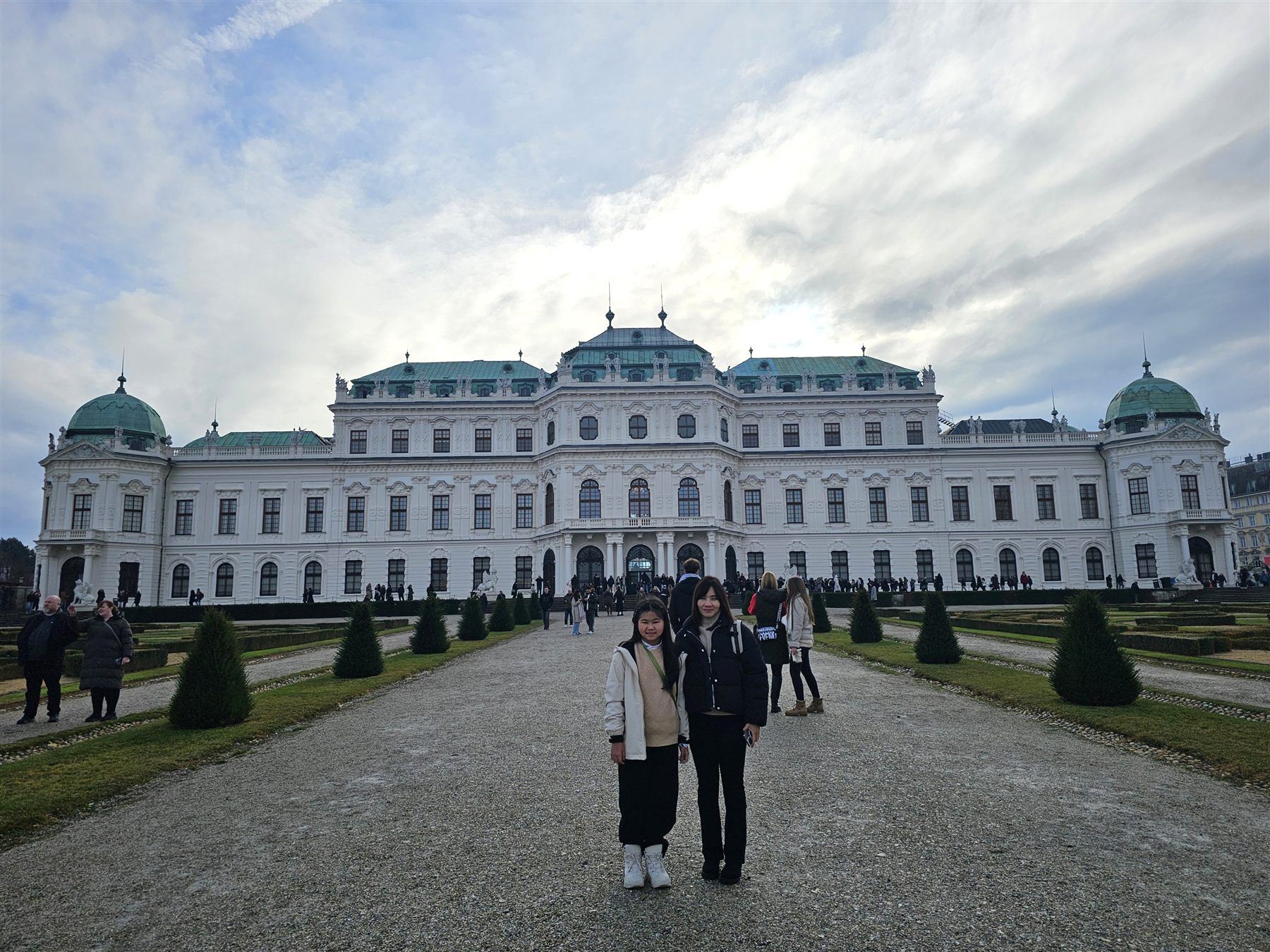
Our booked activity for the day was a two-hour guided walking tour, but it didn't start until 2pm, so we spent the morning at Belvedere Palace on our own first. It gave us a calm, spacious opening to the day before the streets got busier.
Minoriten Church — Where the Tour Began
We met our guide at 1:45pm at the Leopold-Figl-Denkmal, right outside Minoriten Church, about a 35-minute walk or a 24-minute tram ride from our apartment. The tour cost us S$88.27 in total, booked a few weeks ahead through Klook, and officially covered Minoriten Church, Heldenplatz, the Hofburg Imperial Palace, the Austrian National Library, the equestrian statue of Prince Eugene of Savoy, the Spanish Riding School, the Albertina Museum, and the Vienna State Opera.
Minoriten Church was the first stop, and the one that surprised us most. From the outside, it looks quite simple, so we didn't expect much. But inside, there's a detailed mosaic of Leonardo da Vinci's "The Last Supper," made from thousands of small tiles. It's surprisingly impressive — we ended up spending more time here than we thought.
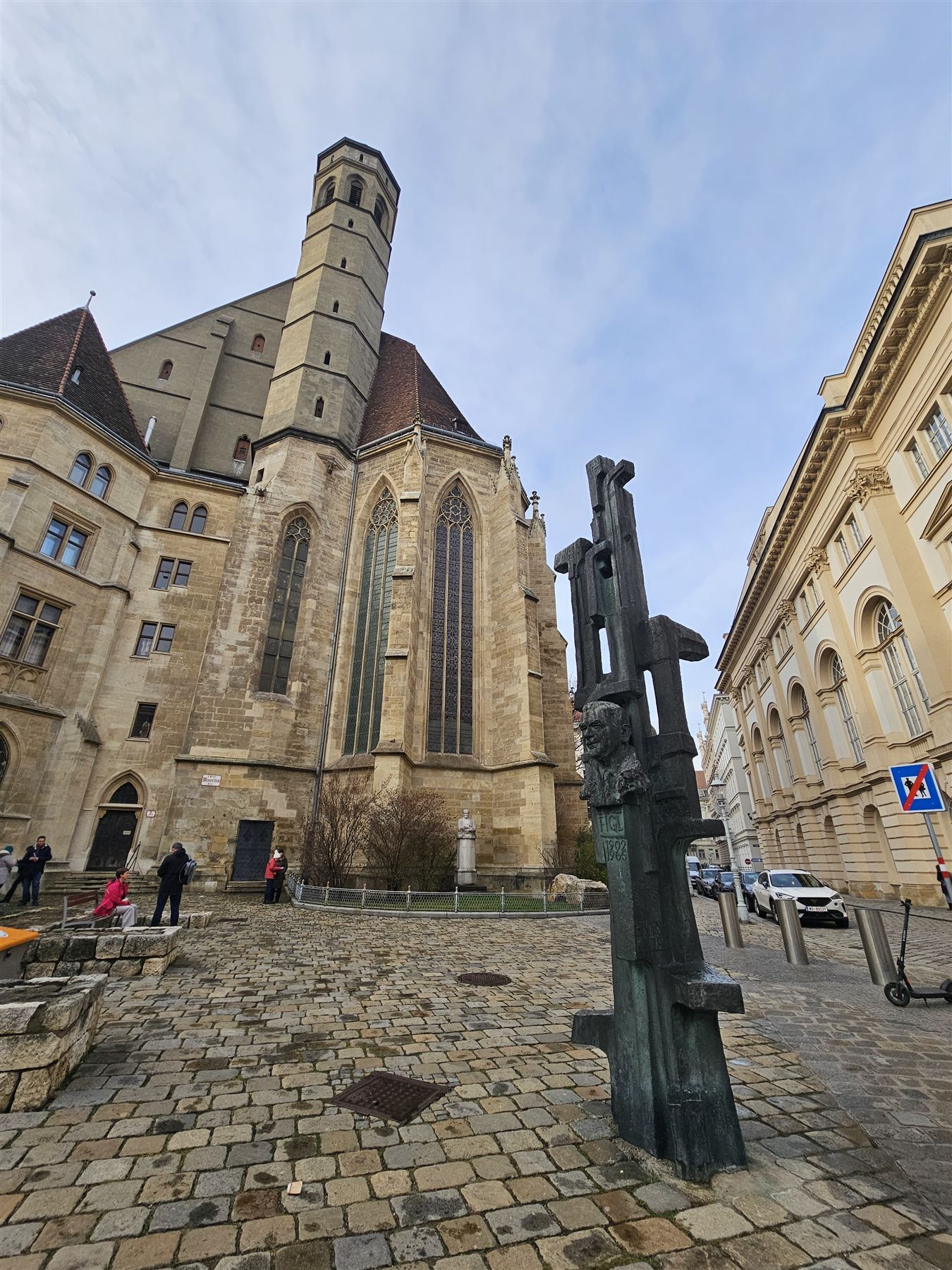 Minoriten Church, with the Leopold-Figl-Denkmal in front.
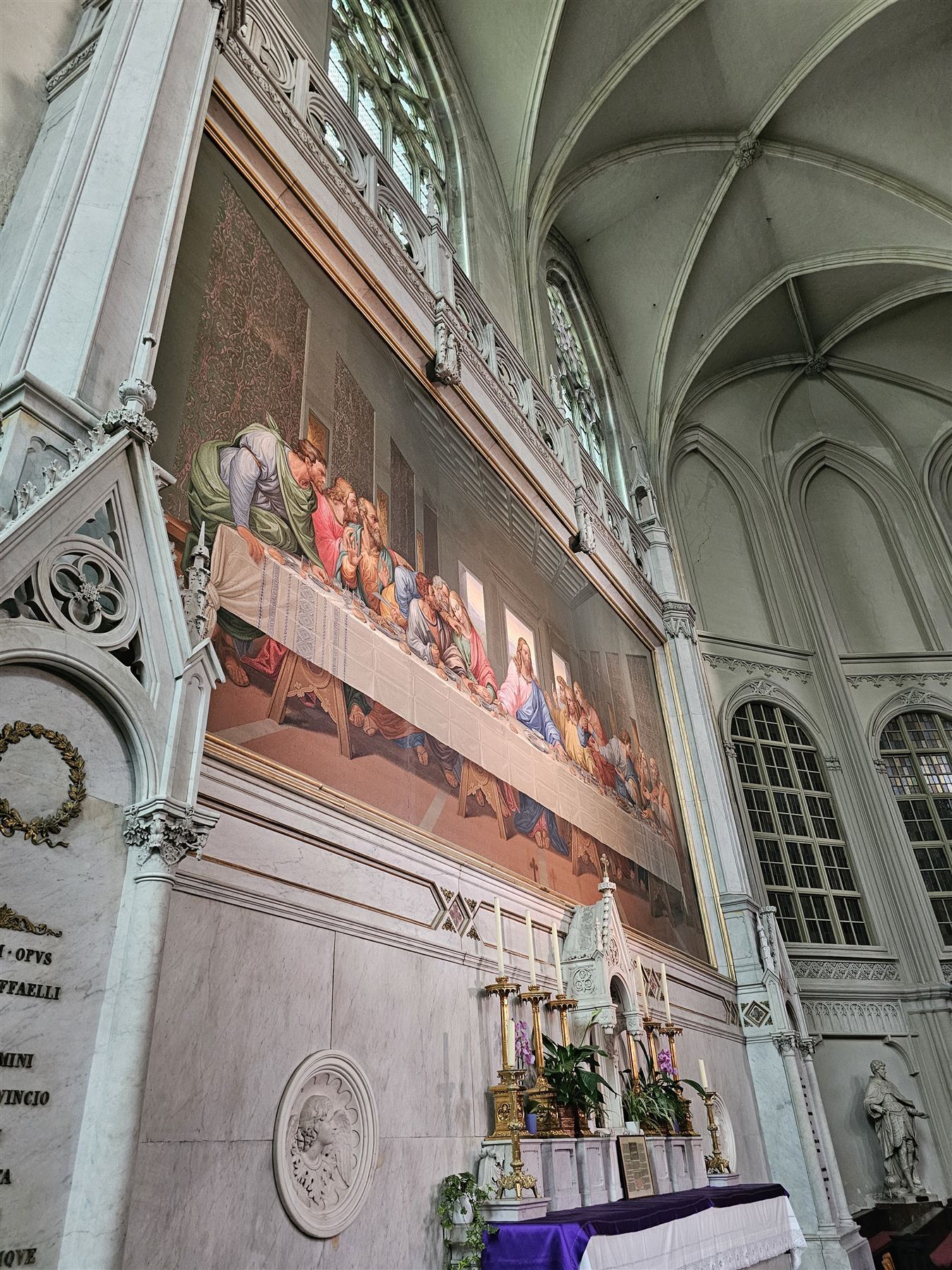 The mosaic of "The Last Supper" inside — thousands of small tiles.
Heldenplatz and Hofburg Palace
From there our guide led us to Heldenplatz, a large open square anchored by Anton Dominik Fernkorn's 1865 equestrian statue of Prince Eugene of Savoy, the military commander who broke Ottoman sieges of Vienna in the early 1700s. Across the square, the Hofburg Imperial Palace was the Habsburgs' main residence for almost 500 years, from 1438 until the monarchy's collapse in 1918 — 18 wings and roughly 2,600 rooms in total, today housing the Austrian President's office alongside museums open to visitors. The tour also took us past the Austrian National Library, the Spanish Riding School, and the Albertina Museum, before ending near the Vienna State Opera. The square itself is wide open, with the neo-Gothic Rathaus visible across the Ringstrasse, and there was plenty of room for our daughter to run a little before we carried on.
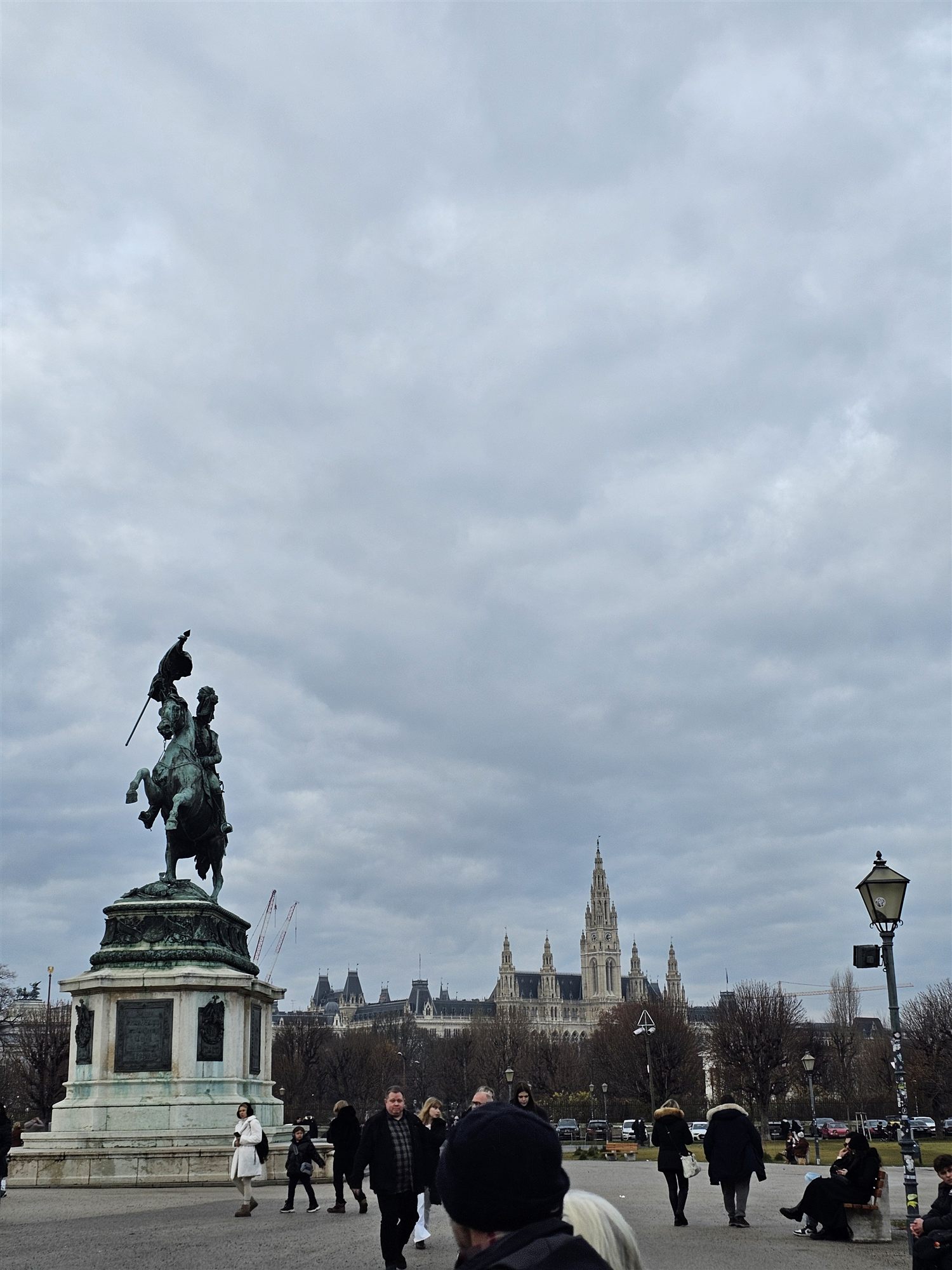 Prince Eugene of Savoy, cast in 1865, with the Rathaus behind.
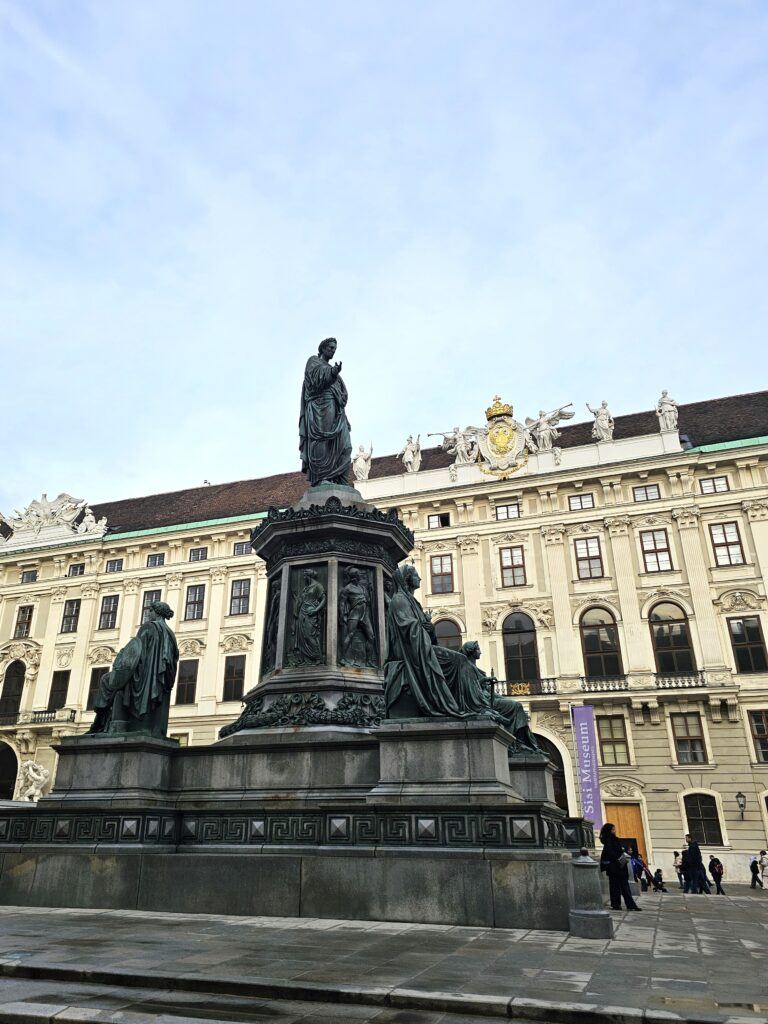 The Hofburg — home to the Habsburgs for close to 500 years.
Two Statues, Two Very Different Lives
After all the grand buildings, Burggarten felt like a nice break, its centrepiece a monument to Mozart unveiled in 1896. A short walk away in the Volksgarten stands a statue of Emperor Franz Joseph I, who reigned for 68 years (1848–1916), one of the longest reigns of any European monarch. The length of it masks how much he buried along the way: his wife, Empress Elisabeth, was assassinated in Geneva in 1898; his only son and heir, Crown Prince Rudolf, died in a murder-suicide at Mayerling in 1889; his brother Maximilian was executed by firing squad in Mexico in 1867; and it was the 1914 assassination of his own nephew and successor, Archduke Franz Ferdinand, that triggered the First World War.
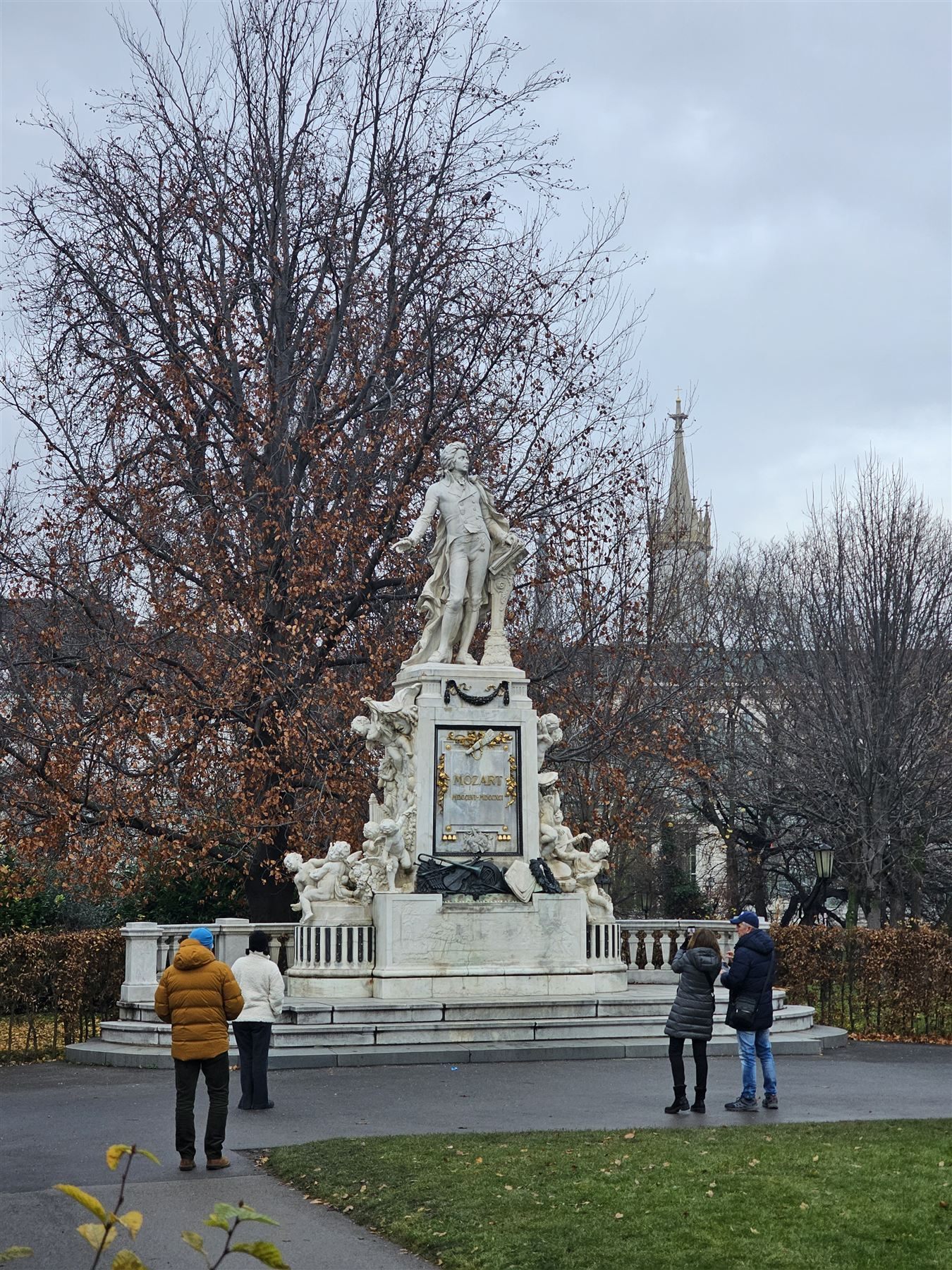 The Mozart Monument, Burggarten, unveiled in 1896.
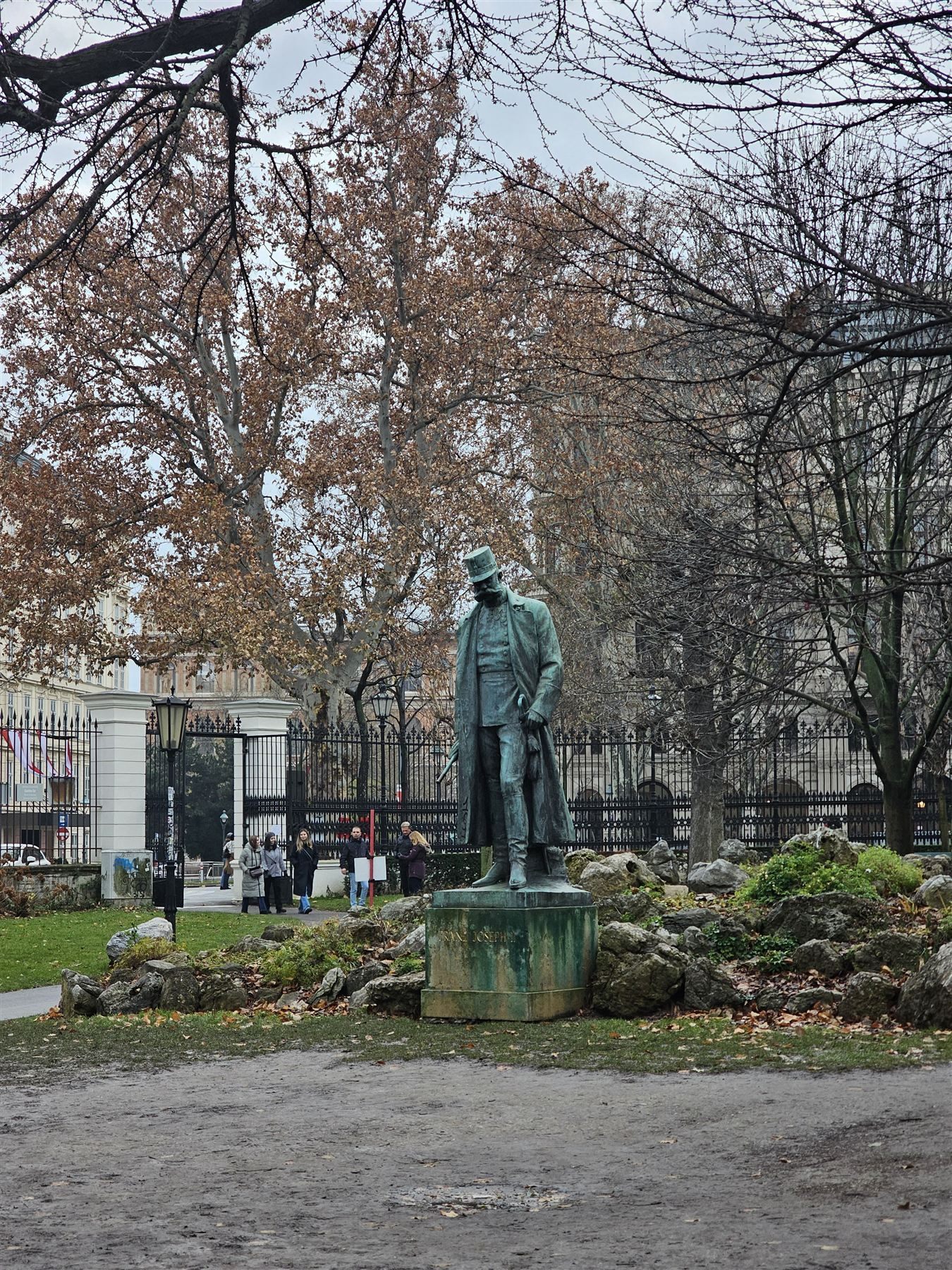 Emperor Franz Joseph I, who reigned for 68 years.
A More Serious Moment
We also passed the Memorial Against War and Fascism, sculptor Alfred Hrdlicka's 1988 installation at Albertinaplatz, built on the site of a building destroyed in a 1945 bombing raid that killed people sheltering in its basement. One figure — a kneeling man scrubbing the pavement — refers directly to the "scrubbing parties" Jewish residents were forced into by Nazi supporters after the 1938 Anschluss; it was originally placed at street level with no barrier, which meant people sat and stood on it for photos until public criticism led to a low fence being added. Watching our daughter walk past it, we tried to explain, simply, what it showed and why.
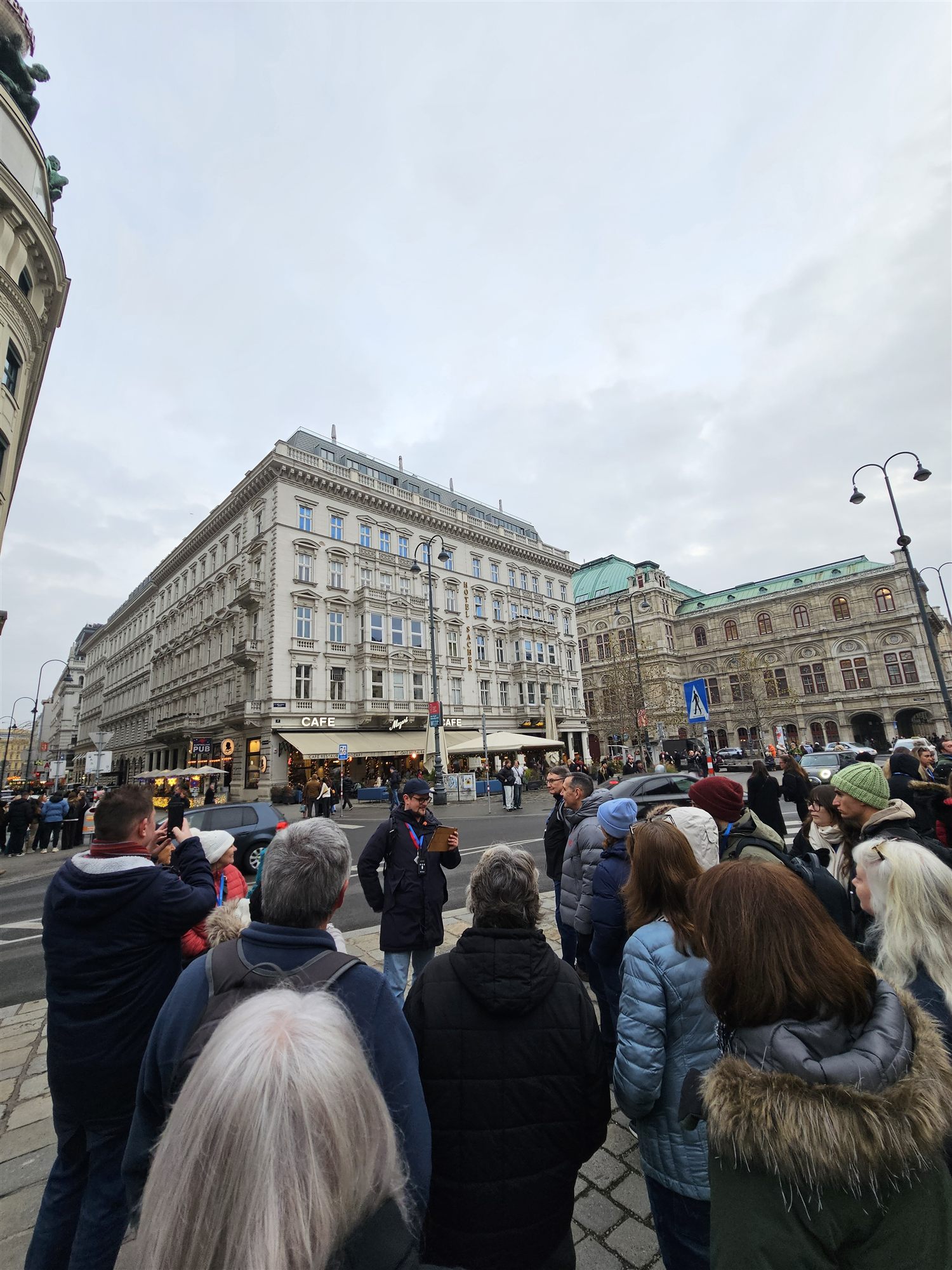 Our guide, gathering the group near the State Opera.
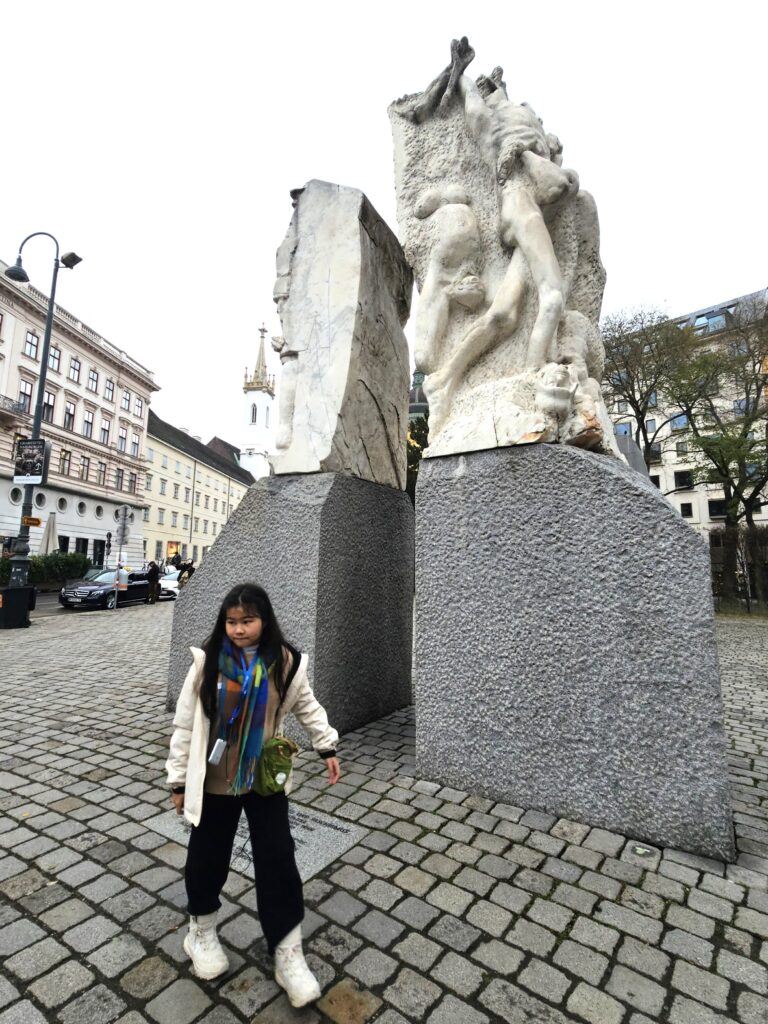 The Memorial Against War and Fascism, unveiled 1988.
Start your day at Belvedere — it's quiet and spacious. Most attractions in District 1 are walkable, and the whole route takes around 2–3 hours. Bring snacks and water, especially with kids, and save the old town for late afternoon when the Christmas lights come on.
Ending the Day at St. Stephen's Cathedral
Our walking tour ended near the Vienna State Opera, but we continued walking on our own. As it got darker, the streets started to light up with Christmas decorations. We made our way to St. Stephen's Cathedral, and by then the whole area felt lively but still cosy.
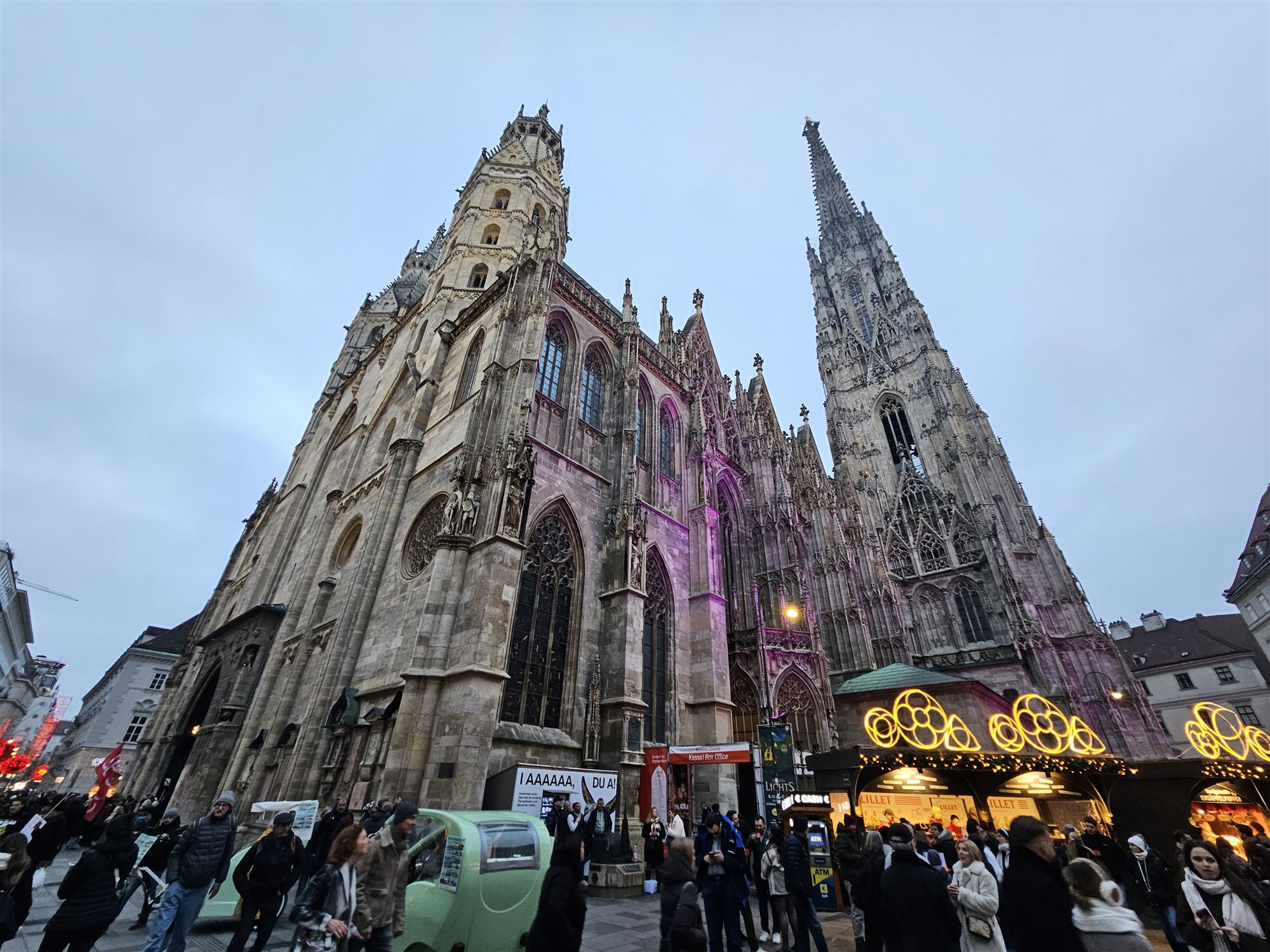
By the end of the day, Vienna didn't feel like a new city anymore. It felt familiar, easy to walk, and surprisingly comfortable even with a child.