
Quick Facts
- Date
- Tuesday, 9 December 2025
- Region
- Graz, Styria, Austria
- From Vienna
- Semmering Railway (ÖBB), round trip, self-guided
- Train times
- 08:58 Vienna → 11:33 Graz; return 16:26 Graz → 19:36 Vienna
- Covers
- Hauptplatz, Schlossberg, the Uhrturm, Old Town, Cathedral, Murinsel, Kunsthaus
- Good for
- An easy, unhurried day trip — no tight itinerary needed
A Scenic Start on the Semmering Railway
On 9 December, our third day in Austria, we took the 08:58 train from Vienna to Graz on the Semmering Railway, arriving just before half past eleven. Built between 1848 and 1854 under the engineer Carl Ritter von Ghega, it was the first mountain railway in Europe built on standard-gauge track, climbing through 14 tunnels and across 16 viaducts, and UNESCO listed the line as a World Heritage Site in 1998 for that engineering. The views changed constantly — tunnels giving way to forested slopes, then stone viaducts crossing the valleys below.
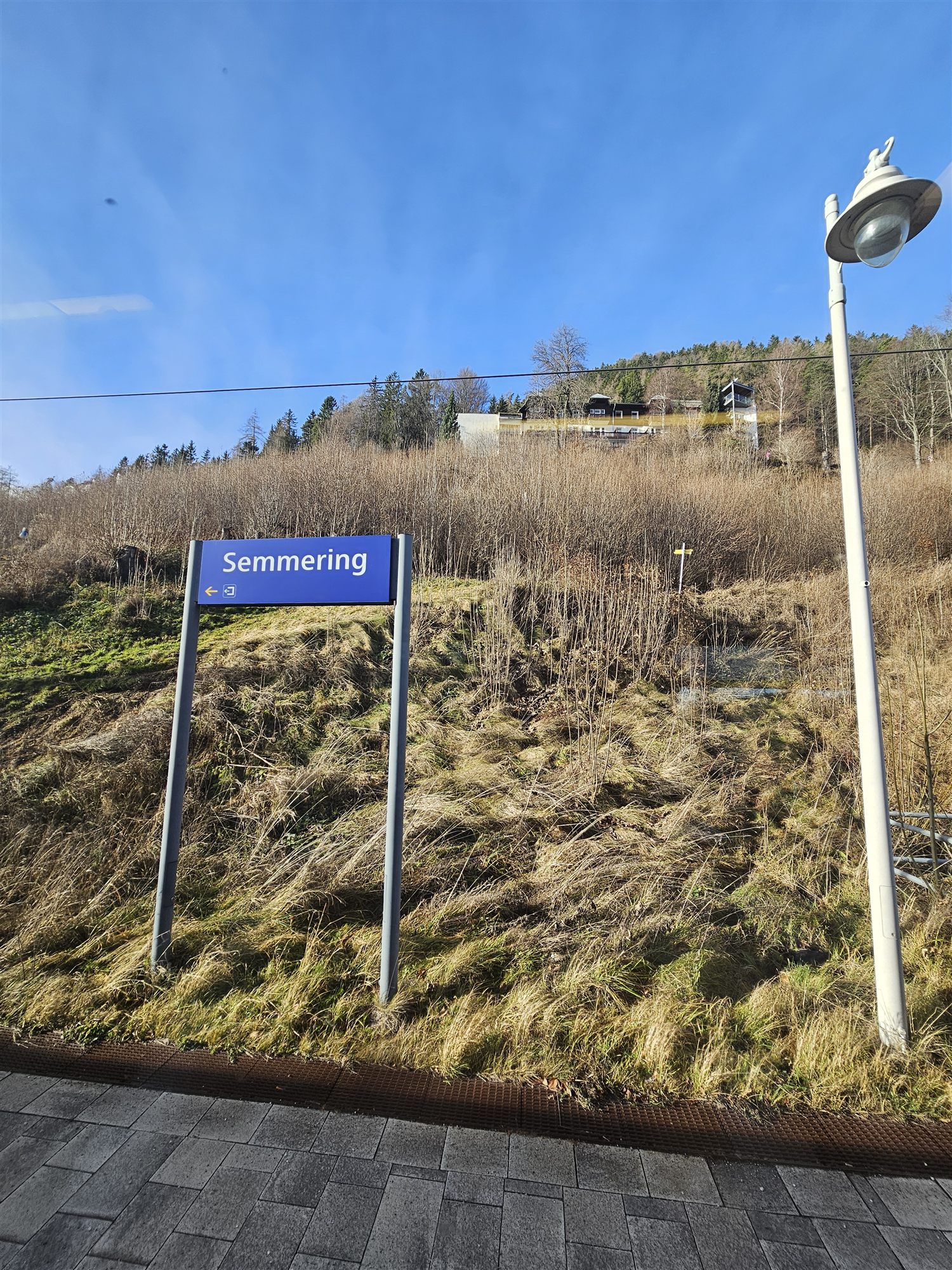 Semmering station, partway up the line.
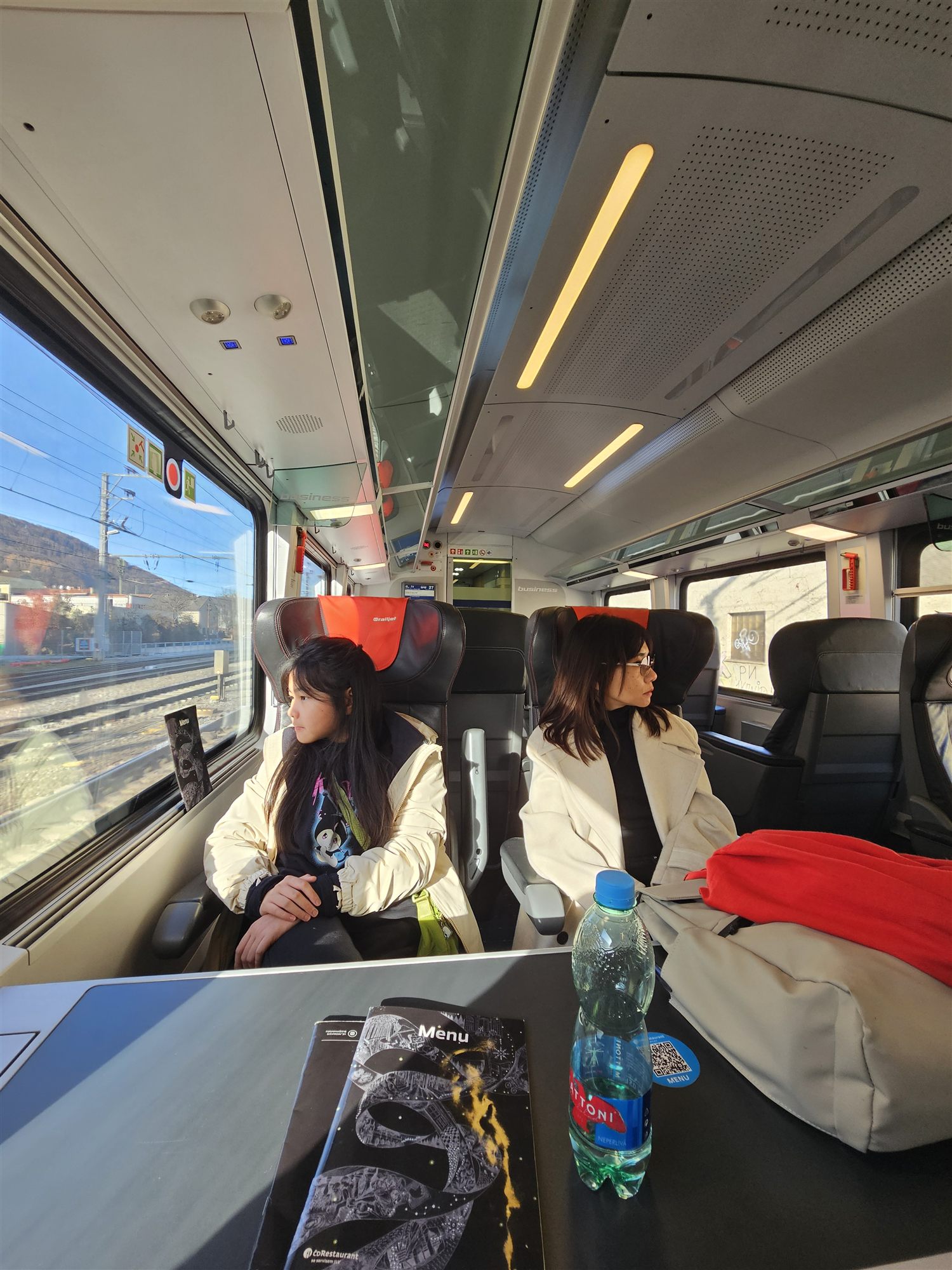 Settled in for the ride, menus out.
Arriving in Graz
By late morning, we arrived in Graz, Austria's second-largest city with a population of around 290,000 — a fraction of Vienna's, and it showed in the pace. We started near Hauptplatz, the main square in front of the Graz Town Hall, before making our way up toward Schlossberg. Locals cycled past unhurried, cafés spilled onto quiet corners, and the old town, a UNESCO World Heritage Site since 1999, was easy to cover without a fixed plan.
Lunch at Murinsel
For lunch, we stopped at Murinsel, a steel-and-glass platform that floats on the Mur River rather than resting on piers, connected to both banks by footbridges. Designed by the American artist Vito Acconci and opened in 2003 as part of Graz's year as European Capital of Culture, it holds a small amphitheatre, a playground, and the café where we ate, with the current visibly moving beneath the floor.
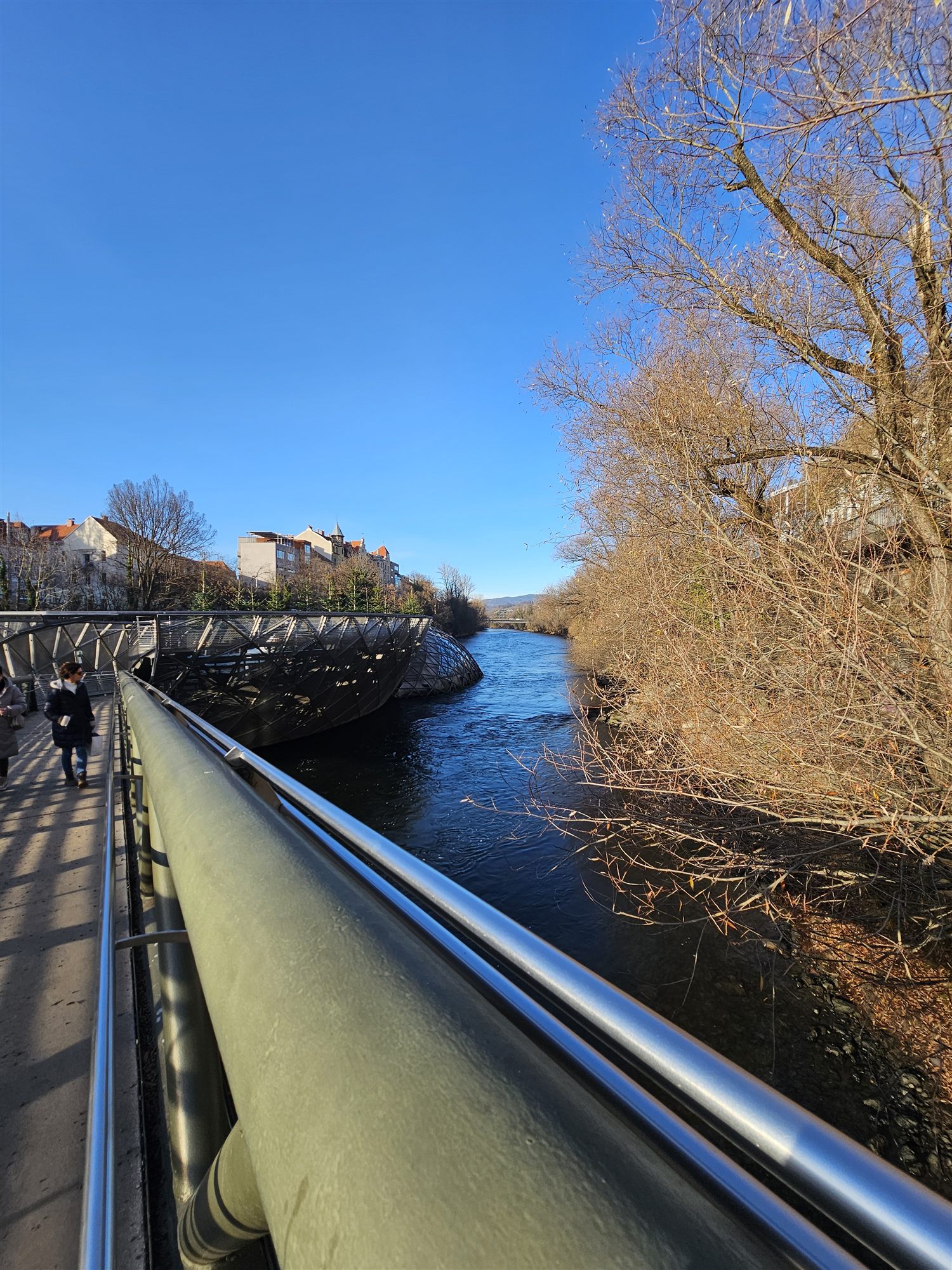 Crossing the footbridge onto the island.
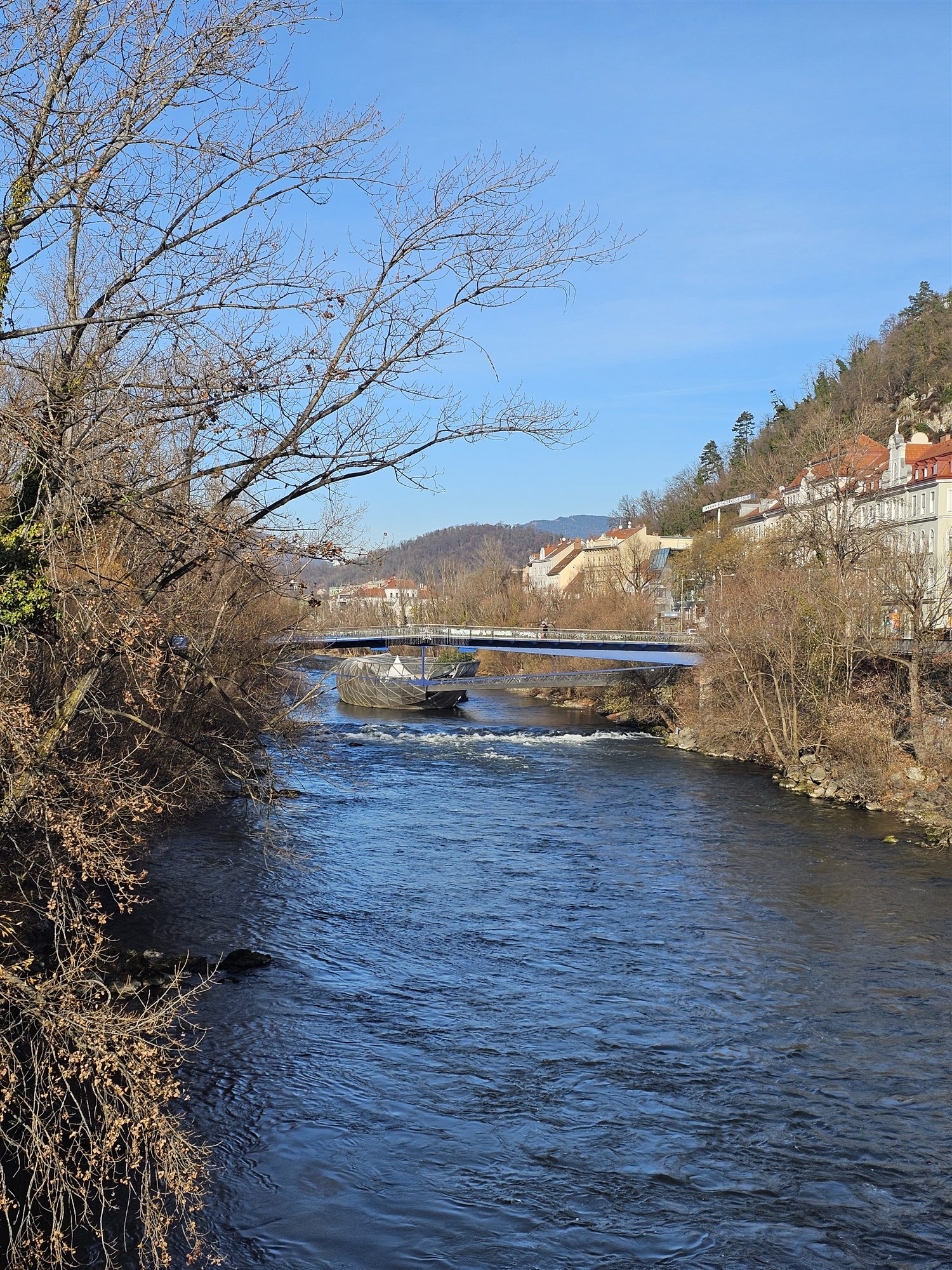 The shell from the riverbank.
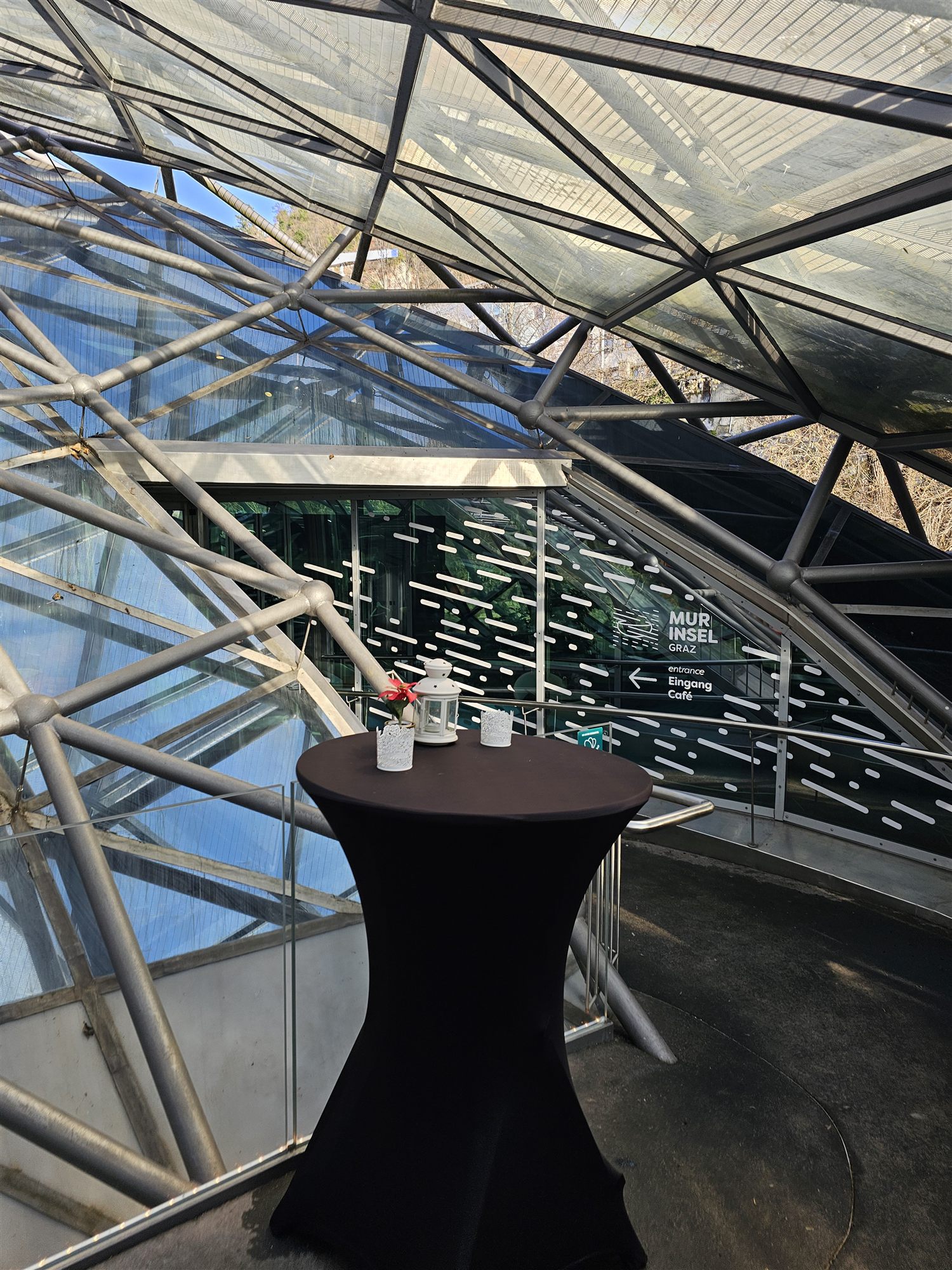 The steel lattice overhead, from inside.
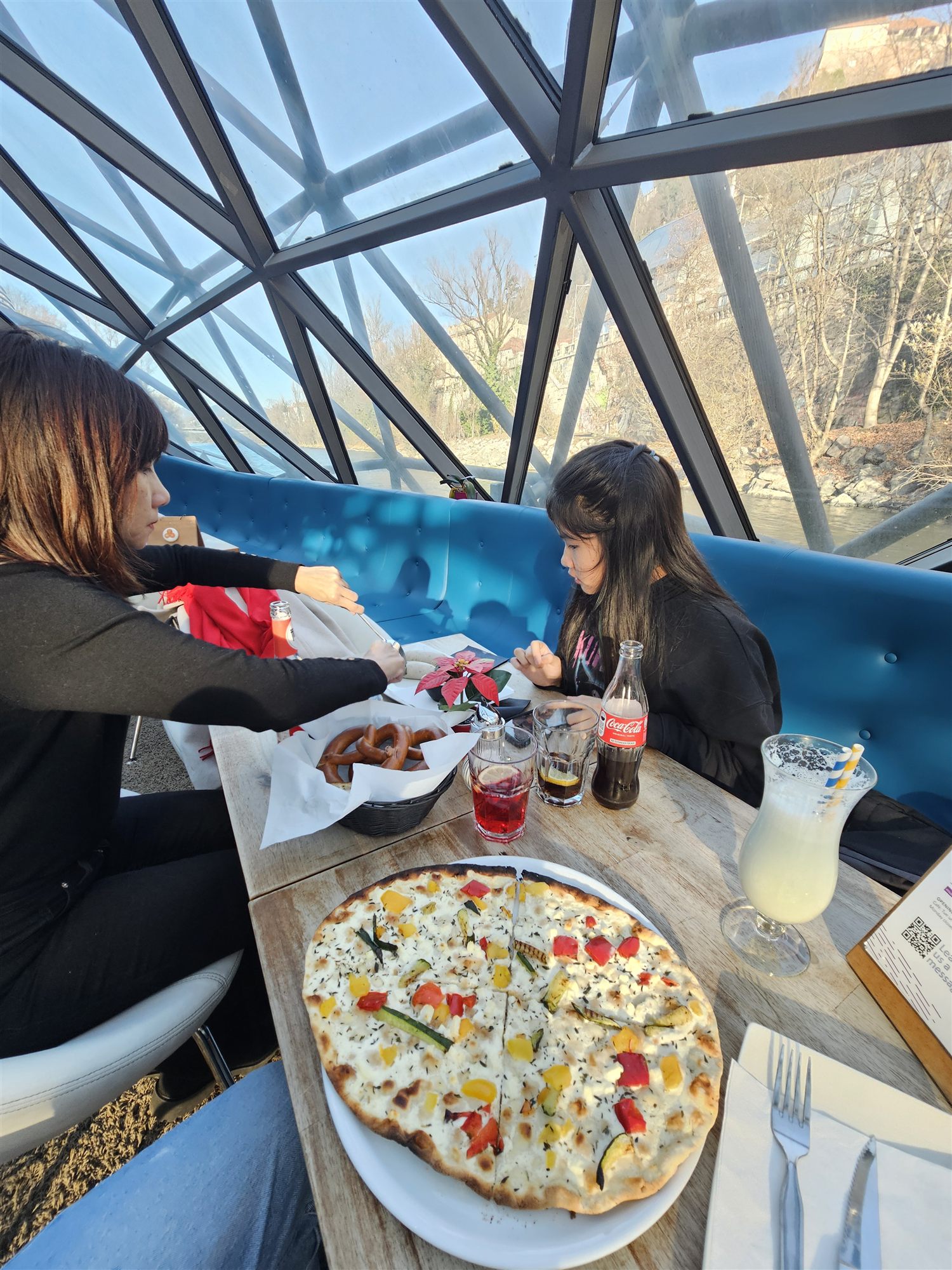 Lunch, with the river moving underfoot.
Walking Through the City
After lunch, we continued exploring on foot, following the river and wandering through the old town. The streets are easy to navigate, and there's a nice mix of historic buildings and everyday life happening around you. Along the way we passed Graz Cathedral and the nearby Mausoleum, with its distinct turquoise roof, before reaching the Renaissance arches of the Landhaus courtyard.
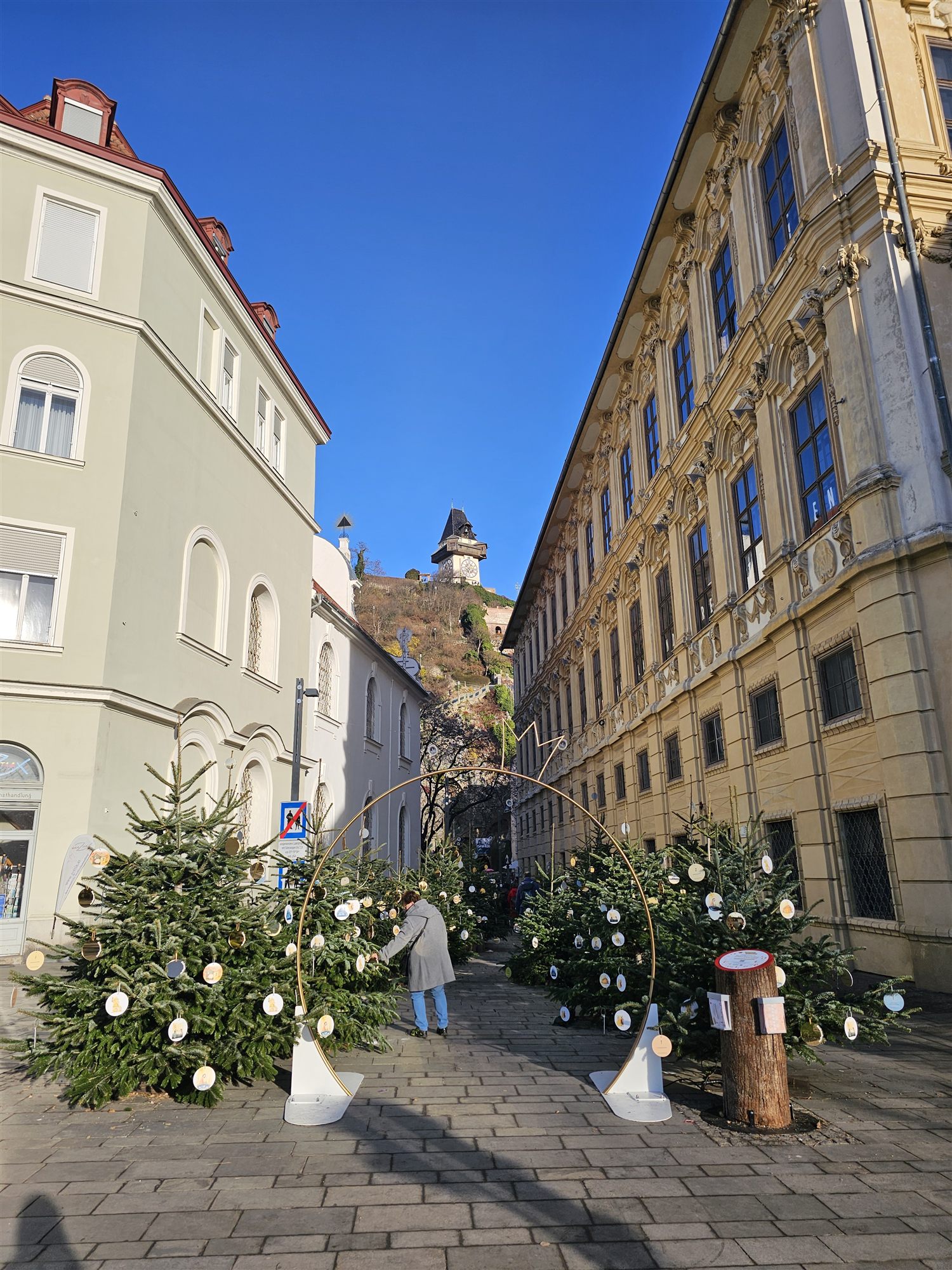 The Uhrturm, framed above a street of Christmas trees.
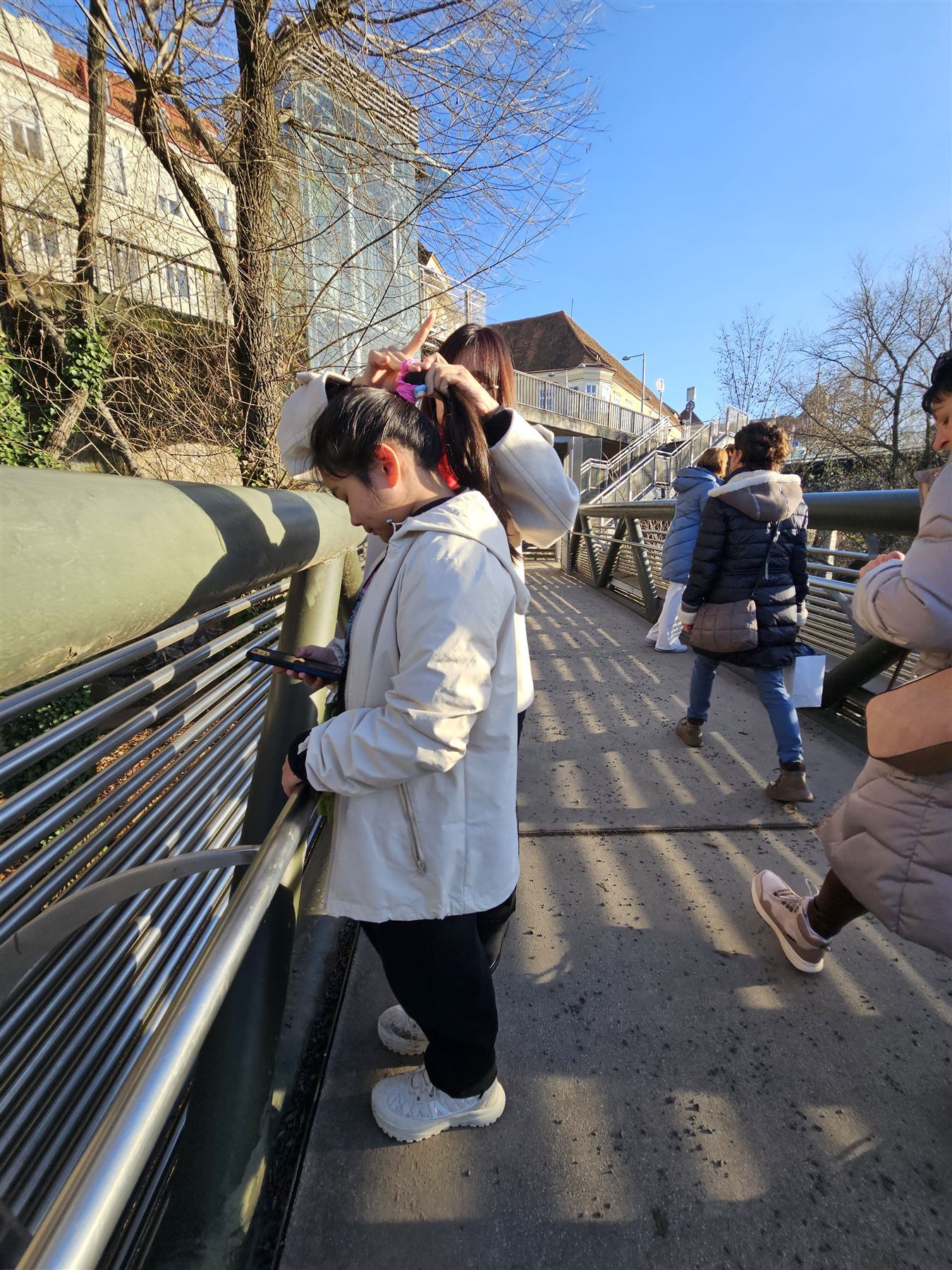 Crossing back over the Mur.
Climbing Up to Uhrturm
Later in the afternoon, we made our way up to Graz's most well-known landmark — the Uhrturm, or clock tower, which has stood on Schlossberg hill since at least the 13th century and survived intact when Napoleon's troops demolished most of the rest of the fortress in 1809, reportedly because the citizens of Graz paid a ransom to save it. The walk up was steady but manageable, and along the way a wooden viewing pavilion gave us an excuse to pause and take in the view before continuing to the top.
 A pause at the viewing pavilion, on the way up.
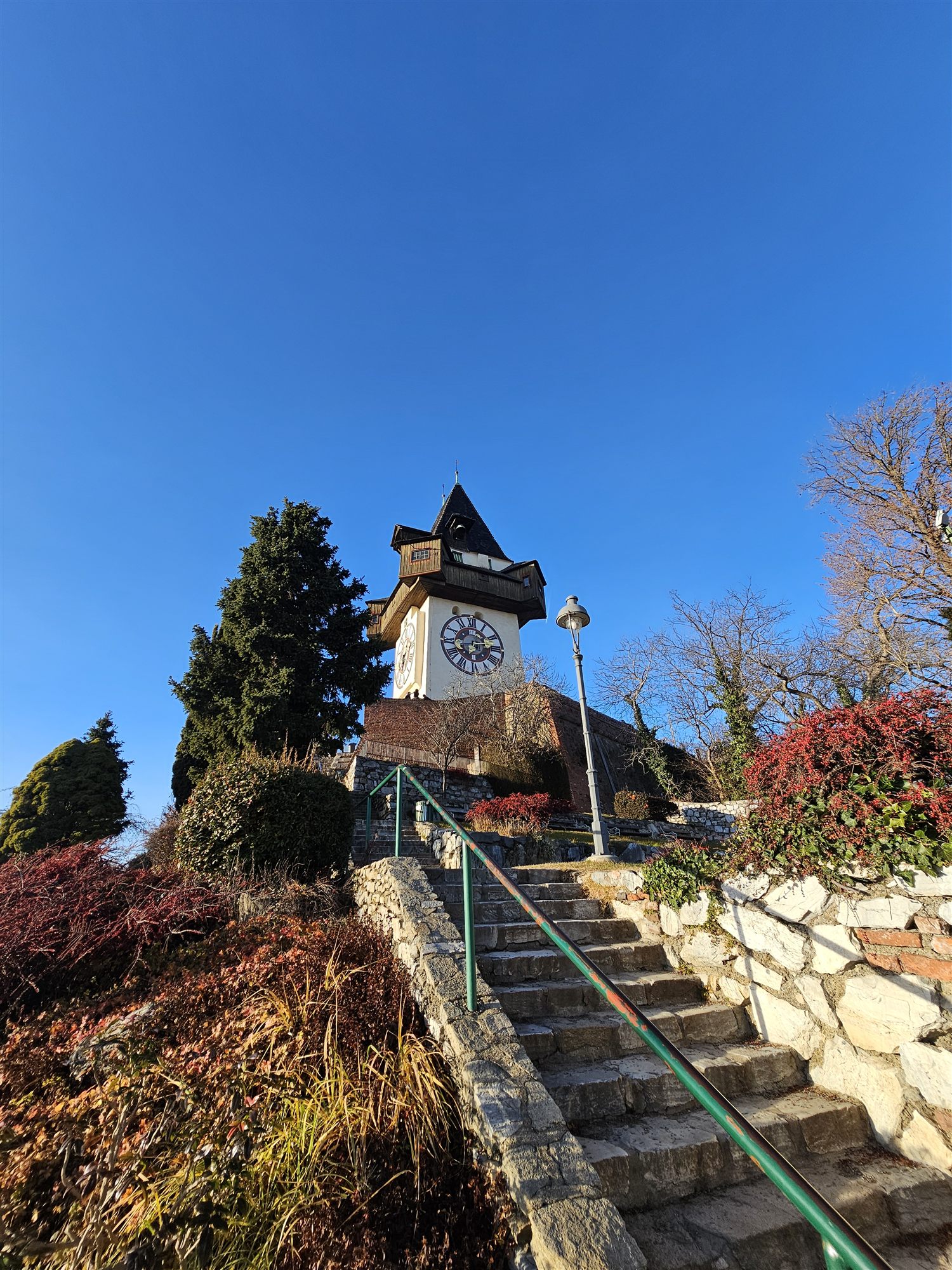 The last stretch of stairs to the tower.
Up close, the tower's oversized clock face has an odd quirk: the larger hand marks the hour and the smaller one marks the minutes, the reverse of a normal clock, a holdover from a time when the hour was all most people down in the city needed to read from a distance.
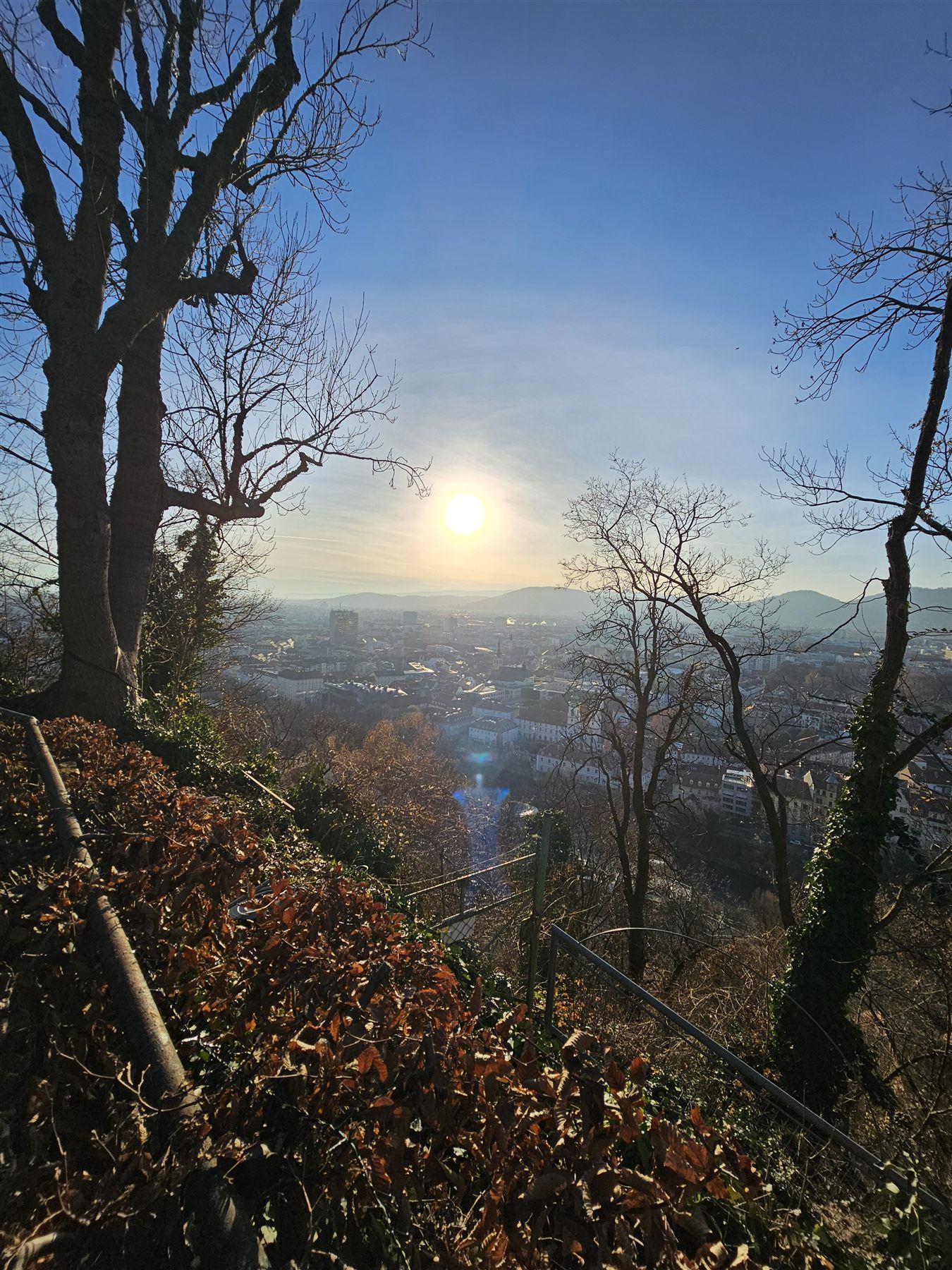 Red rooftops, looking down from Schlossberg.
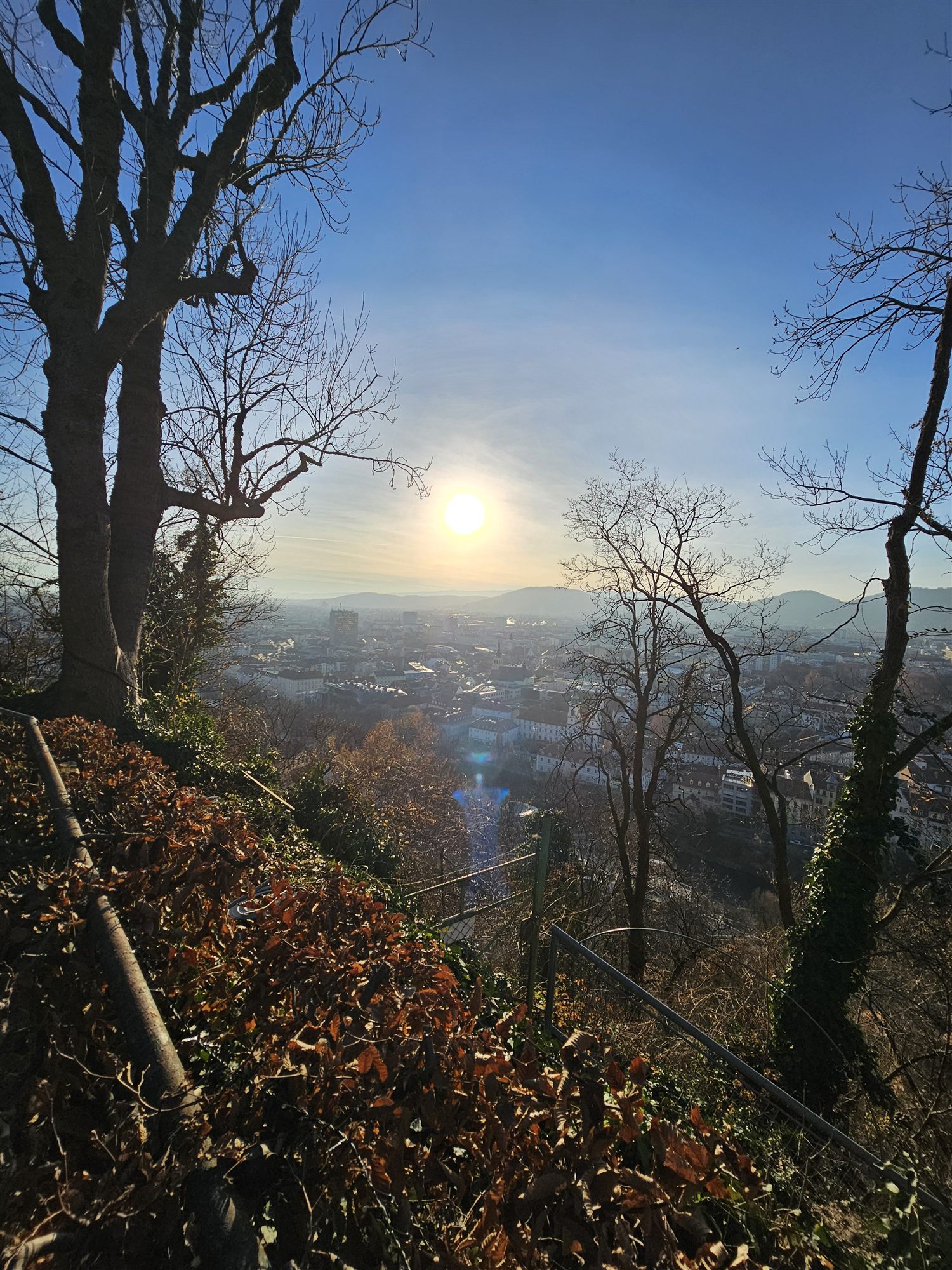 The sun dropping behind the hills as we headed back down.
Take the Semmering Railway during daylight for the best views. Graz itself is very walkable, so there's no need for a tight itinerary — Murinsel is a nice stop for a relaxed lunch, and the walk up to the Uhrturm is manageable if you take your time.
A Simple and Good Day
Before heading back, we swung past the Kunsthaus Graz, the bubble-shaped modern art museum locals nickname the "Friendly Alien," built in 2003 alongside Murinsel for the same Capital of Culture year. Then it was the 16:26 train back to Vienna, the same tunnels and viaducts sliding past in reverse, this time lit by the last of the afternoon sun. We hadn't planned much beyond the train times and the walk up Schlossberg, and that turned out to be enough.