
Quick Facts
- Date
- Wednesday, 10 December 2025
- Region
- Western Slovakia
- Covers
- Smolenice Castle, Devín Castle, Bratislava Castle & Old Town
- From Vienna
- Guided day tour, hotel pickup, booked via Klook
- Cost & duration
- S$281.07 total for the three of us, 10 hours (7am–5pm)
- Good for
- A quieter alternative day trip, away from the bigger crowds
Lost in the Mist: Smolenice Castle
Slovakia rarely makes it onto a Vienna itinerary, which is part of why we booked it. On 10 December, we took a guided day tour through Klook, S$281.07 in total for the three of us, with hotel pickup between 7 and 7:30am and a return by around 5pm.
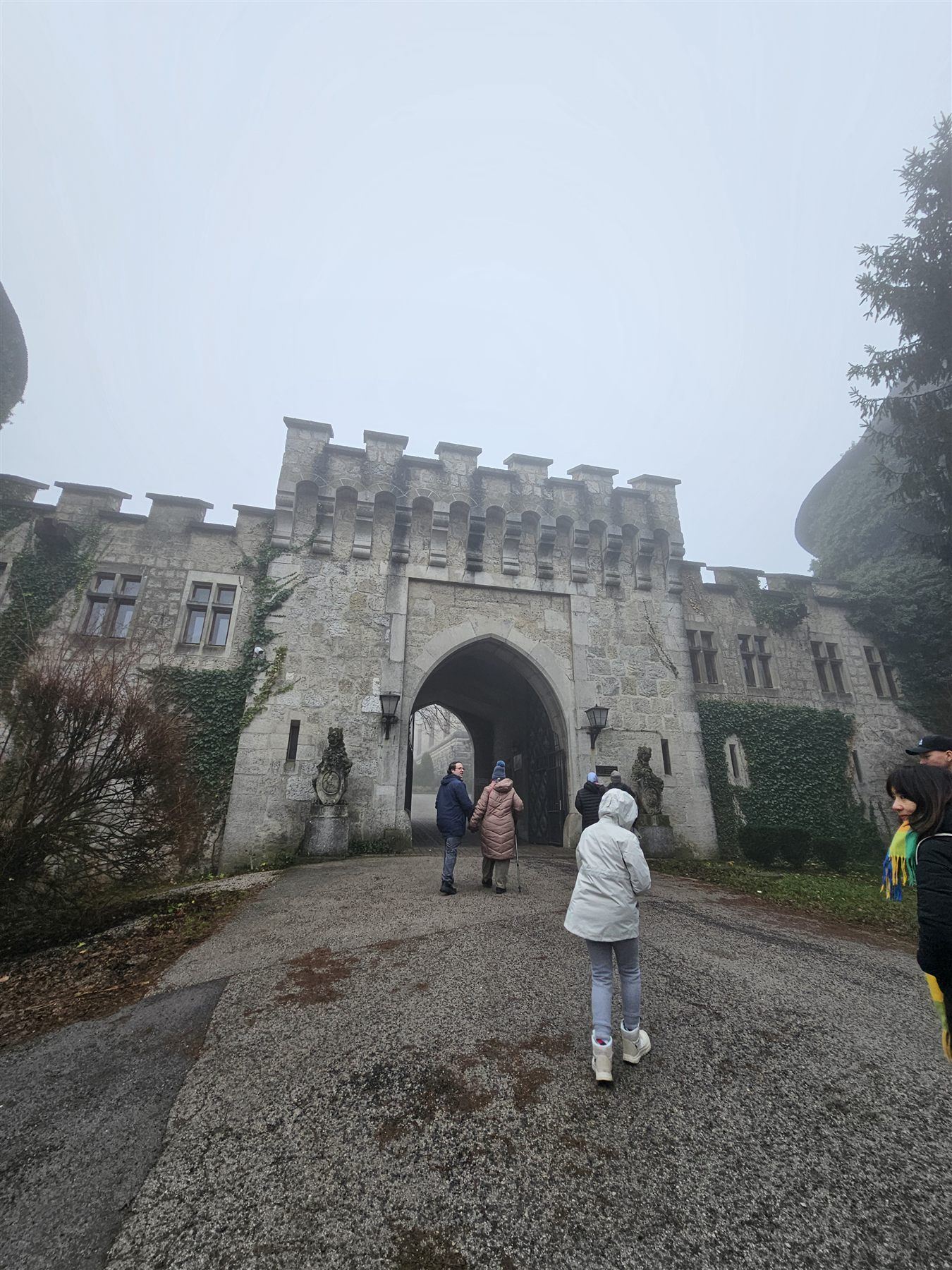
Our day began at Smolenice Castle, about an hour outside Bratislava. The current Neo-Gothic building dates to a rebuild between 1887 and the 1950s, though a castle has stood on the site since the 14th century; it's now owned by the Slovak Academy of Sciences and used mainly as a conference venue rather than a museum, which explains the near-total absence of other visitors. The castle emerged slowly out of the morning fog as we approached — cold air, soft light, and almost nobody else around.
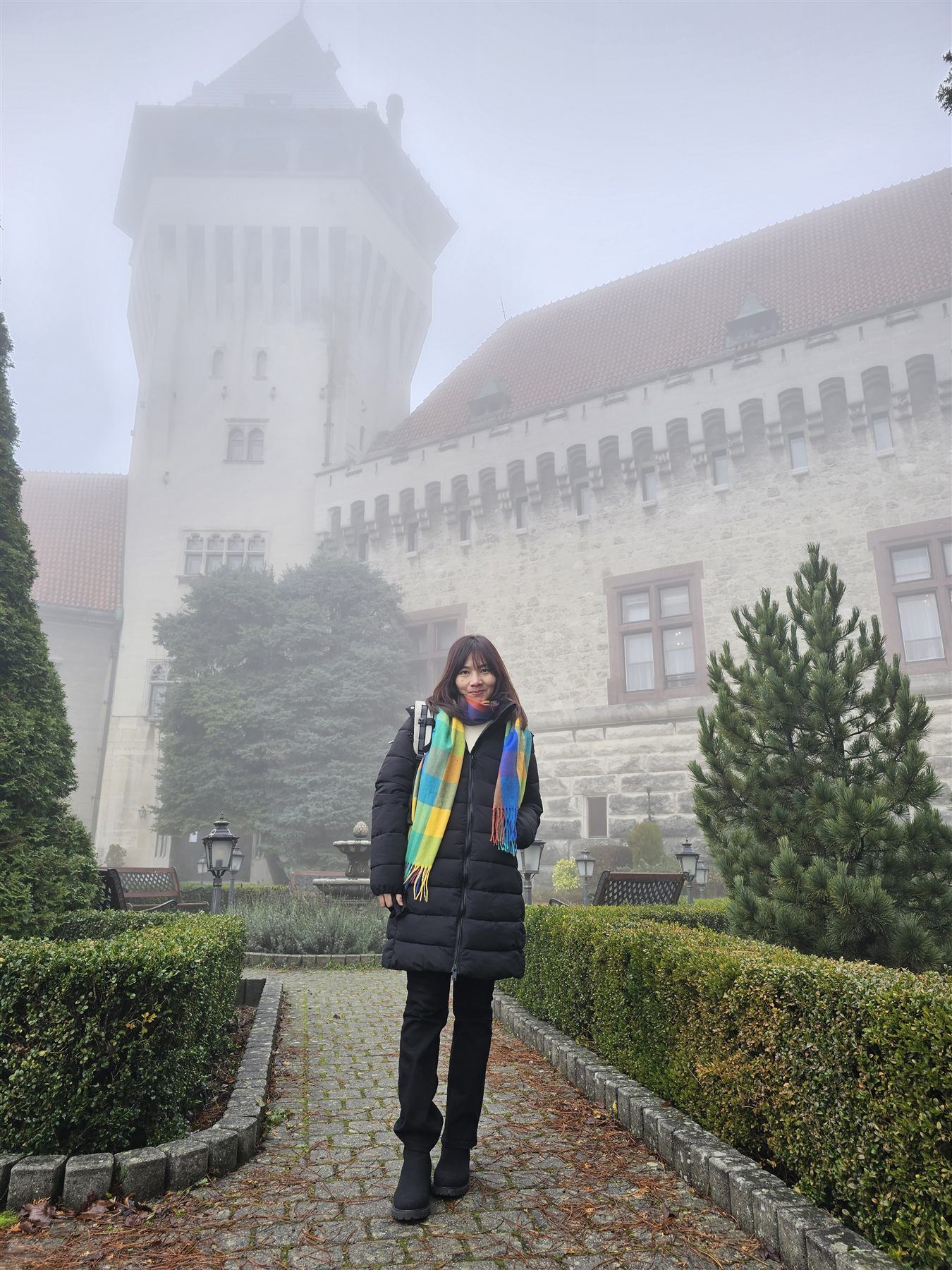 Smolenice Castle, slowly appearing through the fog.
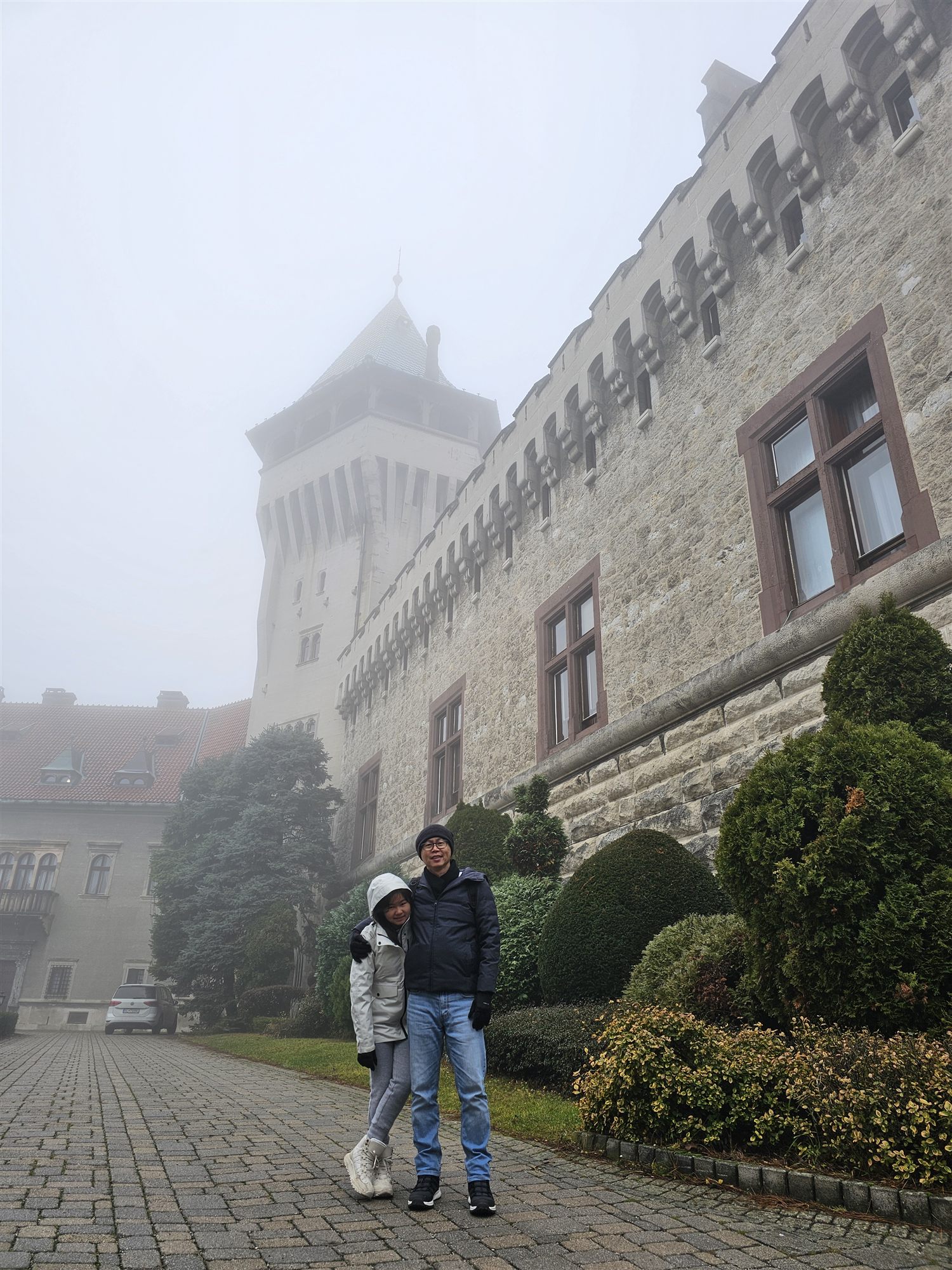 The castle's tower, still half-lost in the fog.
Inside, a guided walk through the castle's halls turned out to be one of the quiet highlights of the morning — portraits looking down from the walls, an ornate gilded bed, and a green tiled stove tucked in the corner of one of the rooms. One hall in particular stood out: a Baroque grotto-style room with rocaille "stalactite" walls and a painted ceiling, now used for conferences and events rather than left as a museum piece.
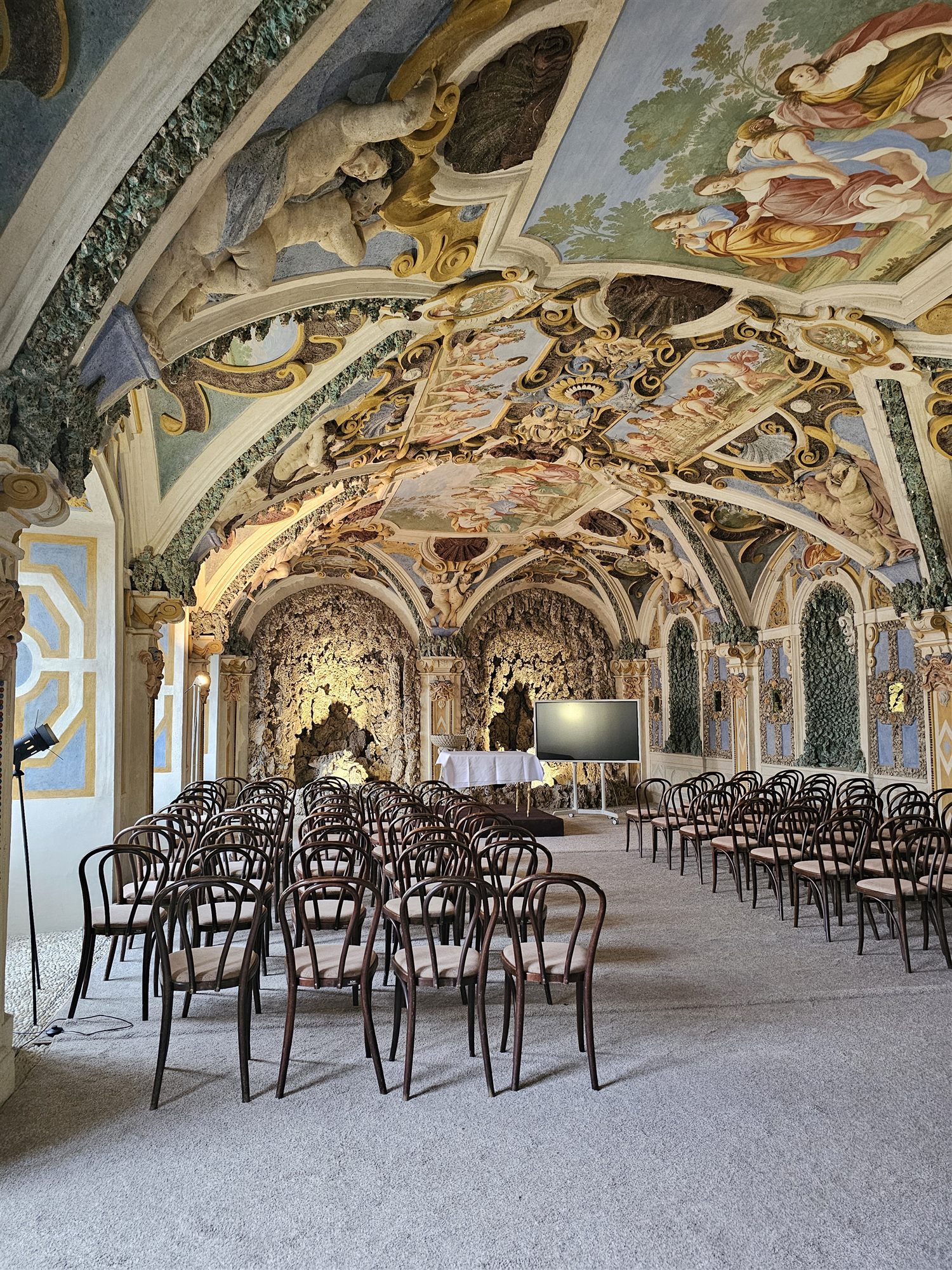 The castle's Baroque grotto hall, still used for events today.
 One of the castle's stone staircases, lined with old prints.
Warmth on a Cold Day
Our guide, Martin, set an easy pace all day, pointing out details we'd have walked straight past on our own — the grotto hall's painted ceiling, the story behind Devín's ruined walls, later the Čumil statue wedged into a Bratislava manhole. It felt less like a scheduled tour and more like being shown around by someone who actually lived there.
We stopped for lunch at Reštaurácia Devín, right below the castle walls — a chalkboard menu of mulled wine, homemade pastries, and the restaurant's own currant wine, exactly what the cold, foggy morning called for.
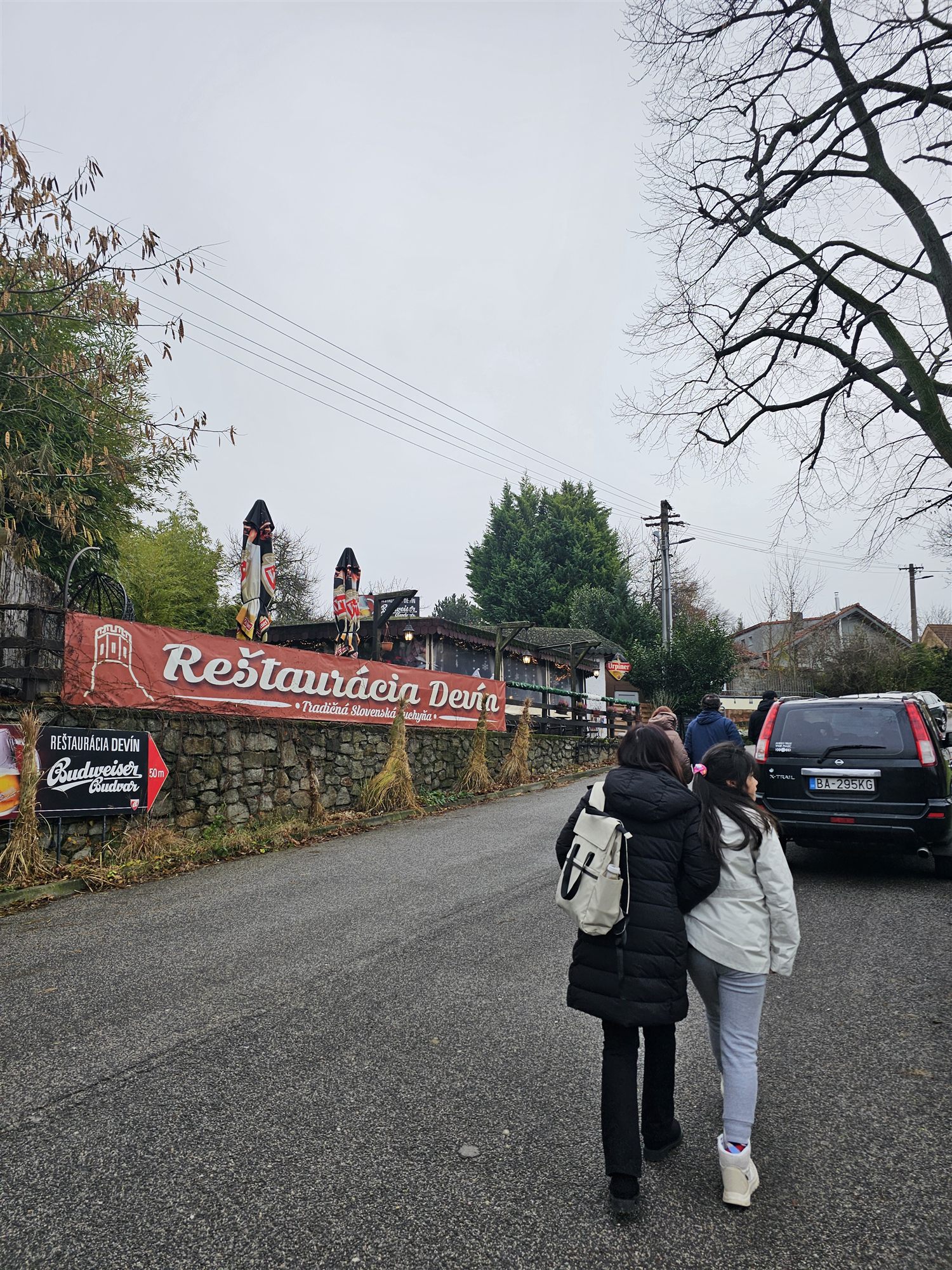 Walking up to Reštaurácia Devín.
 Mulled wine, homemade pastries, and Devín's own currant wine.
Where Rivers Meet History: Devín Castle
After lunch, we walked toward Devín Castle, its ruins visible from the village long before we reached them — perched on a rocky outcrop where the Danube and Morava rivers meet. The site was first fortified by the Great Moravian state in the 9th century, and the fortress that stood here later was blown up by Napoleon's troops in 1809, leaving the ruins we walked through. Down by the riverbank stands the Brána slobody (Gate of Freedom), a bullet-scarred concrete memorial to the people killed trying to cross the border here during the Communist era, when this stretch of the Morava marked the Iron Curtain itself — a fence and minefield ran along the bank until 1989.
 The Gate of Freedom memorial, marking the old Iron Curtain border.
 A lone fisherman on the same riverbank today.
Up close, the ruined walls climb straight out of the rock face, still tracing the outline of a fortress that once controlled everything moving along both rivers.
 The castle comes into view above the village as you walk in.
 Stone walls climbing straight out of the rock.
Today it's simply quiet — open sky, slow-moving water, and none of the crowds we'd gotten used to in Vienna.

Bratislava Revealed: Castle Views & City Layers
From Devín, we continued to Bratislava Castle, overlooking the city. We wandered through the grounds as dusk settled in, and the low winter fog rolled through the courtyard, catching the floodlights in long glowing beams above the castle's white walls.
 Fog rolling through the castle courtyard, lit by the floodlights above.
 The path back toward the castle, lined with benches and Christmas trees.
Nearby, a path through the castle gardens was strung with fairy-lit trees, the gatehouse glowing under a streetlamp as blue hour settled in, before we headed down into the Old Town.
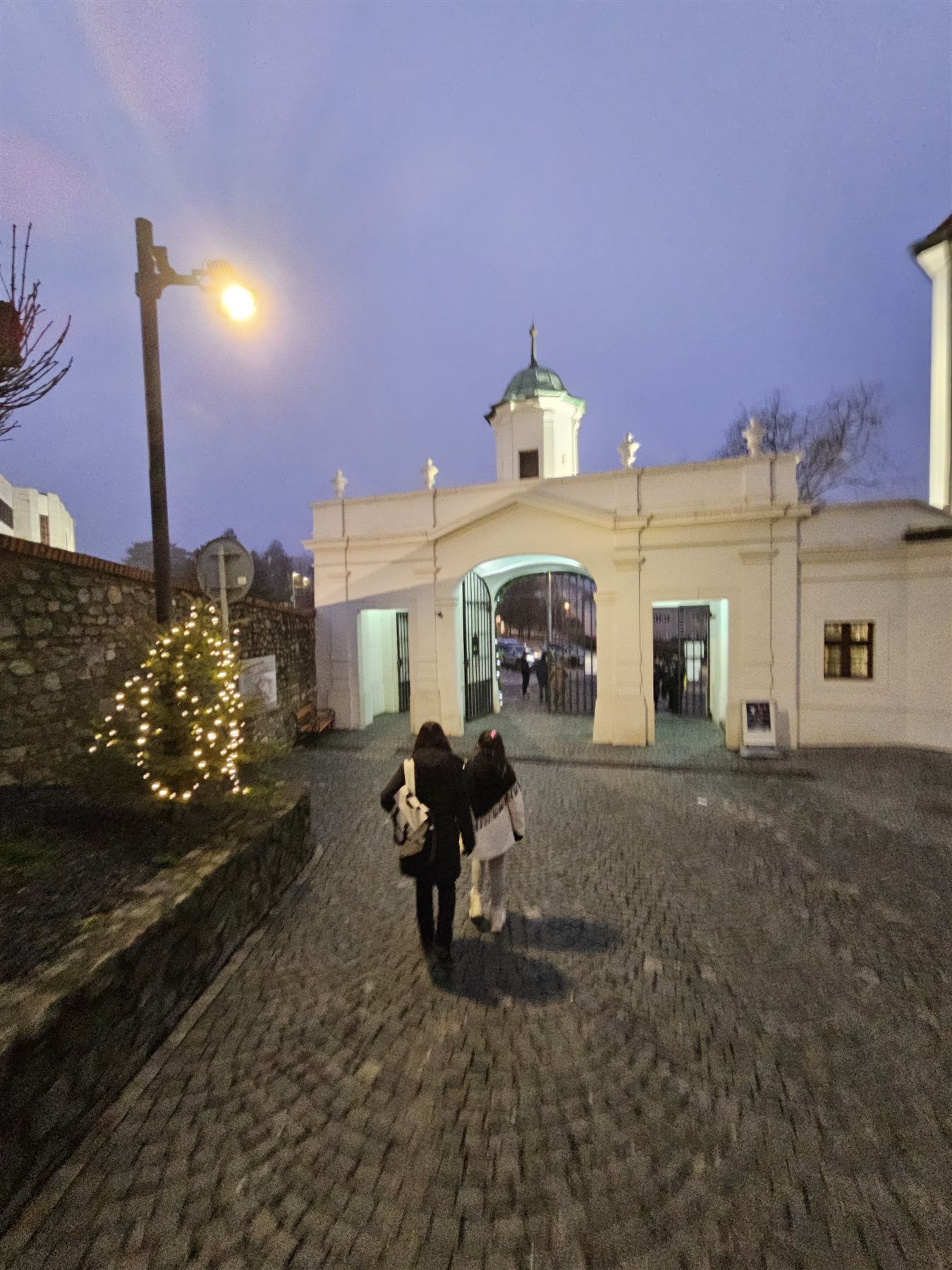 The castle gatehouse, glowing at blue hour.
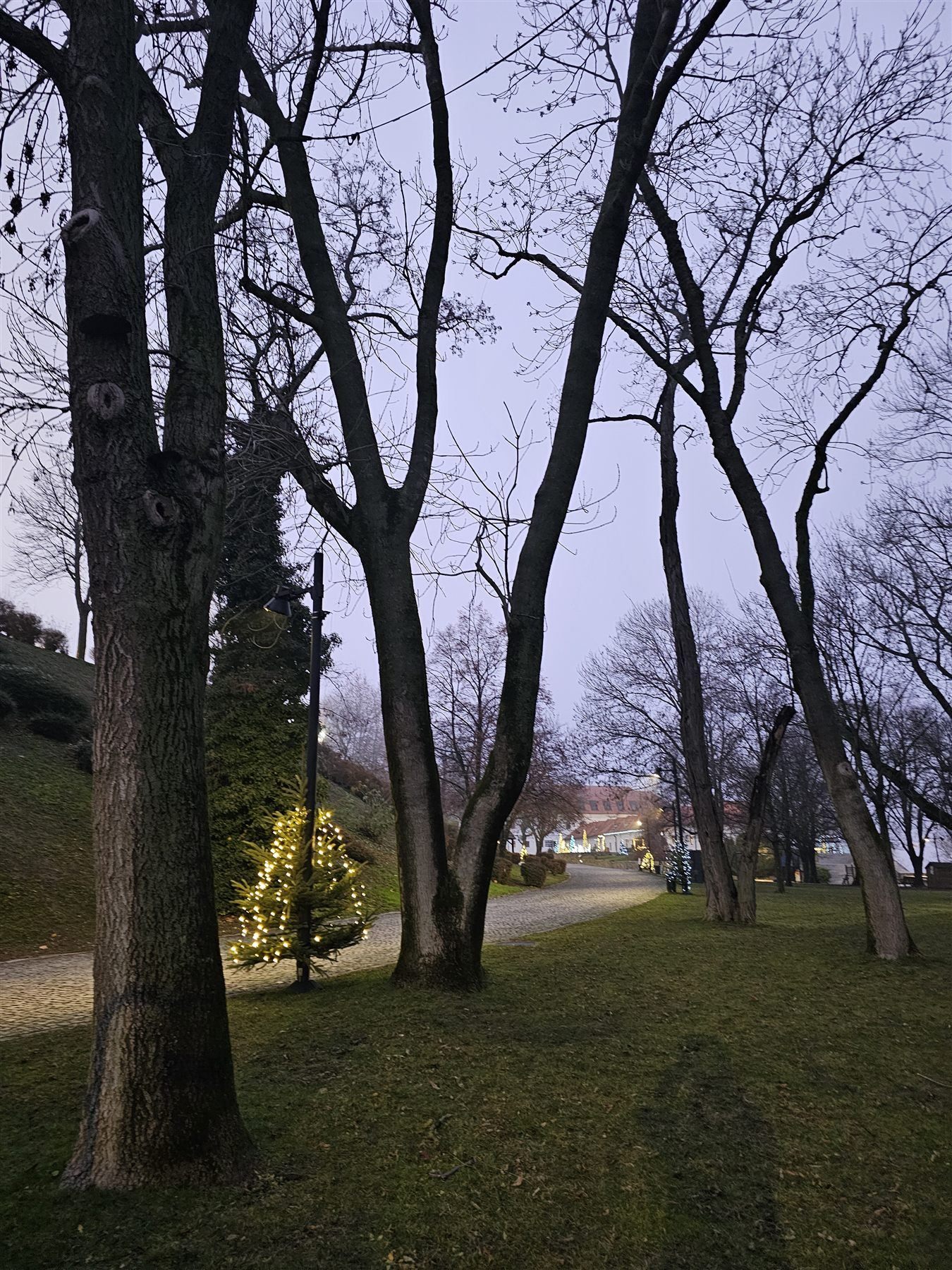 A quiet path through the castle gardens at twilight.
A guided day trip is worth it here — having a local guide like Martin turned a simple sightseeing route into a personal, unhurried day. It also makes the border crossing and transport between the three stops far easier with kids in tow.
Nightfall in Bratislava Old Town
Our final stop was Bratislava Old Town. The streets glowed under warm lights, and the Christmas market stalls were still doing steady business at that hour — mulled wine, roasted chestnuts, music drifting between the buildings. Martin walked us past the Slovak National Theatre and a few corners we'd have missed on our own before we reached Čumil.
Čumil ("the watcher") is a bronze statue of a workman peeking out of a manhole, installed in 1997 as one of several whimsical street sculptures scattered through the Old Town — small, easy to miss, and exactly the kind of detail a guide is useful for. Nearby, a bronze compass set into the pavement marks distances from Bratislava to cities around the world, from Vienna to Tokyo.
 Čumil, "the watcher," installed in 1997.
 A compass marking distances to cities around the world.
 The Old Town square, glowing under Christmas lights.
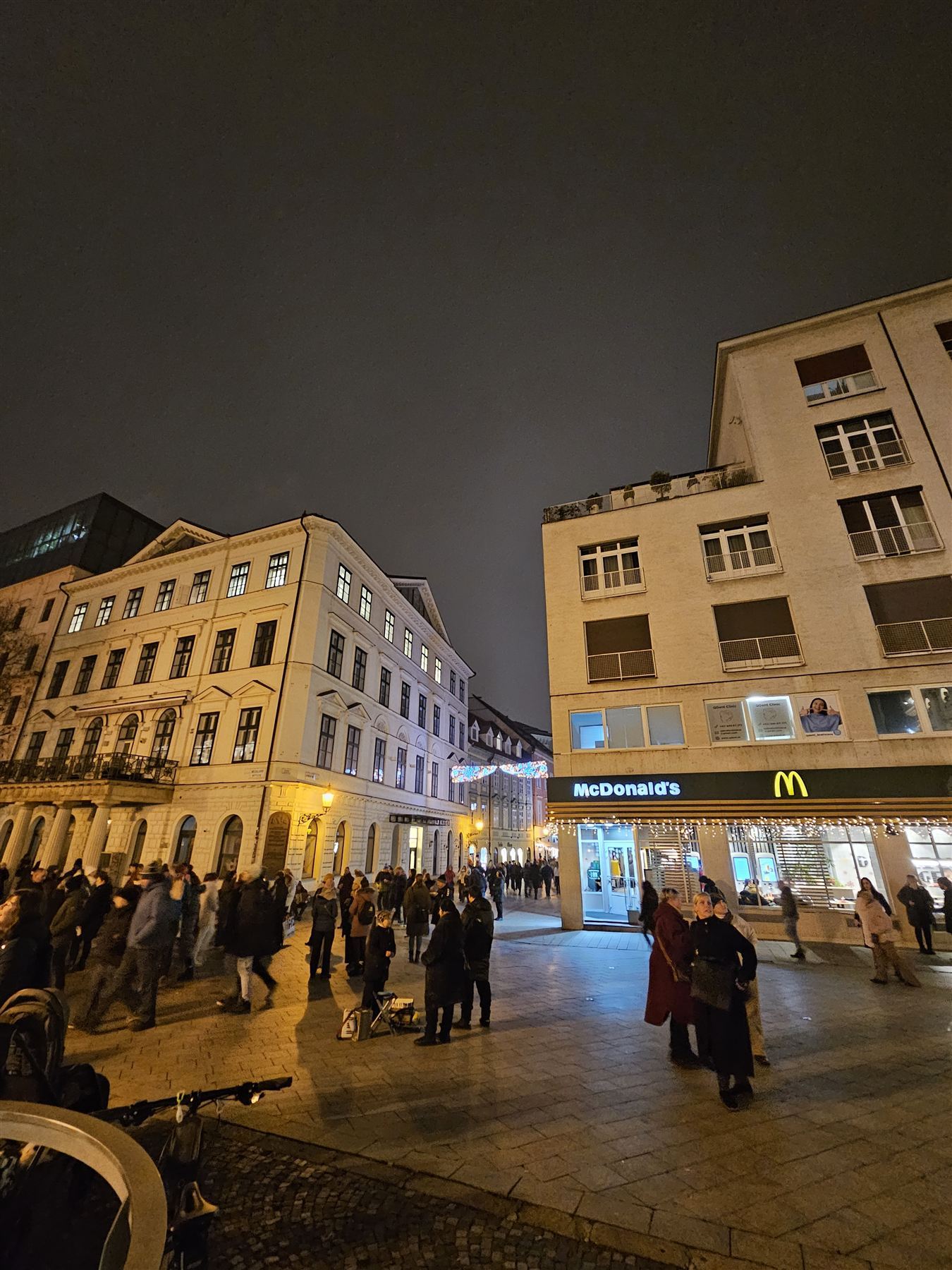 The Old Town square, still busy well after dark.
More Than a Day Trip
We were back at our hotel in Vienna by five, tired and a little cold, with photos of a fog-covered castle, a Cold War memorial, a plate of Slovak pastries, and a bronze man peeking out of a Bratislava manhole. Not the itinerary most people build a Vienna trip around — but worth the extra border crossing.