
Quick Facts
- Date
- Wednesday, 20 December 2023 — Day 10 of 14, one day after arriving by train from Florence
- Tour
- Guided walking tour, roughly 3 hours, followed by a Grand Canal gondola ride
- Region
- Venice, Veneto, Italy
- Covers
- St Mark's Square, St Mark's Basilica, Doge's Palace, a Grand Canal gondola ride
- Good for
- A full day of walking, with a sit-down gondola break built in
Into St Mark's Square
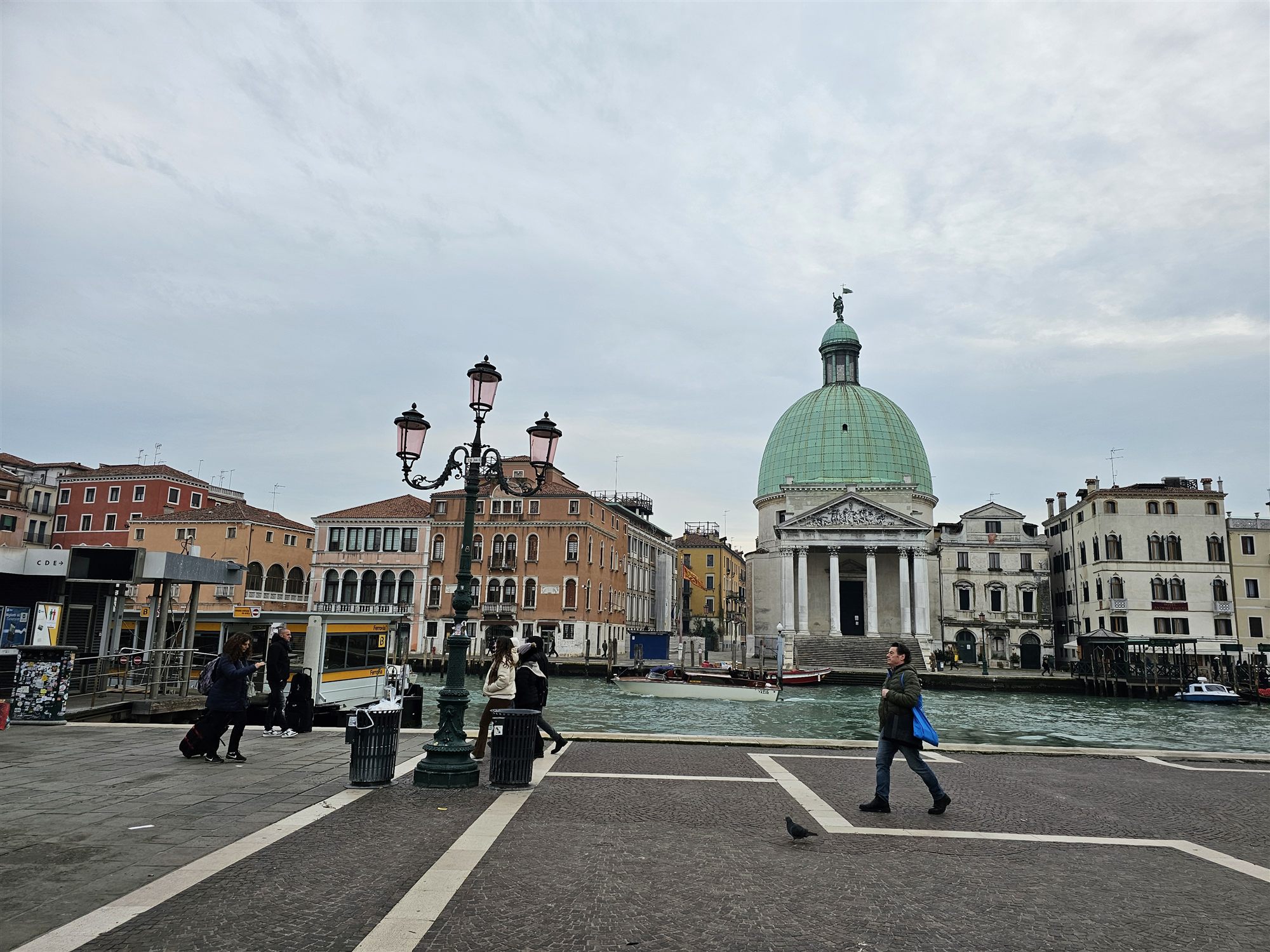
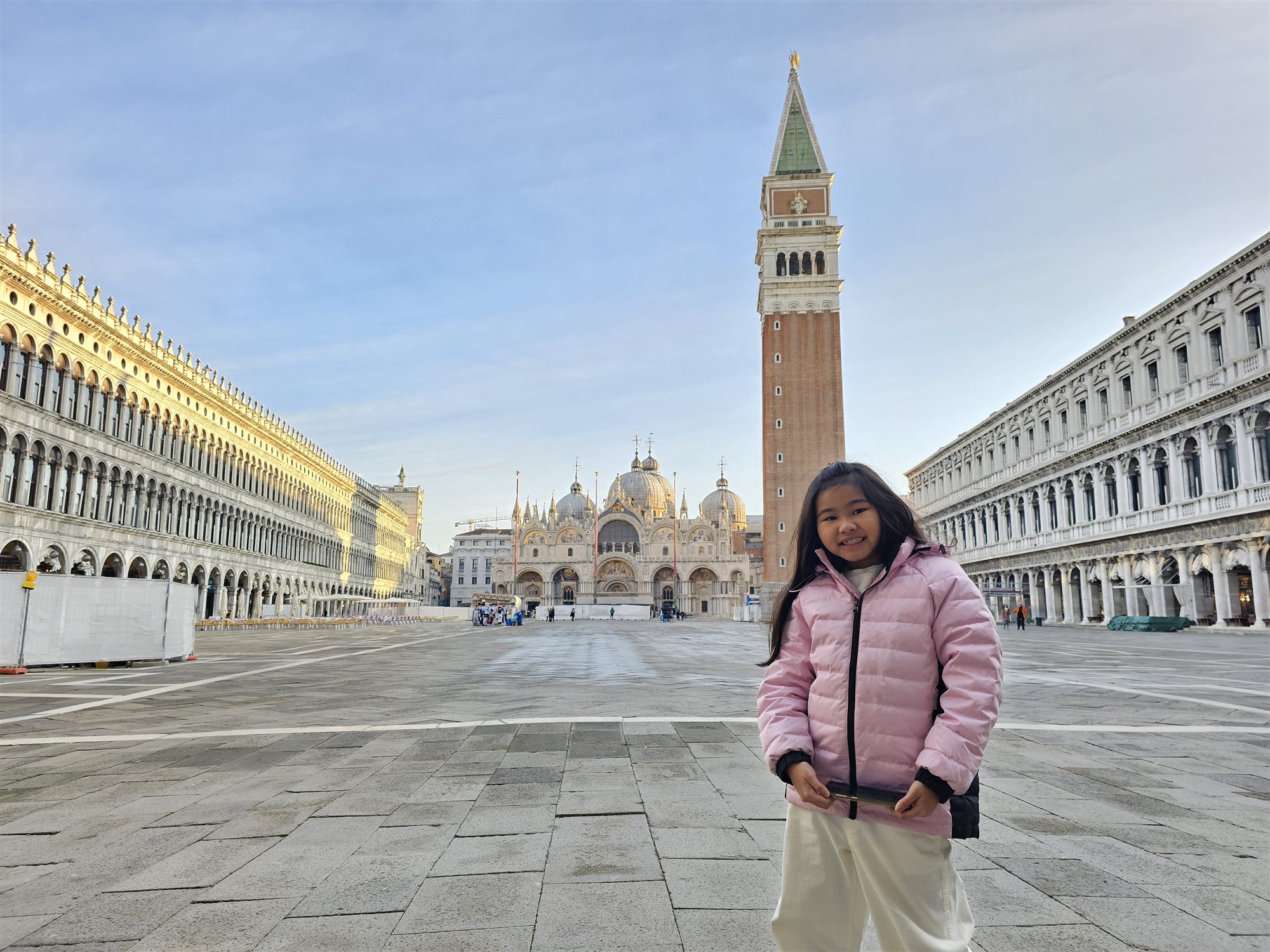
We arrived in Venice by train from Florence the day before, and on Day 10 joined a guided walking tour through the city's alleys and canal bridges toward St Mark's Square. Venice is built across 118 small islands linked by roughly 400 bridges, with no roads for cars anywhere in the historic centre — everything moves on foot or by boat, which is part of why the city still looks and functions the way it did centuries ago.
St Mark's Basilica dominates the square, its construction begun in 1063 in the Byzantine style, and its facade covered in close to 8,000 square metres of gold mosaic. Above the main entrance stand four bronze horses — the Horses of Saint Mark — which are actually looted Byzantine treasure, taken from Constantinople during the Fourth Crusade in 1204. The originals now sit inside the basilica's museum for preservation; what's outside today is a replica. Next to it, the Doge's Palace served as the seat of Venice's elected head of state, the Doge, for over 700 years, and is connected to the old prisons by the enclosed Bridge of Sighs.
The Marco Polo Noodle Myth
Our guide walked us past the site of Marco Polo's house and told the well-known story that Polo brought noodles back to Italy from China in the 13th century, supposedly inventing pasta as a result. It's a fun story to tell an 8-year-old, but historians generally agree it isn't true: flour-and-water noodles already existed in Italy before Polo returned to Venice in 1295.
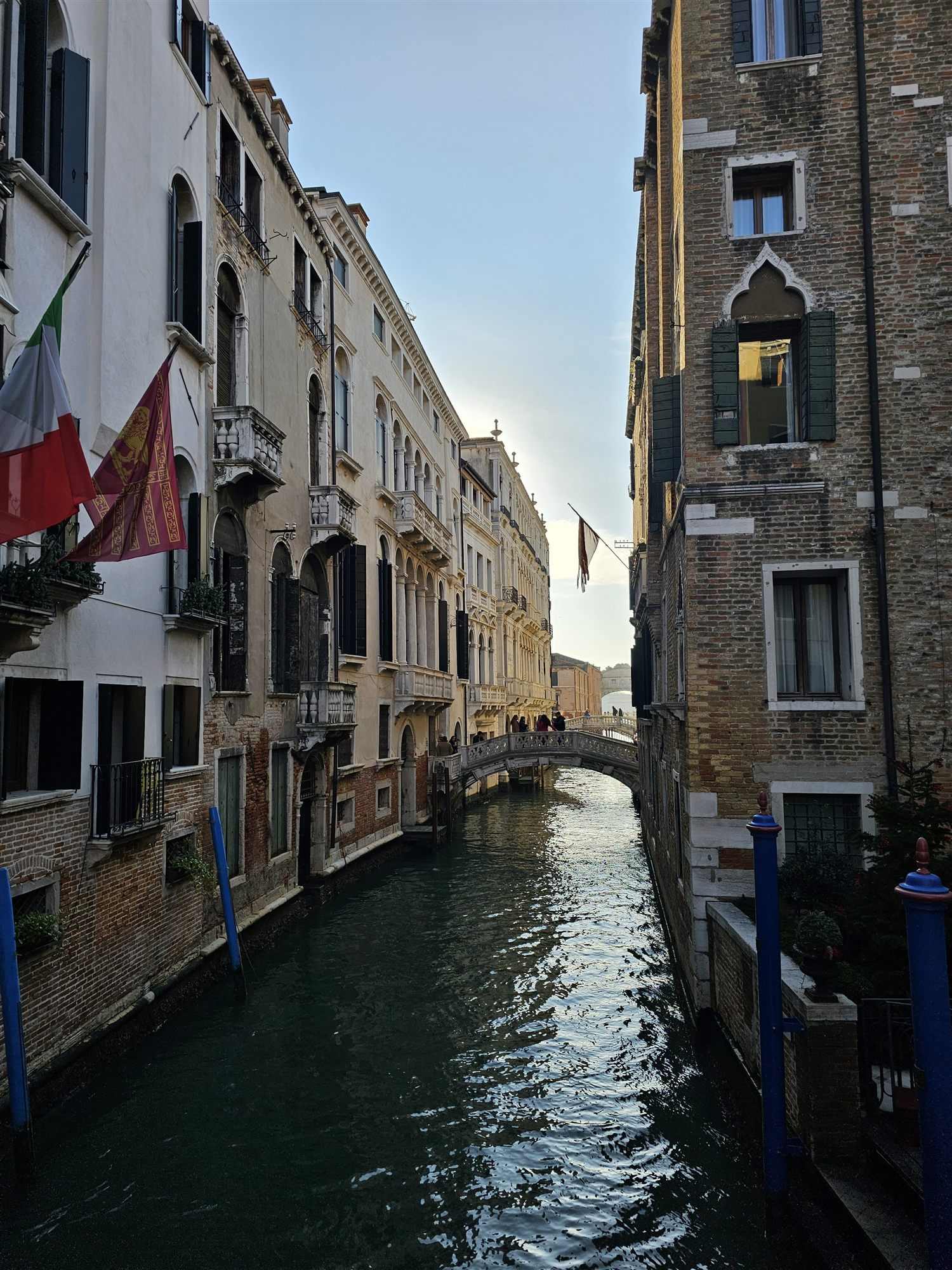 A narrow canal, with the Bridge of Sighs in the distance.
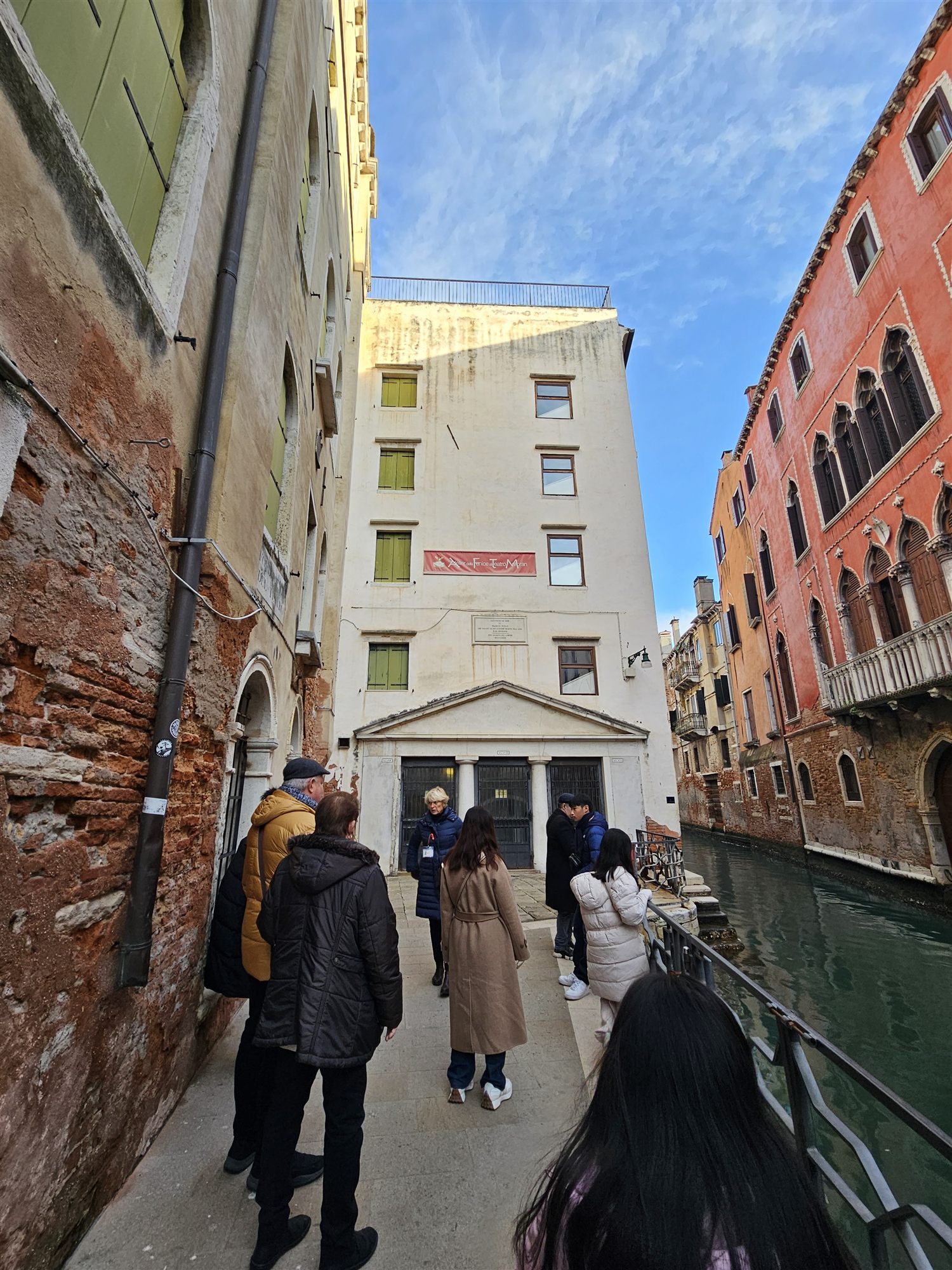 The site of Marco Polo's house, where our guide told the noodle story.
Local legends like the Marco Polo noodle story stick with kids far more than dates and architecture facts do — ask your guide for a couple, and don't worry if they turn out to be more folklore than fact. That's usually part of the appeal.
A Gondola Ride Down the Grand Canal
Later we took a gondola along the Grand Canal, Venice's main waterway, roughly 3.8 kilometres long and lined with over 170 historic palazzos. Venetian gondolas have been built black by law since a 16th-century sumptuary law aimed at curbing extravagant displays of wealth among the city's nobility, and the hull itself is deliberately asymmetrical — one side is wider than the other — so a single gondolier, rowing from one side only, can keep the boat travelling in a straight line. Each one is still hand-built by a small number of specialist boatyards called squeri, using techniques that haven't changed much in generations.

Before the gondola, we'd crossed the Grand Canal itself a few times on foot, the water busy with taxis and delivery boats even in December, grand palazzos lining both banks the whole way down toward the lagoon.

A Slow Afternoon
After the gondola ride, we had lunch — simple pasta, which felt appropriately on-theme after the noodle story — and spent the afternoon without a fixed plan, drifting between quiet side canals and small artisan shops away from the main square. We stopped for gelato by the water and let the rest of the afternoon move at whatever pace it wanted to.
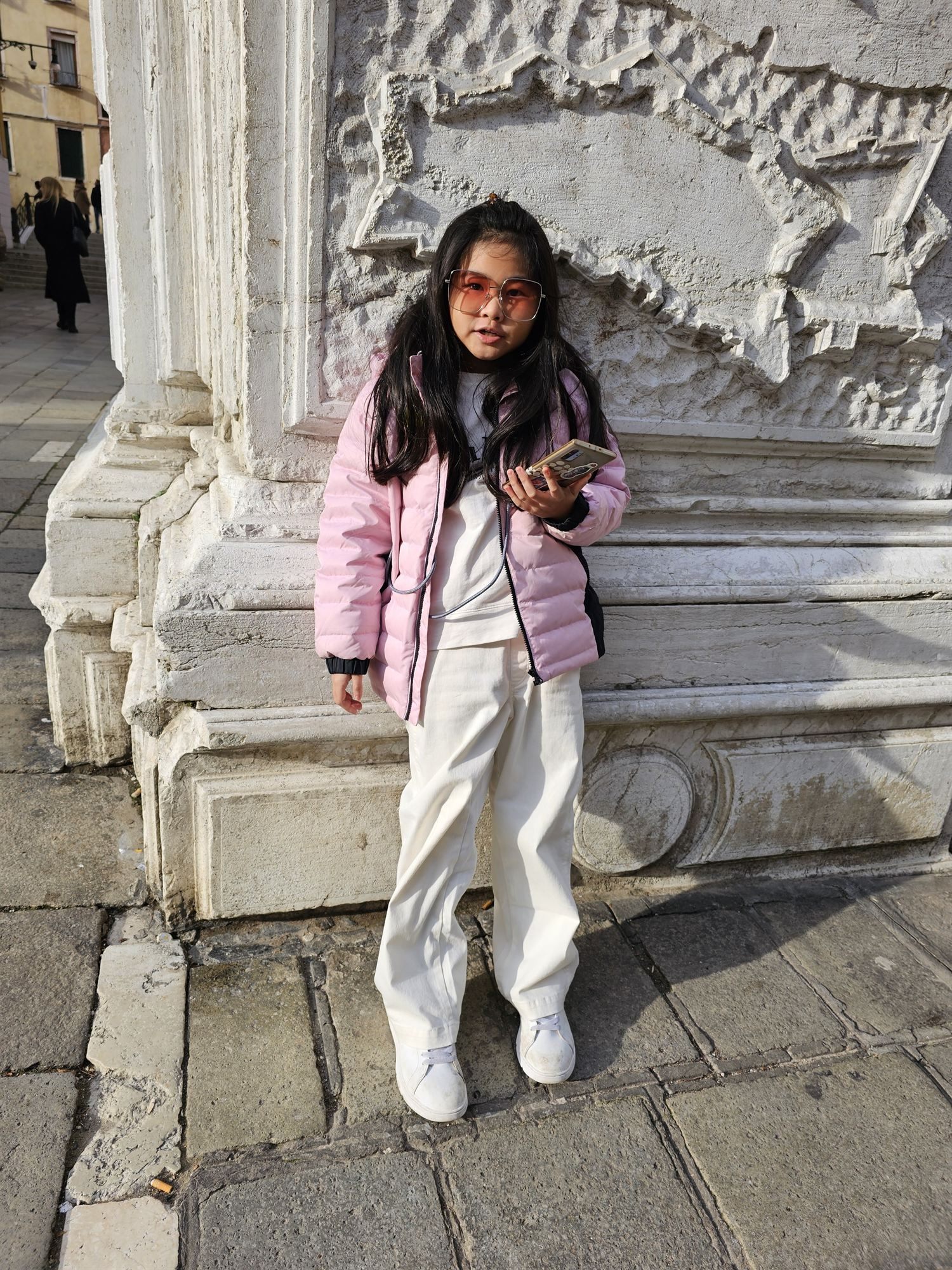 A carved stone base in Venice's old town.
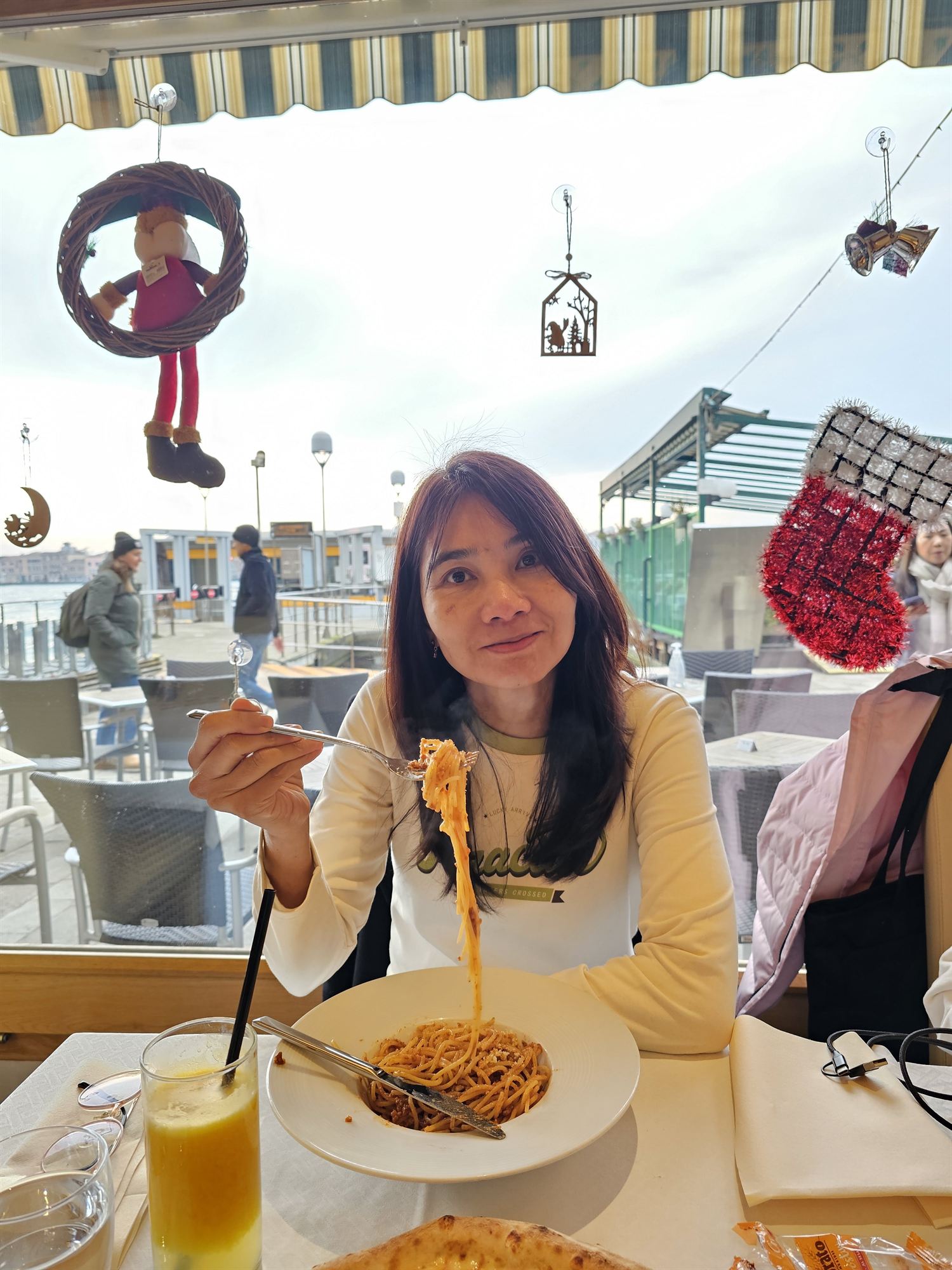 Pasta for lunch at a waterside restaurant, Christmas decorations overhead.
Views From the Water
Getting around Venice by vaporetto (the public water bus) means the lagoon itself becomes part of the sightseeing — including passing the Molino Stucky, a former flour mill on the island of Giudecca, its red-brick industrial towers looking almost fortress-like from the water. Built in the 1890s and converted into a hotel in the 2000s, it's one of the more striking things you'll pass without necessarily knowing what it is.

Venice After Dark

By evening, the canals were reflecting streetlight instead of daylight, and the crowds around St Mark's had thinned out considerably — worth timing a return visit to the square for, if you can manage it. After dark the city changes: quieter, and easier to hear the water against the stone.
Once we left the main routes, the backstreets were much quieter. Along one canal by the Tolentini, orange palazzos stood reflected in the still green water.
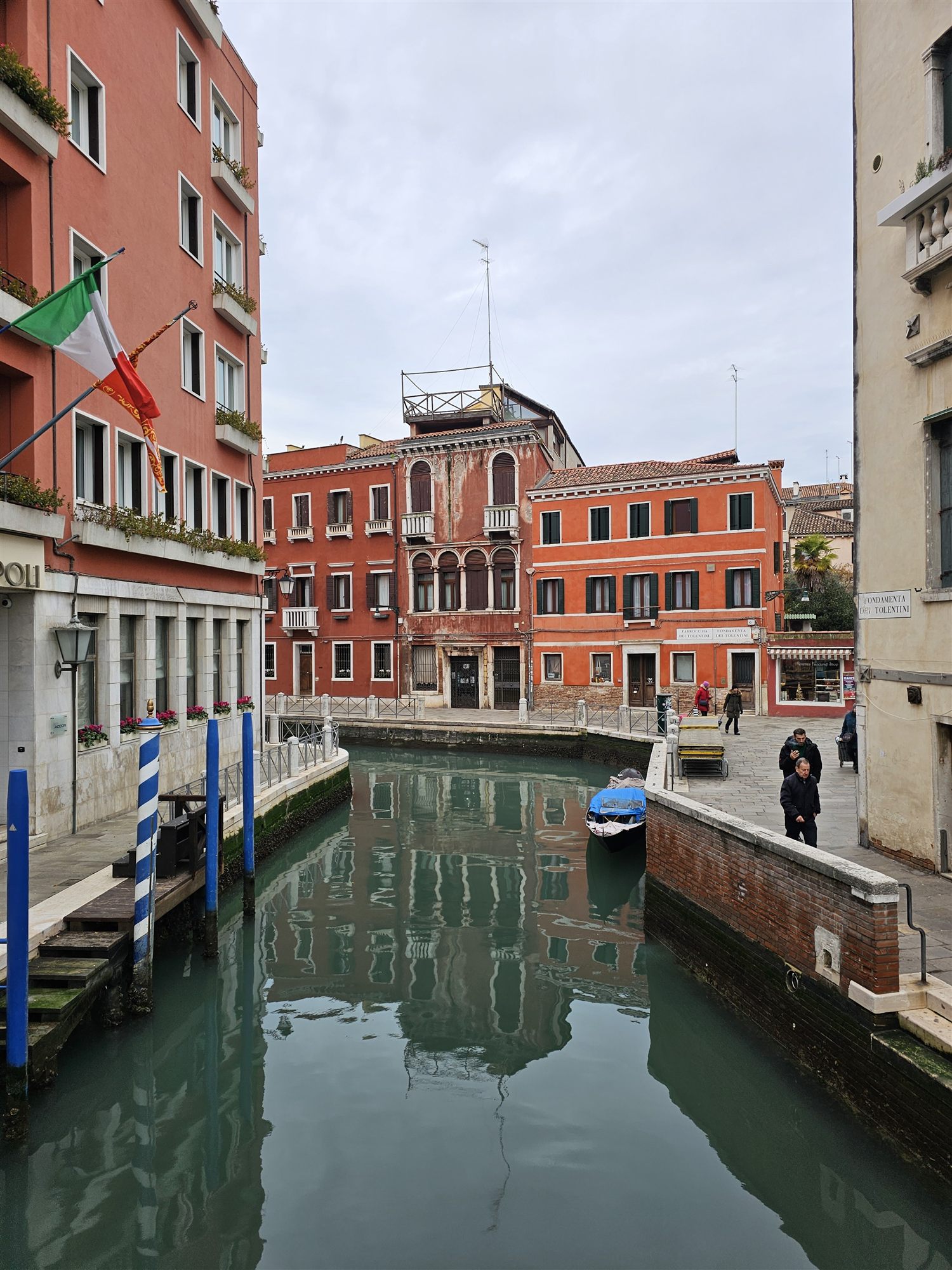 A quiet canal by the Tolentini, its orange palazzos reflected in the water.
 A white marble church facade on the Grand Canal, its statues lined along the roof.