
Quick Facts
- Date
- Friday, 22 December 2023 — Day 12 of 14
- Tour
- Guided half-day walking tour, around 4 hours, with pre-booked entry to see The Last Supper
- Region
- Milan, Lombardy, Italy
- Covers
- Duomo di Milano, Galleria Vittorio Emanuele II, La Scala, The Last Supper, Sforza Castle
- Good for
- A full day — book The Last Supper tickets the moment your Milan dates are confirmed
A Quiet Start Before the Tour
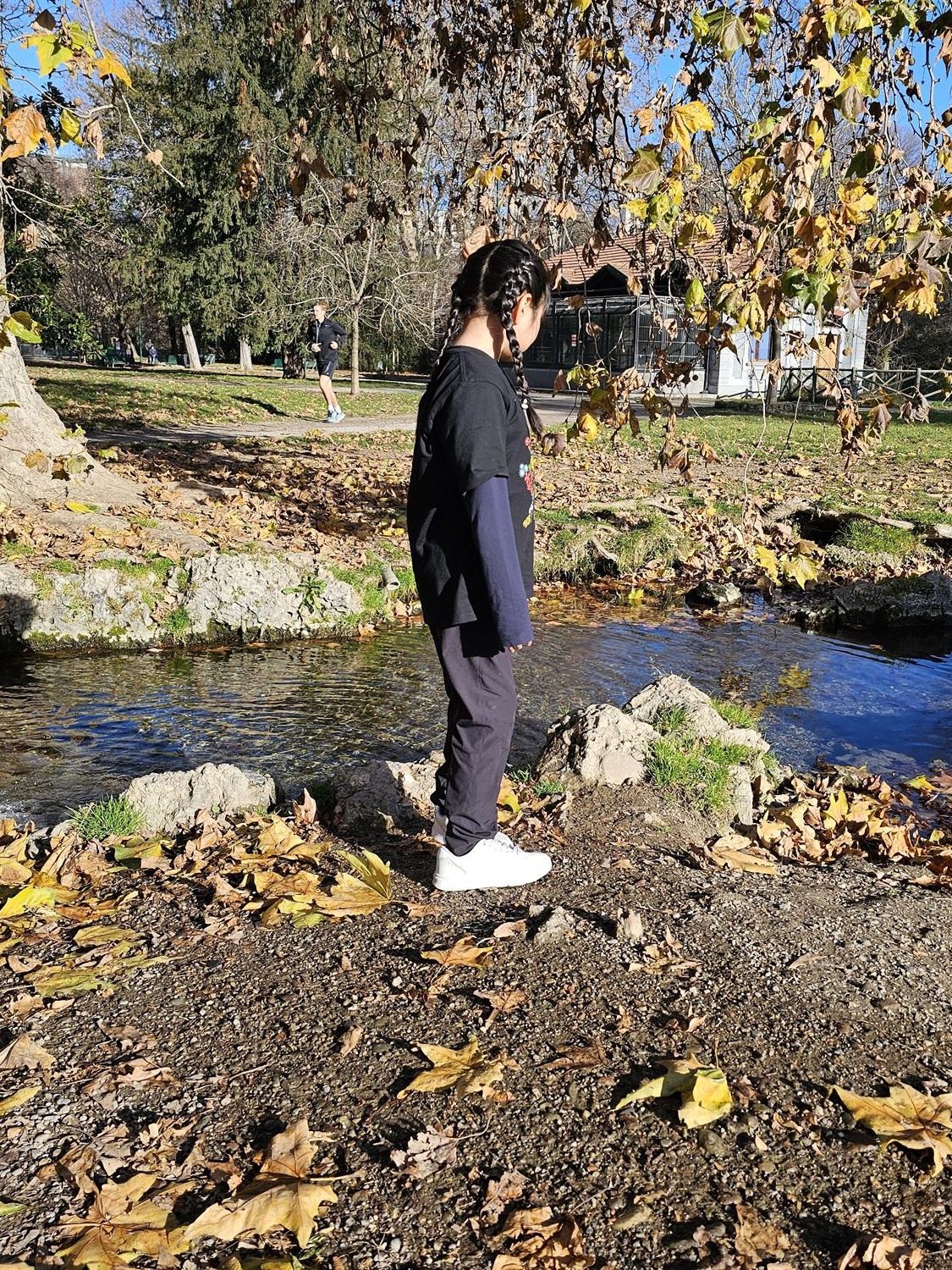
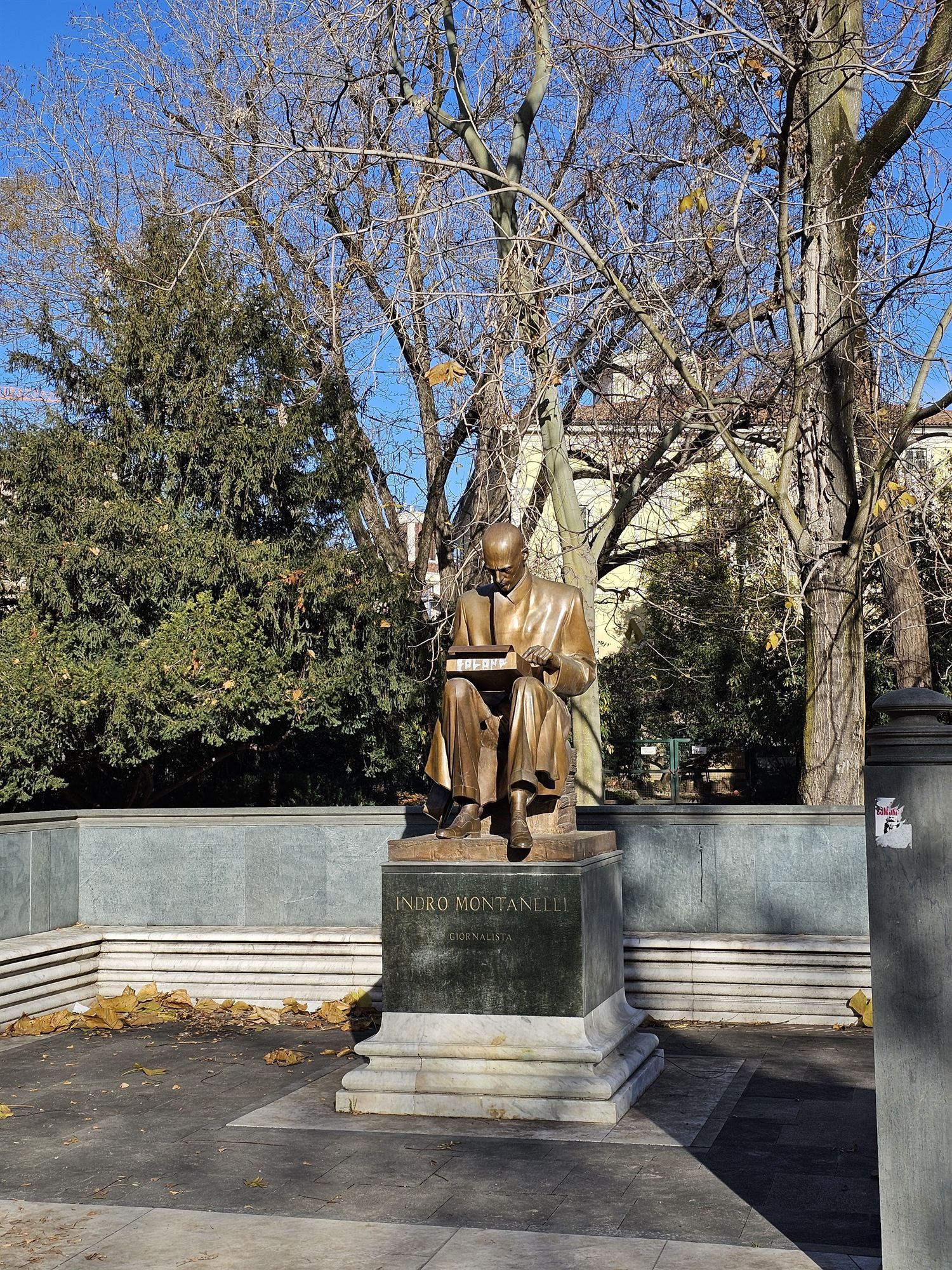
Day 12 started with a walk through Giardini Indro Montanelli, a public park named after the Italian journalist Indro Montanelli, whose statue sits inside it — seated, notebook in hand, as if still working. It's a small, easy park to slot in before a busier day, and a good spot to let a kid burn off some energy before hours of walking tours and museums.
Lunch, Then the Walking Tour
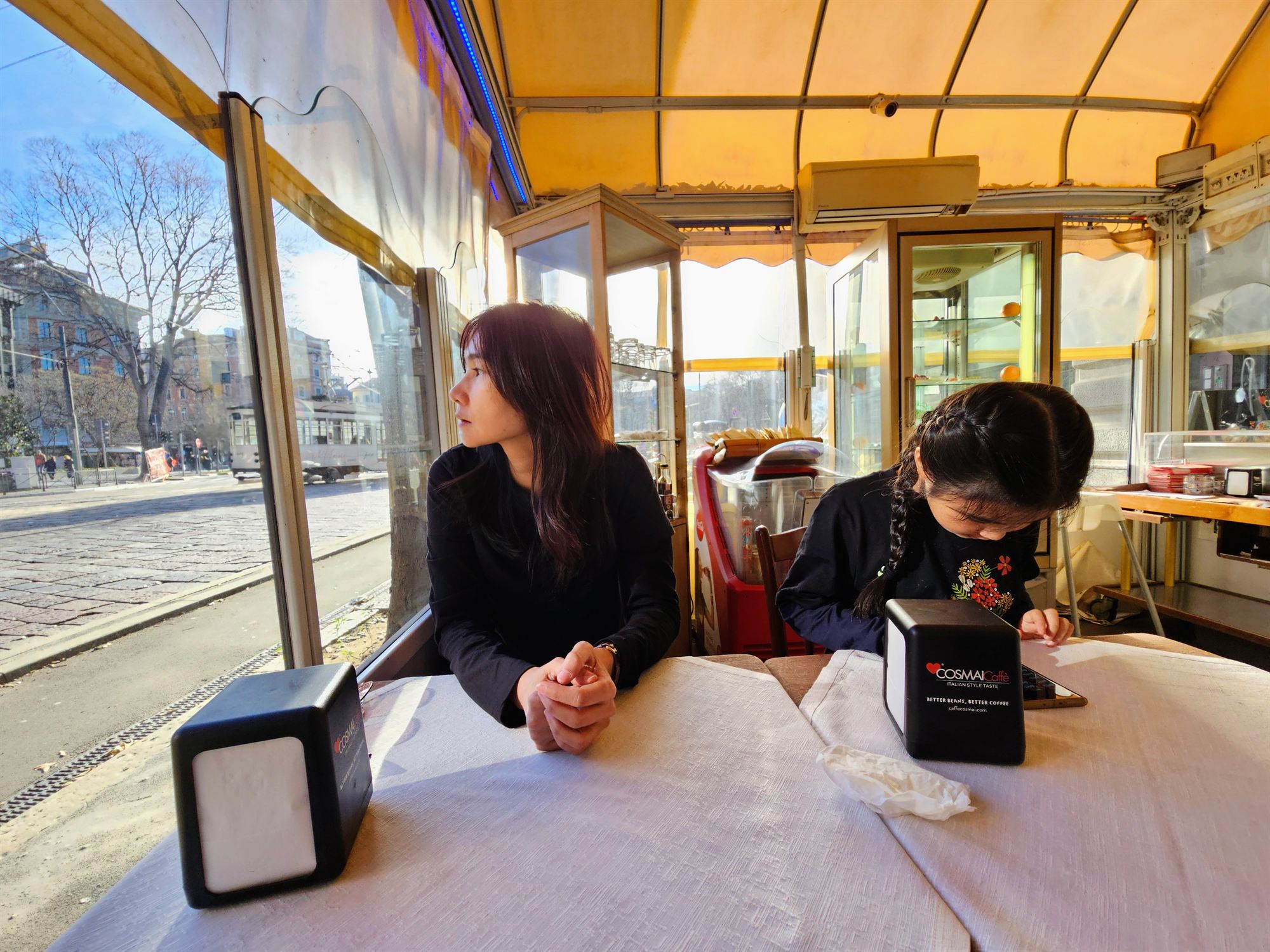
We had lunch at a small restaurant right opposite our tour's meeting point before joining a guided half-day walking tour of Milan, roughly four hours covering the Duomo, the Galleria, La Scala and Sforza Castle. Our guide's English was clear and easy to follow, which mattered for a family with a young child listening along.
The Duomo: Six Centuries in the Making
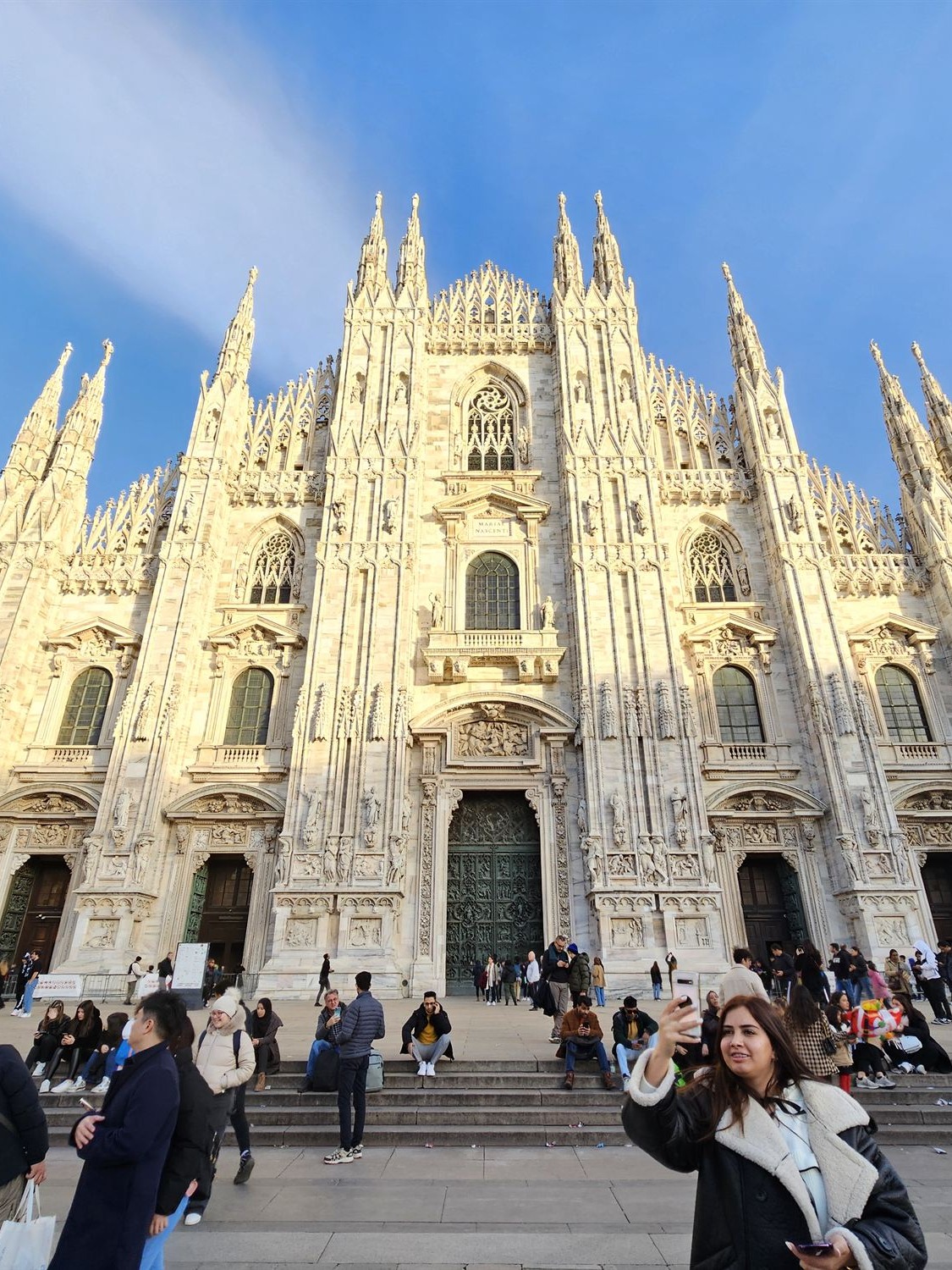
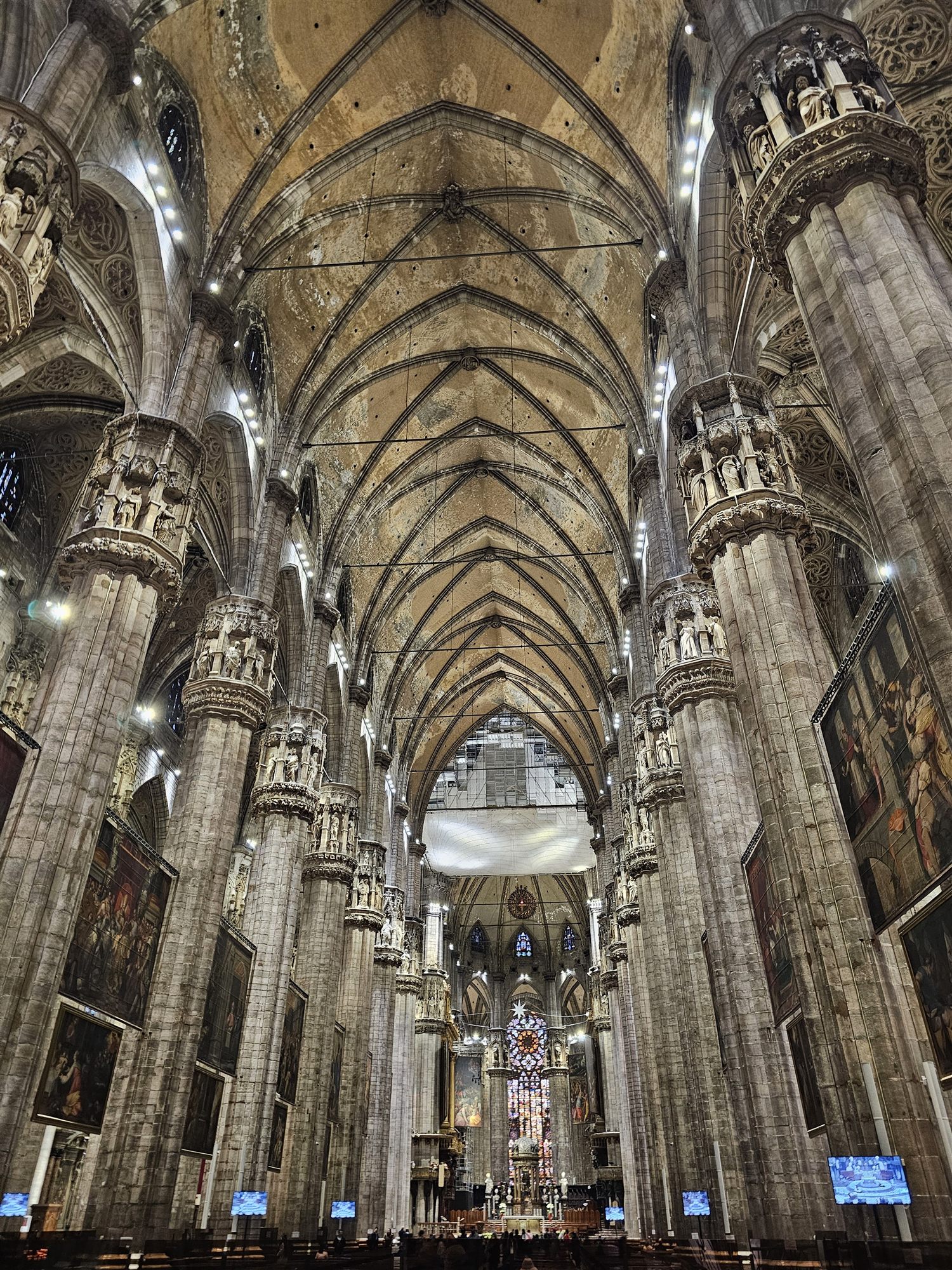
Our first major stop was the Duomo di Milano, one of the largest Gothic cathedrals in the world. Construction began in 1386 and, remarkably, wasn't officially declared complete until 1965, when the last bronze gate was finally installed — nearly 600 years of work across shifting architectural styles, which is part of why the facade reads as such a dense accumulation of detail rather than one unified design. It's covered in an estimated 3,400 statues and 135 spires, more than any other building on Earth by most counts, topped by the gilded Madonnina statue, added in 1774.
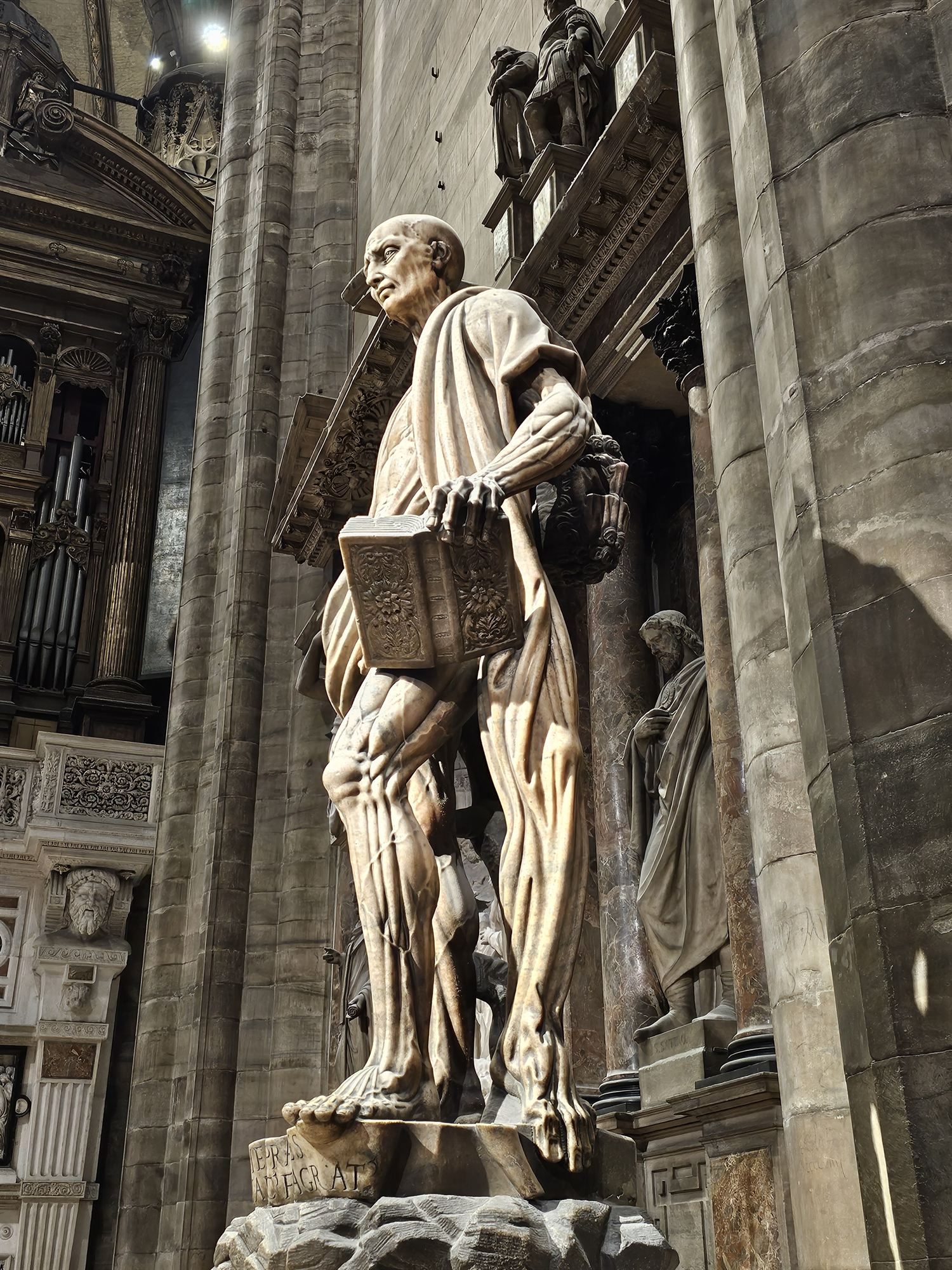
Inside, one statue our guide made sure we stopped at was St Bartholomew, sculpted by Marco d'Agrate in 1562, depicting the martyr flayed and carrying his own skin draped over his shoulder like a cloak — based on the way he was killed. The statue's base carries a joking Latin inscription that translates roughly to "I was not made by Praxiteles, but by Marco d'Agrate," poking fun at how good the anatomical detail is, compared to the legendary Ancient Greek sculptor.
Our guide walked us through the cathedral floor, its intricate inlaid marble patterns underfoot almost as detailed as the architecture overhead.
 A tall stained-glass window, its painted scenes lit from behind.
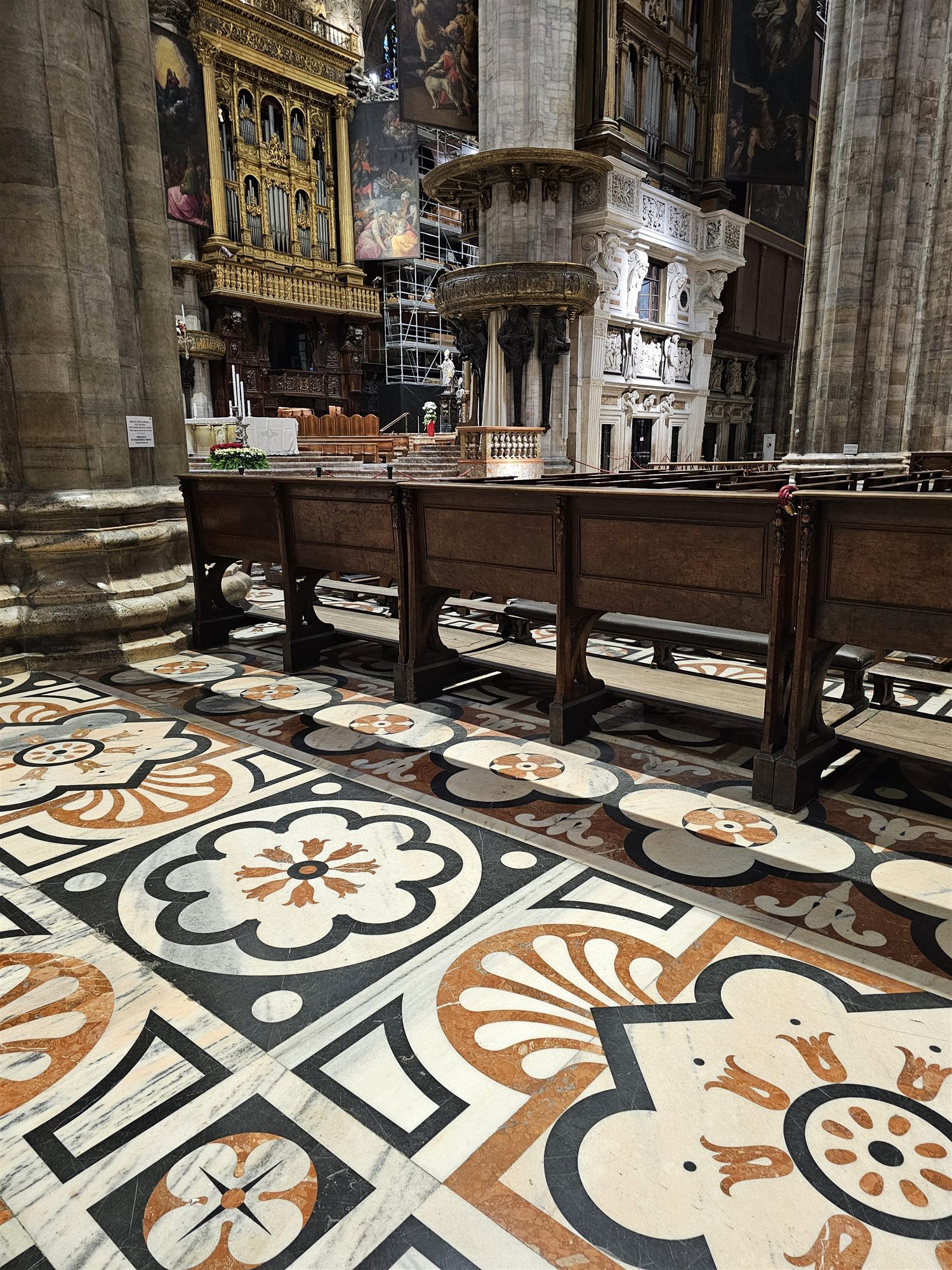 The inlaid marble floor, with the wooden pews beside it.
Tickets to see The Last Supper sell out weeks in advance and viewing slots are limited to just 15 minutes at a time — book this the moment your Milan dates are confirmed, not after you land.
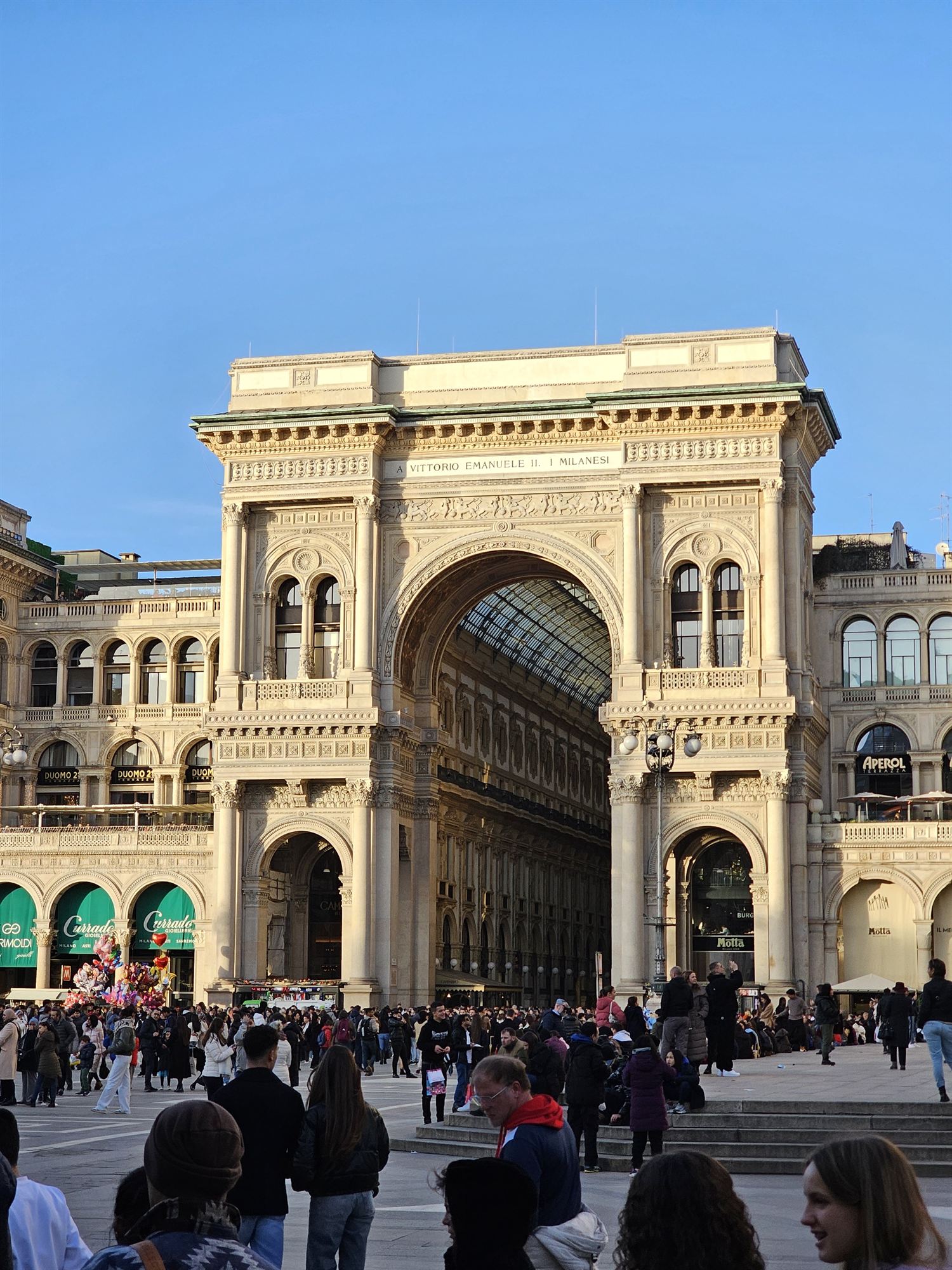
Galleria Vittorio Emanuele II
Outside the cathedral, we passed the Leonardo da Vinci statue at Piazza della Scala before walking into the Galleria Vittorio Emanuele II, generally considered the world's oldest active shopping arcade, opened in 1867 and completed in 1877. Its architect, Giuseppe Mengoni, fell to his death from scaffolding on the building's dome shortly before the arcade was finished — a detail our guide delivered with the same deadpan timing as the Marco d'Agrate joke. There's a tradition of spinning your heel three times on the mosaic bull set into the floor for good luck, and our daughter made sure we all did it properly.
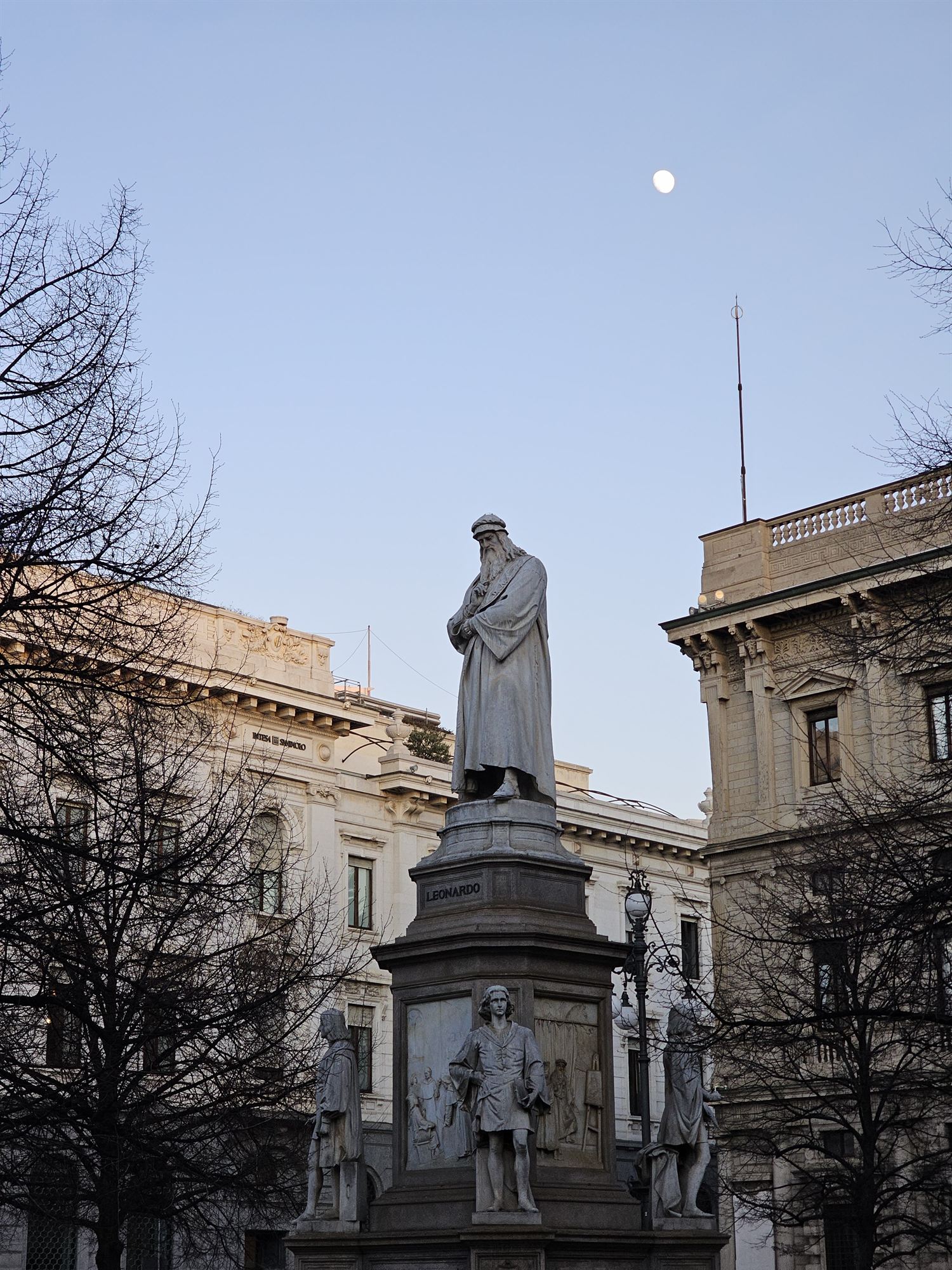 The Leonardo da Vinci statue at Piazza della Scala.
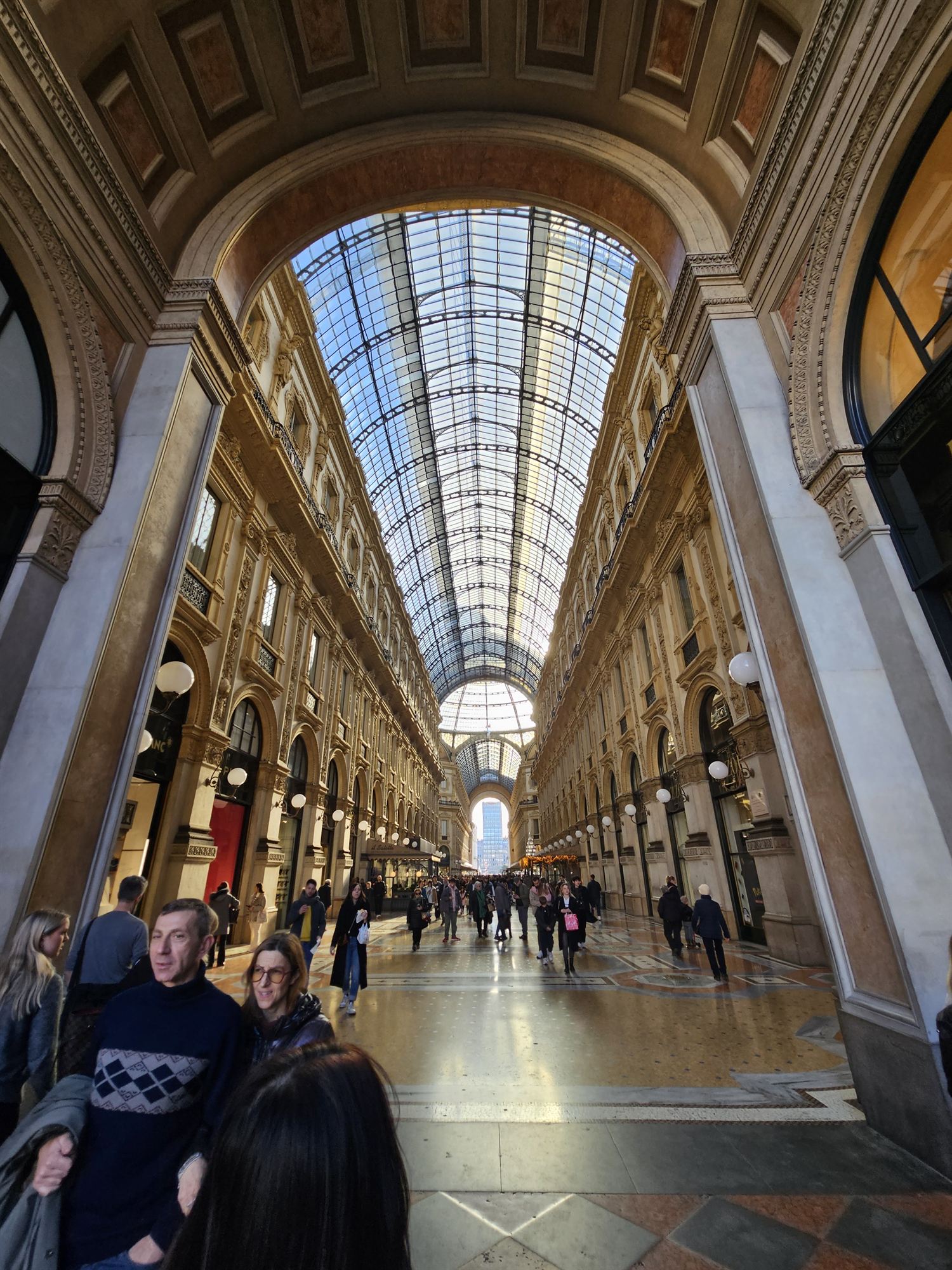 The Galleria's glass-and-iron roof, still striking nearly 150 years on.
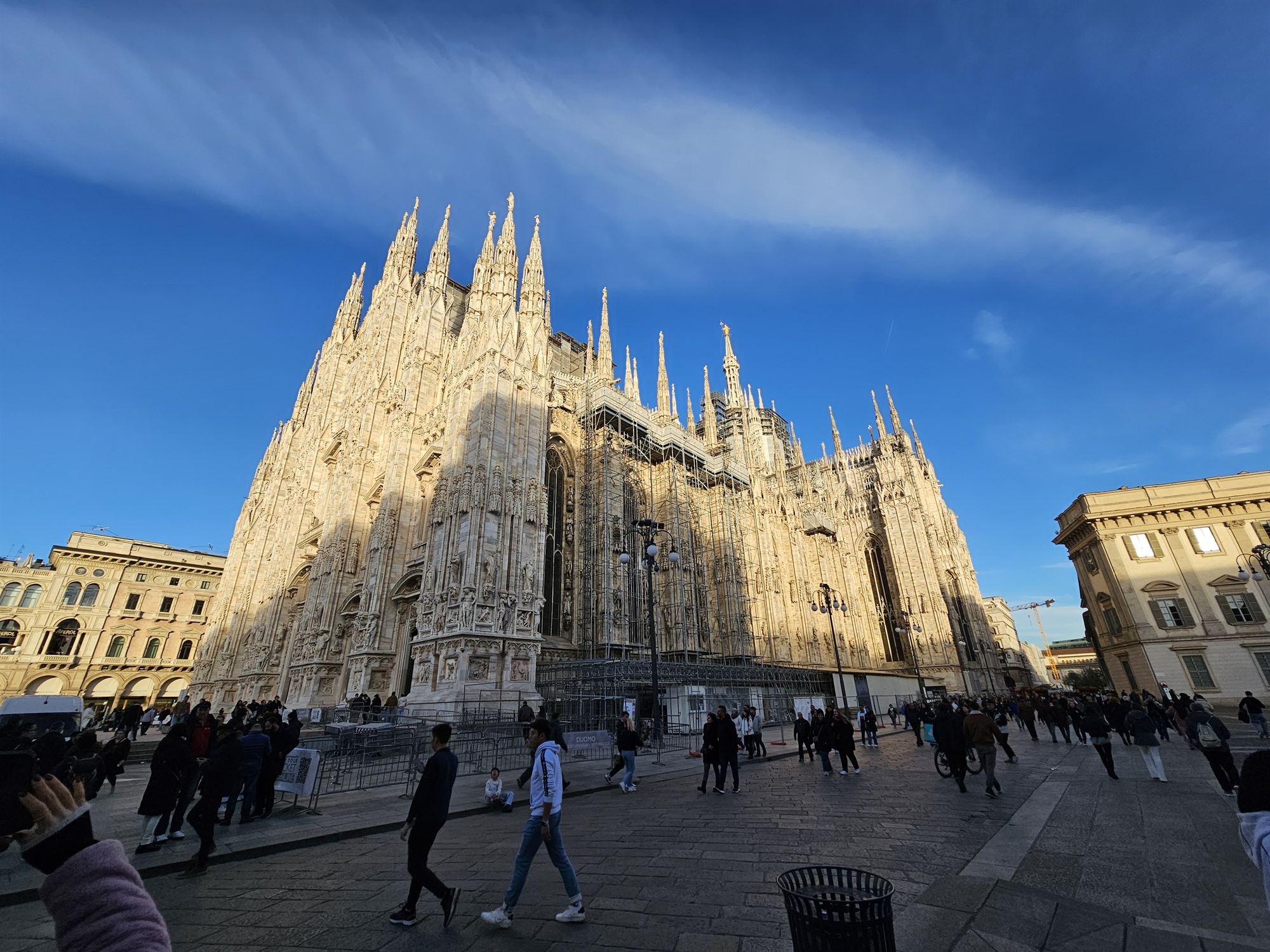
La Scala
Next was La Scala, Milan's opera house, founded in 1778 and still one of the most important in the world — Verdi and Puccini both premiered major works here, and Toscanini reopened it with a live concert in 1946 after Allied bombing had destroyed much of the building in 1943. The current interior, red velvet and gilt boxes stacked in tiers, is largely a faithful postwar reconstruction rather than the untouched 18th-century original.

The Last Supper
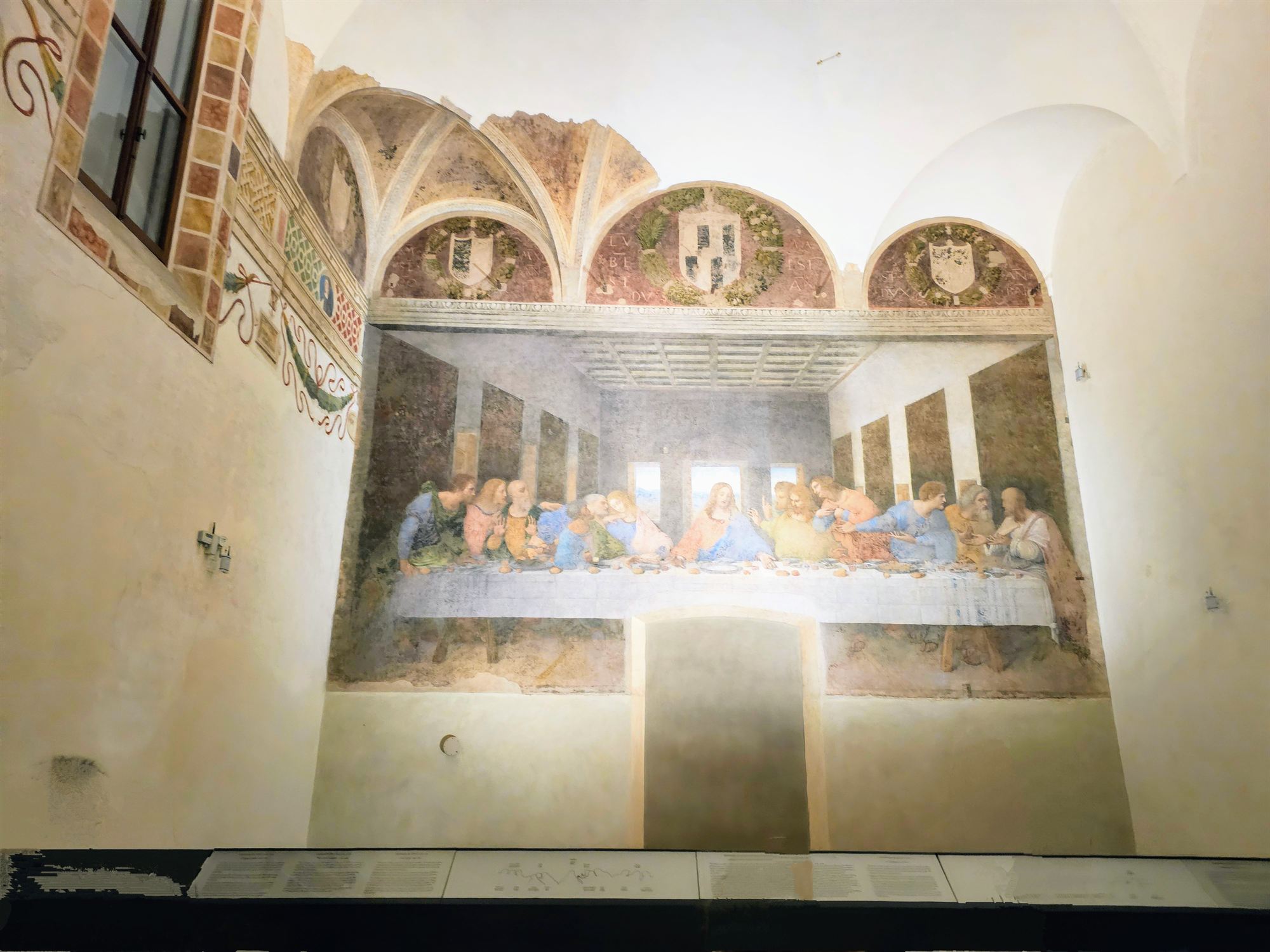
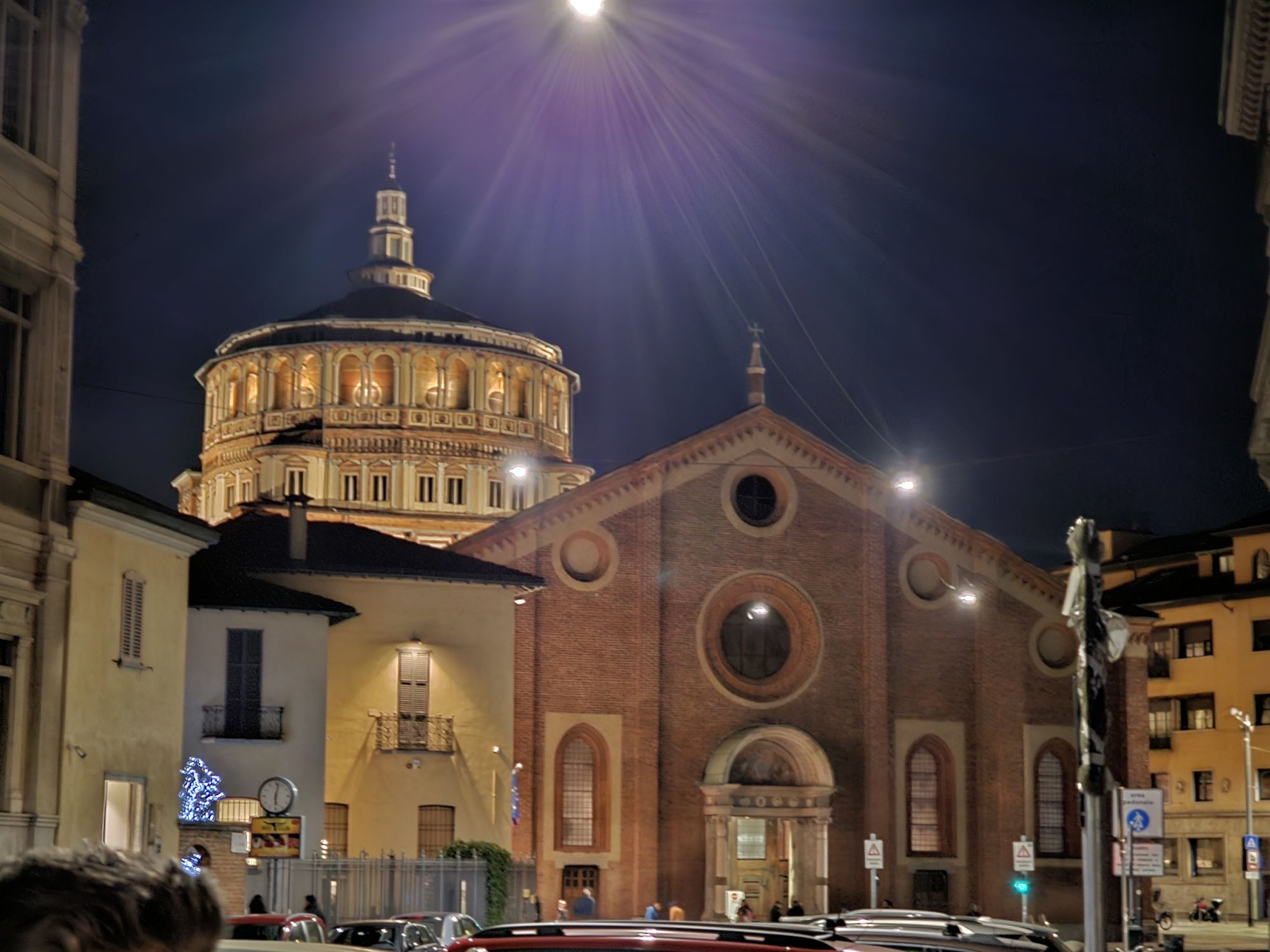
The day's centrepiece was Leonardo da Vinci's The Last Supper, painted between 1495 and 1498 on a wall of the refectory at Santa Maria delle Grazie, a Dominican convent now a UNESCO World Heritage Site. Leonardo used tempera on dry plaster rather than true fresco technique, which lets an artist work more slowly and with finer detail — but it also meant the paint started flaking within decades, and what survives today is the result of centuries of restoration rather than the picture as Leonardo left it. That fragility is exactly why visits are capped at 15 minutes in small, climate-controlled groups. Even faded, the composition — the exact moment Christ announces one of the twelve will betray him, and the ripple of reaction down the table — still reads clearly.
Sforza Castle After Dark
We ended the day at Sforza Castle, built in the 15th century by Francesco Sforza, Duke of Milan, on the ruins of an earlier Visconti fortress. It's one of the largest citadels in Europe by footprint, and later served as home to some of Europe's most powerful ruling families before being restored into the museum complex it is today. Lit up at night with the crowds gone, it made an easy, low-effort close to a day that had otherwise been spent on our feet.