Quick Facts
- Date
- Thursday, 11 December 2025
- Region
- Schönbrunn, Vienna, Austria
- Visit
- Guided morning tour of the state rooms, self-guided gardens in the afternoon
- Covers
- The Great Gallery, the private apartments, the gardens & the Gloriette
- Good for
- A half-day stop that works well either side of a lighter sightseeing day
A Morning at Schönbrunn
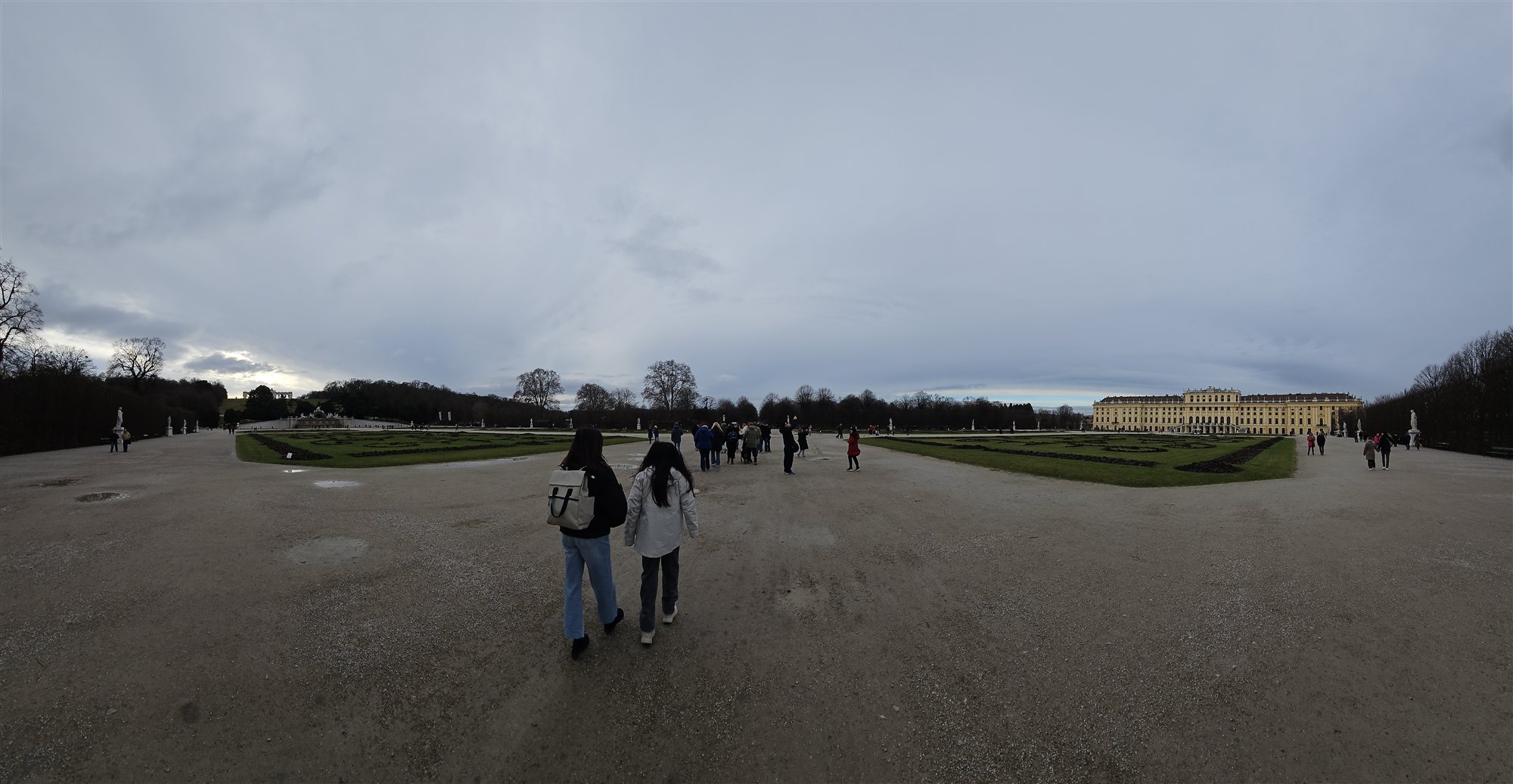
Day 5 of our time in Austria, 11 December, was set aside for Schönbrunn — the Habsburgs' former summer residence, and one of the few Vienna stops we'd actually pre-booked. A UNESCO World Heritage Site since 1996, the palace was largely shaped into its current Baroque form under Empress Maria Theresa in the mid-1700s, after she inherited it from her father and set about turning a modest hunting lodge into something fit for a ruling dynasty with sixteen children. We joined a guided tour through the state rooms first, saving the gardens for after, once the morning fog had a chance to lift.
Stories of an Empire
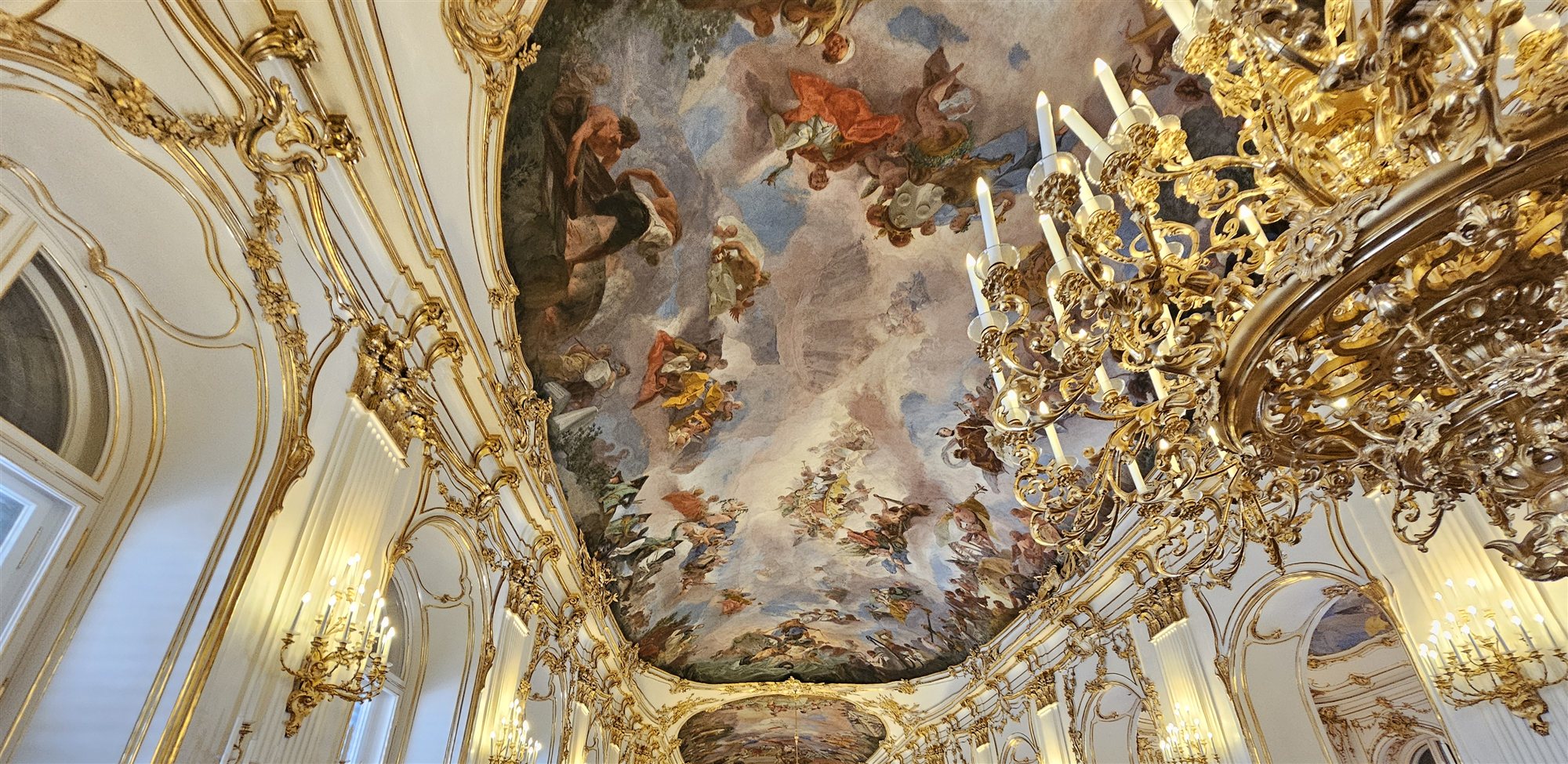
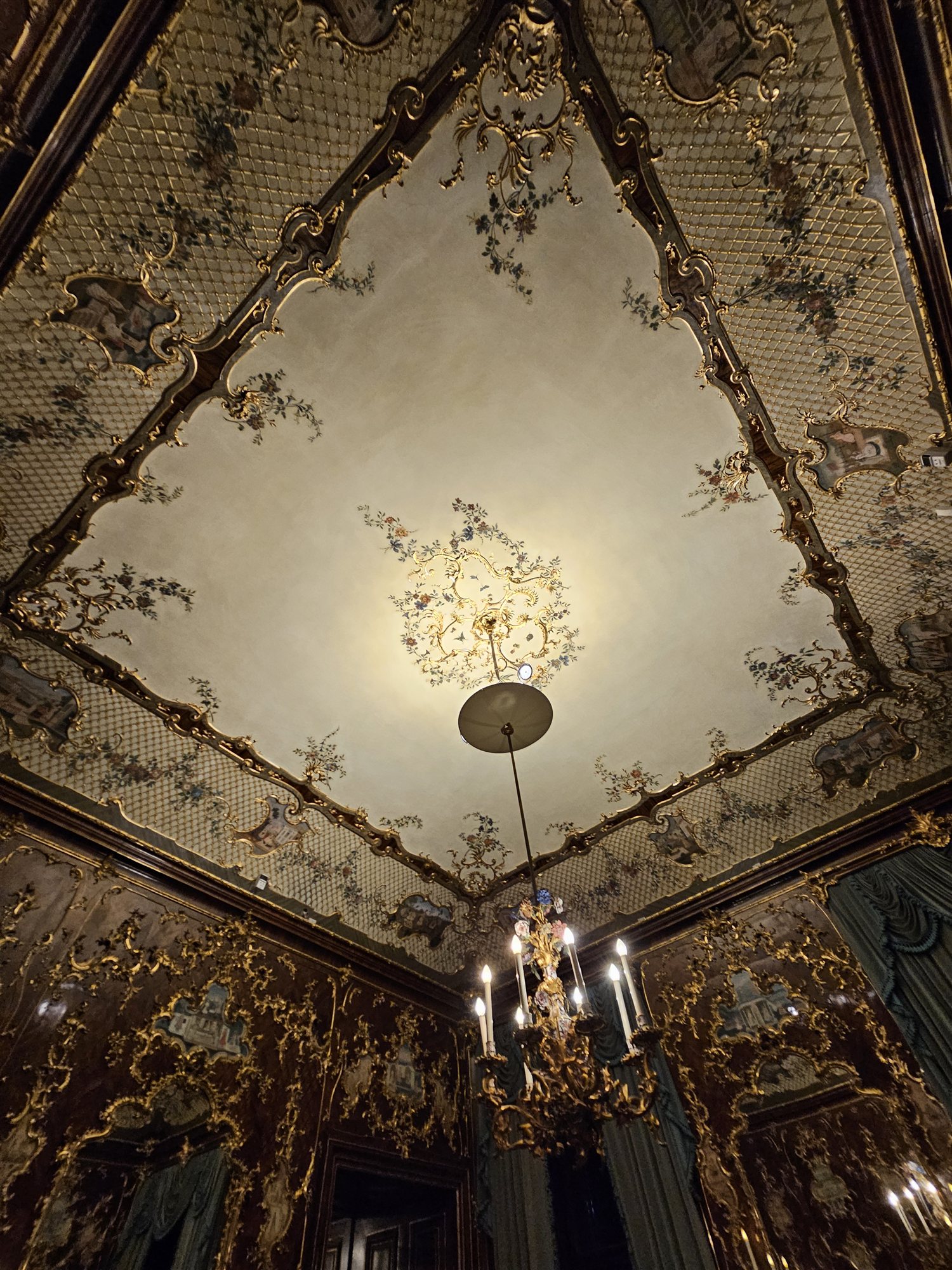
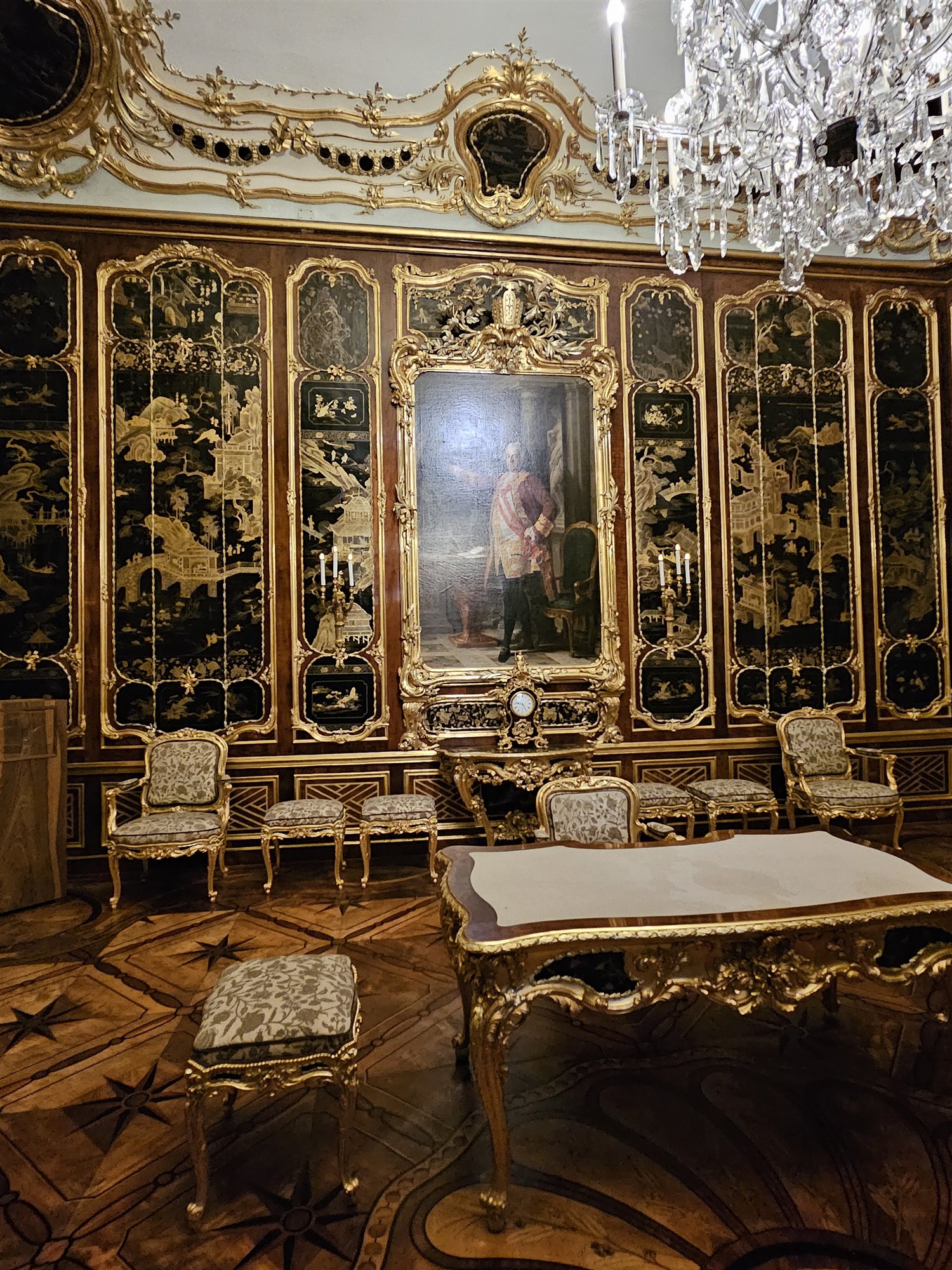
Our guide moved us through room after room, each one holding a different piece of the family's history — Maria Theresa's own private study, the more restrained apartments where the much later Empress Elisabeth, known to most as Sisi, kept to a famously strict routine of exercise and diet. The grandest stop was the Great Gallery, its ceiling frescoed with allegories of the Habsburg Monarchy by Gregorio Guglielmi, still used today for state receptions — it's where John F. Kennedy and Nikita Khrushchev held their tense 1961 summit, a detail that made the gilded quiet of the room feel a little less distant.
A Quiet Memorial
One stop was quieter than the rest. Tucked among the state rooms is a small memorial to Napoleon II — the son of Napoleon Bonaparte and Archduchess Marie Louise of Austria, titled King of Rome at birth but raised at Schönbrunn under his grandfather's roof after his father's fall from power. He died here in 1832, aged just 21, and a marble effigy marks the room associated with him. It struck a strange, familiar chord — we'd stood in front of Napoleon-era relics once before, at Musée de l'Armée in Paris on our 2022 trip through Switzerland and France, never expecting the story to circle back to a palace room in Vienna three years later.
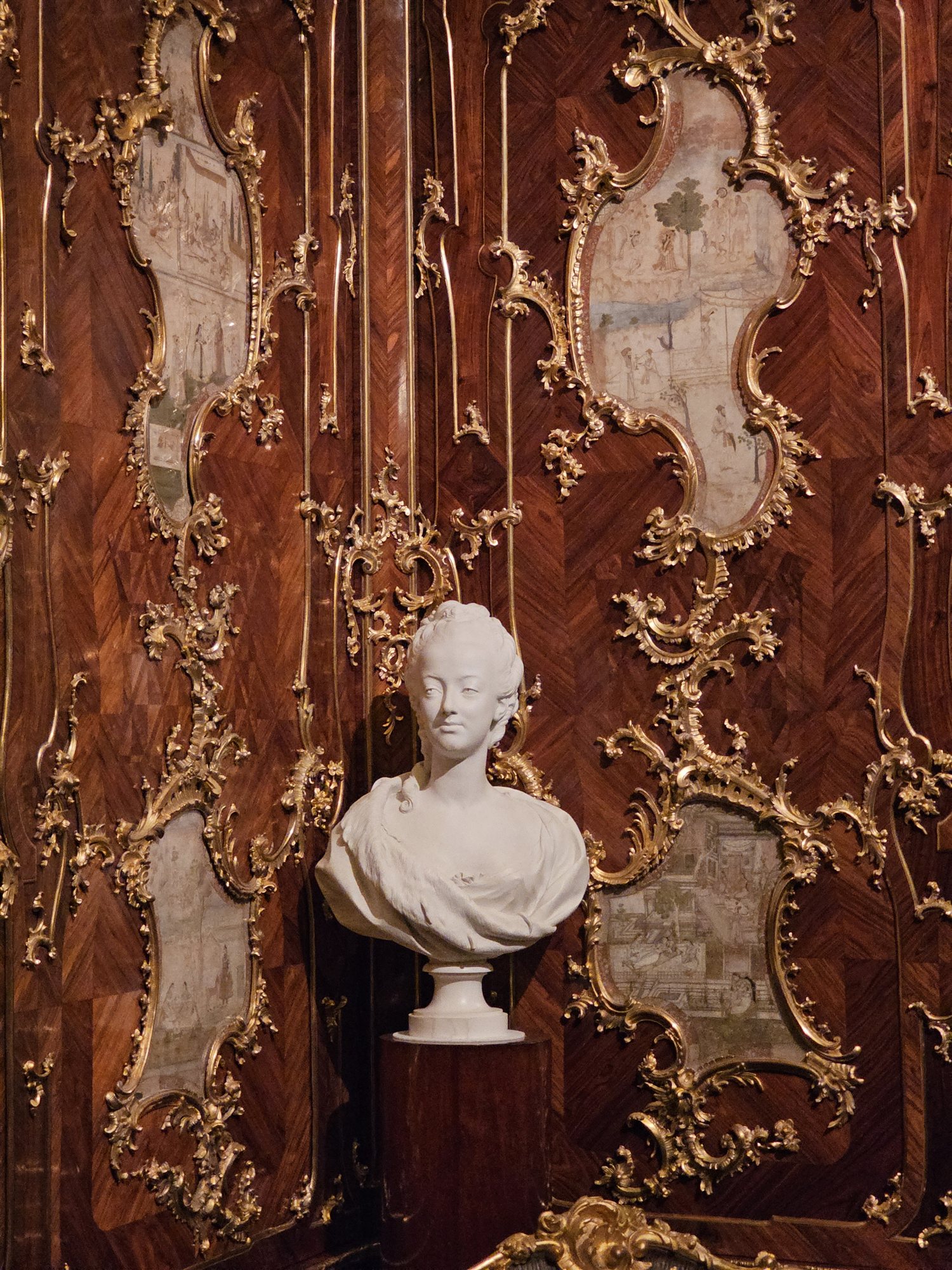
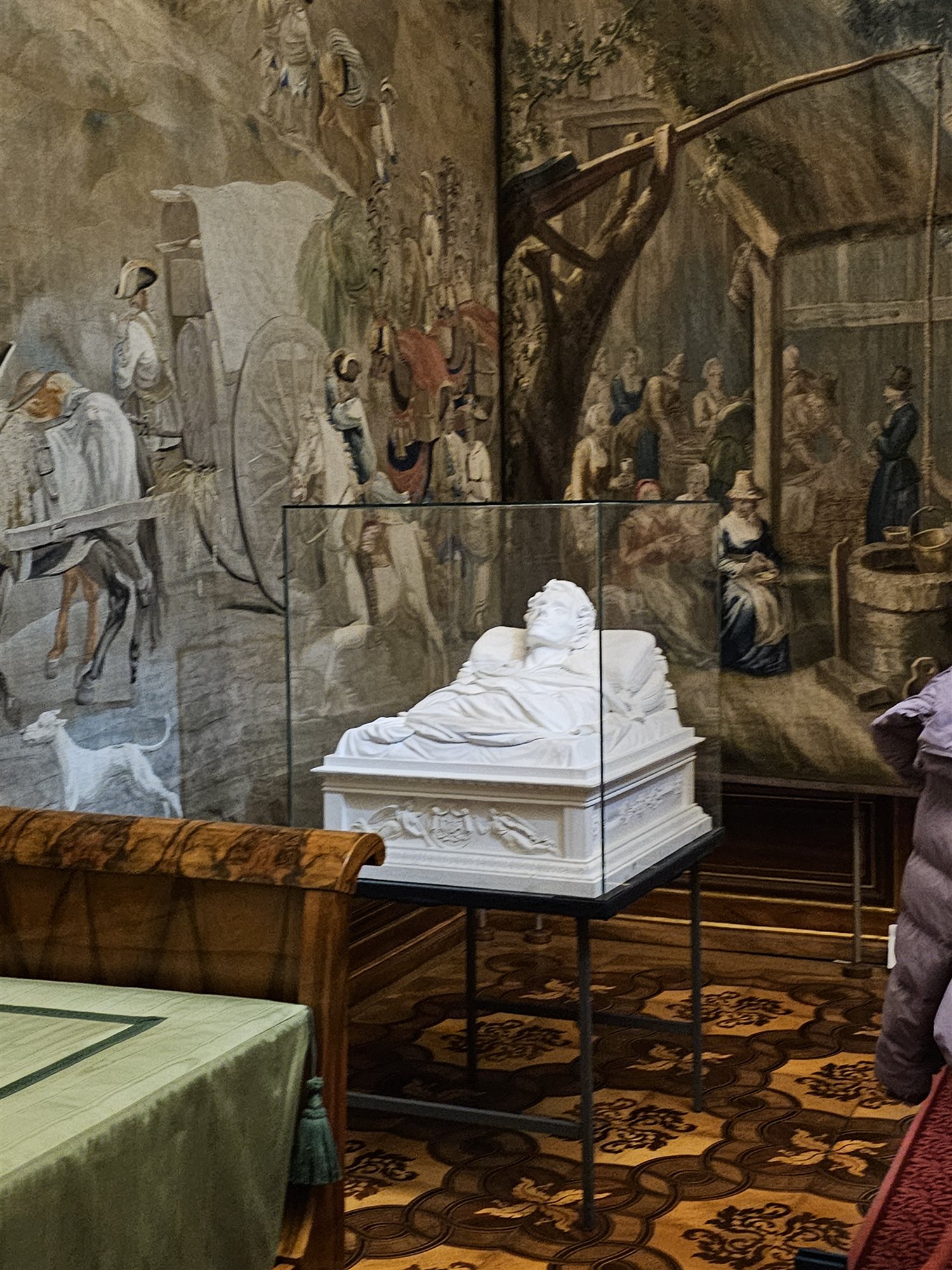
Into the Gardens
By the time we stepped back outside, the fog had burned off into a clear, cold blue. Winter had stripped the formal gardens down to their bones — no colour, no hedges in bloom — but the wide gravel paths and the sheer scale of the grounds still felt grand, maybe more so without anything competing for attention. We followed the long central avenue up toward the Gloriette, the hillside structure that closes off the view from the palace windows below.
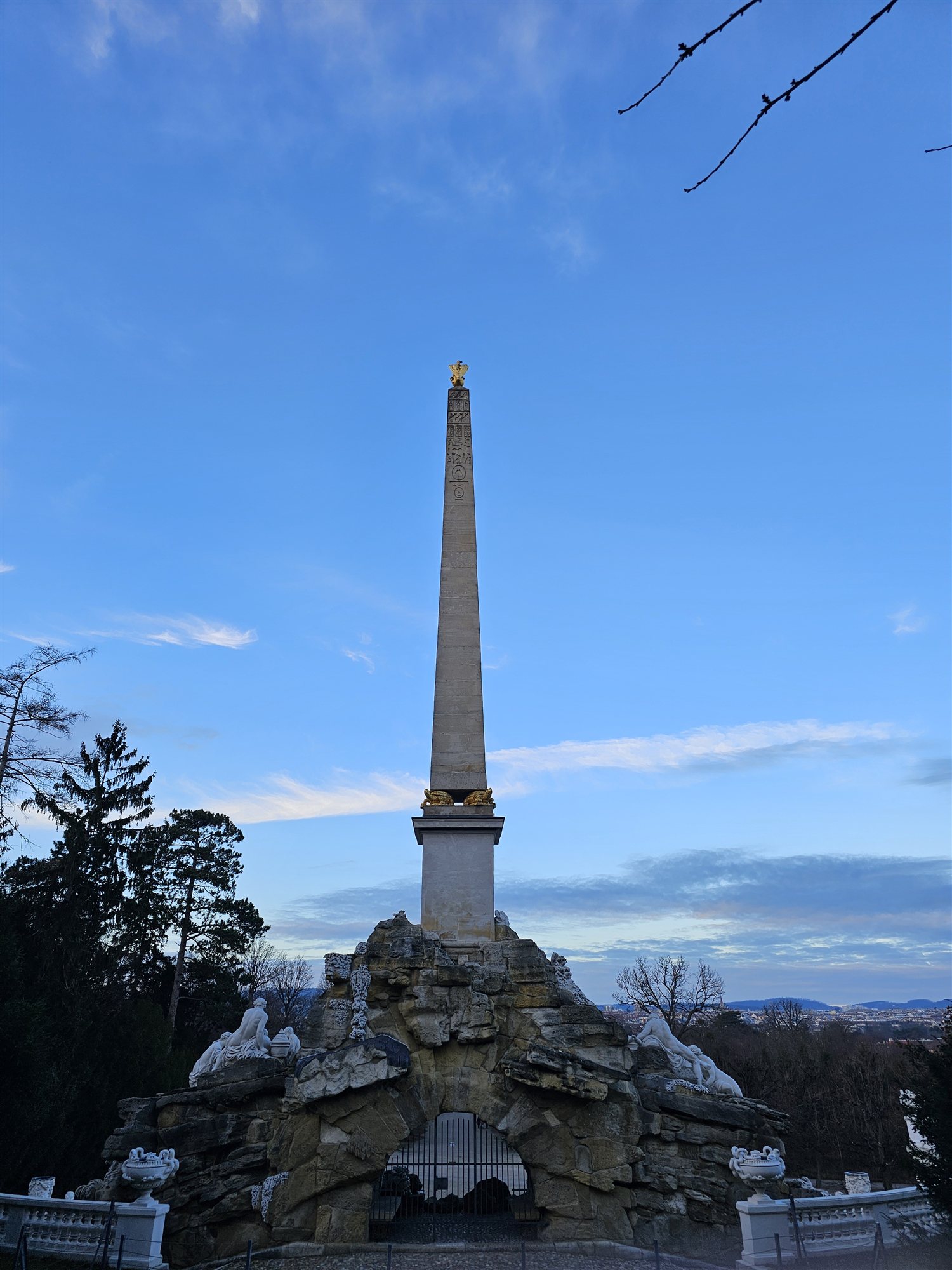
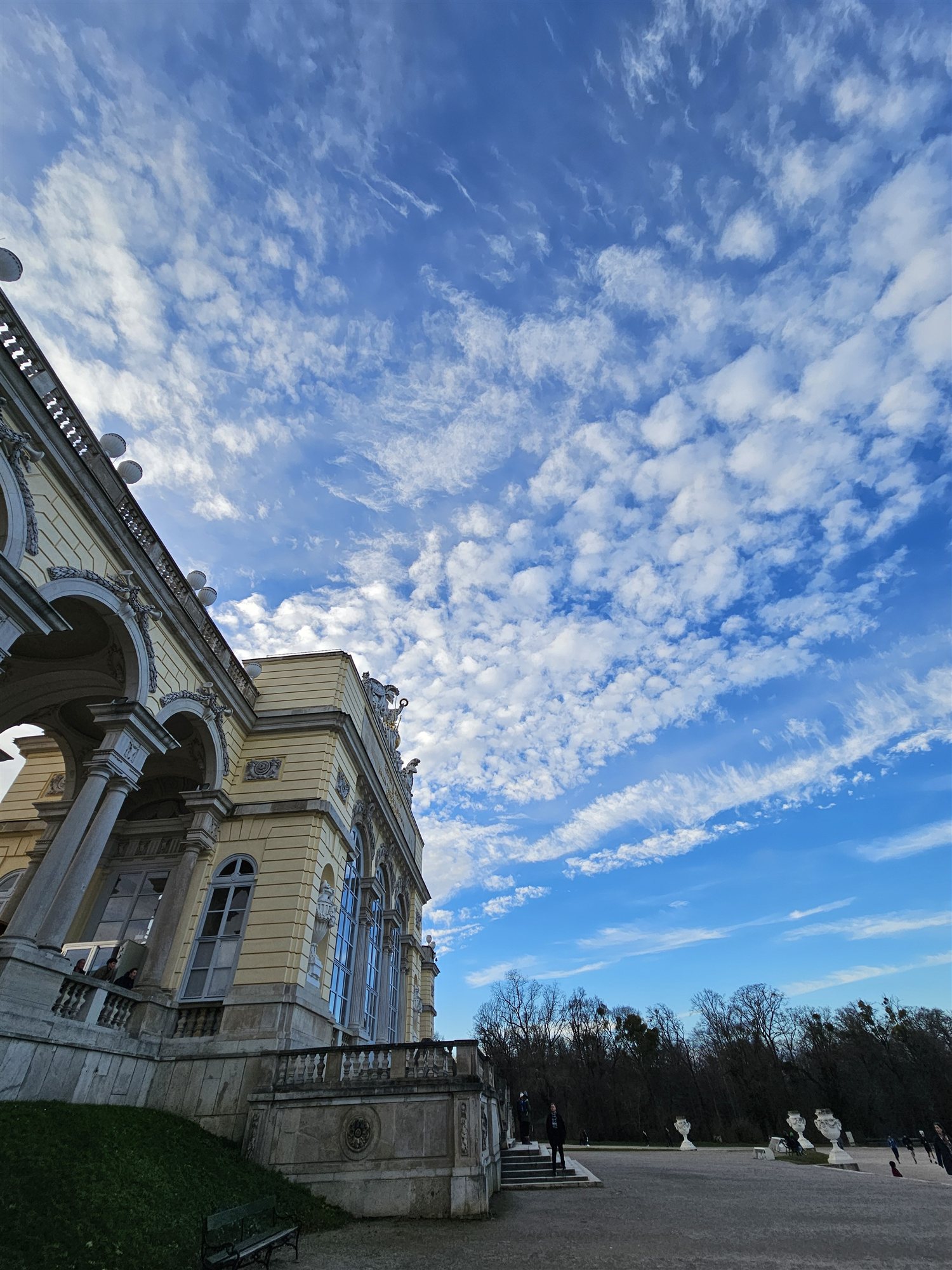
Built in 1775, the Gloriette was never meant to hold anything in particular — it's a garden folly, a point for the eye to rest on from the palace terrace, and today a café operates inside it. Climbing the hill for the view back down over the gardens, the palace, and Vienna beyond felt like the natural end point of the whole visit.
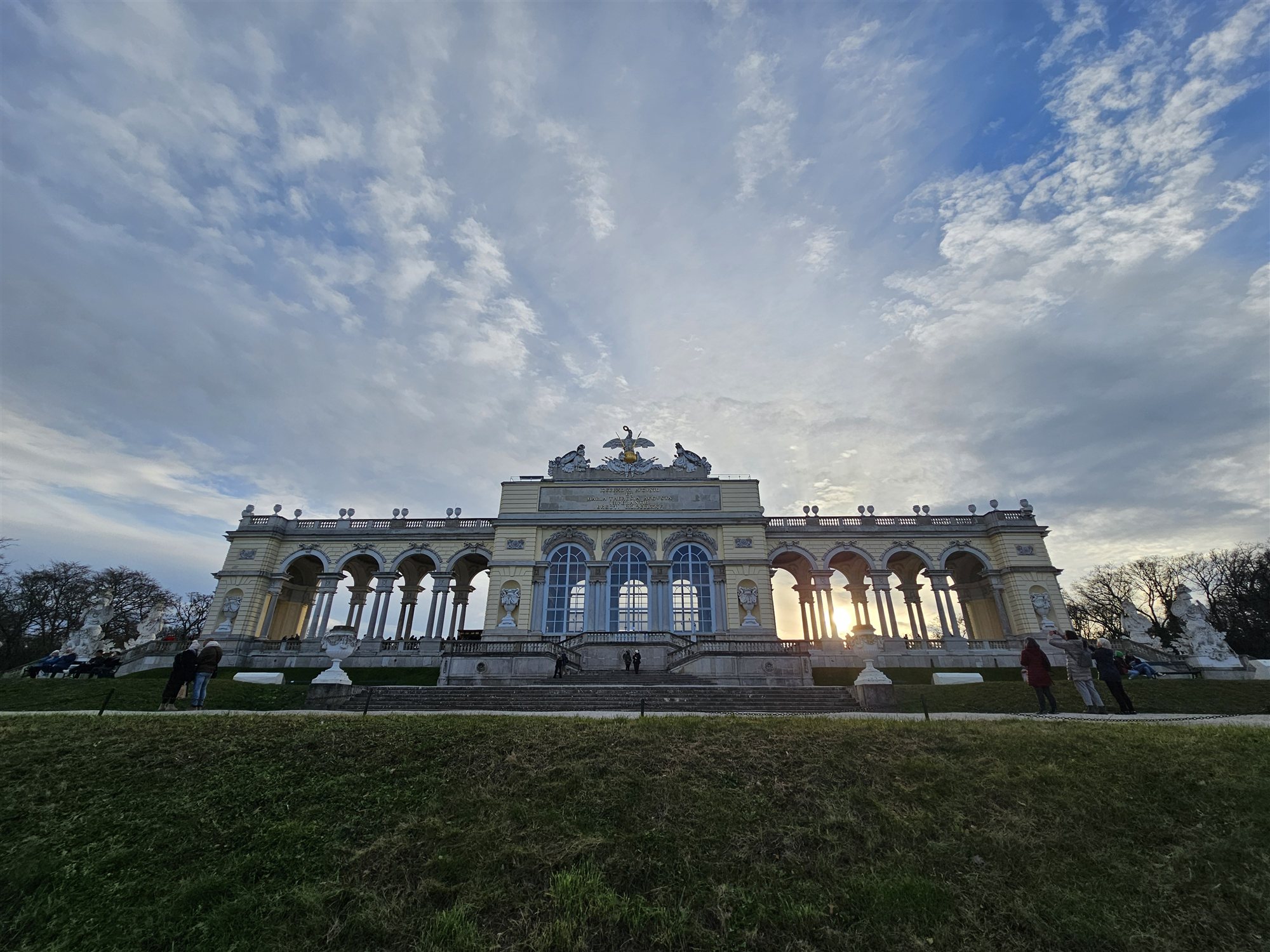
Book the guided tour in advance if you can — it moves through the state rooms at a steady pace and the stories are worth having explained rather than read off a plaque. Leave the gardens and the Gloriette for afterward, and budget at least 30–40 minutes each way for the walk up and back, longer if you stop for photos along the reflecting pool.
A Slow Way to End the Day
We didn't rush the walk back down. The light was already turning by the time we reached the palace again, and after a morning spent indoors being told who had lived in which room, it was good to just walk — no guide, no schedule, just the gravel underfoot and the gardens emptying out around us.