
Quick Facts
- Date
- Wednesday, 28 December 2022 — Day 3 in Paris
- Region
- Les Invalides, Paris, France
- Covers
- Musée de l'Armée, Dôme des Invalides, Napoleon's Tomb
- Good for
- A full, reflective day — a contrast to lighter sightseeing days
A Different Side of Paris
After the lively streets, cafés, and glowing lights of the previous day, Day 3 brought us into a quieter and heavier side of Paris. We spent the day at Musée de l'Armée, one of the world's most comprehensive military history museums, housed within the Hôtel des Invalides — a complex Louis XIV commissioned in 1670 as a hospital and retirement home for wounded soldiers. Even before entering, the architecture caught our attention: the grand courtyards, long symmetrical walkways, and the golden dome rising above everything gave the whole place a calm but imposing presence.

Beneath the Golden Dome
At the heart of the complex stands the Dôme des Invalides, designed by the architect Jules Hardouin-Mansart and completed in 1706 — one of the finest examples of French Baroque architecture in Paris. Napoleon Bonaparte died in exile on the island of Saint Helena in 1821, and it wasn't until 1840, under the "Retour des Cendres" (Return of the Ashes), that his remains were brought back to France. They were finally placed here in 1861, inside a sarcophagus of dark red quartzite resting on a base of green granite from the Vosges, sitting within a sunken circular crypt ringed by twelve marble statues representing his military campaigns.
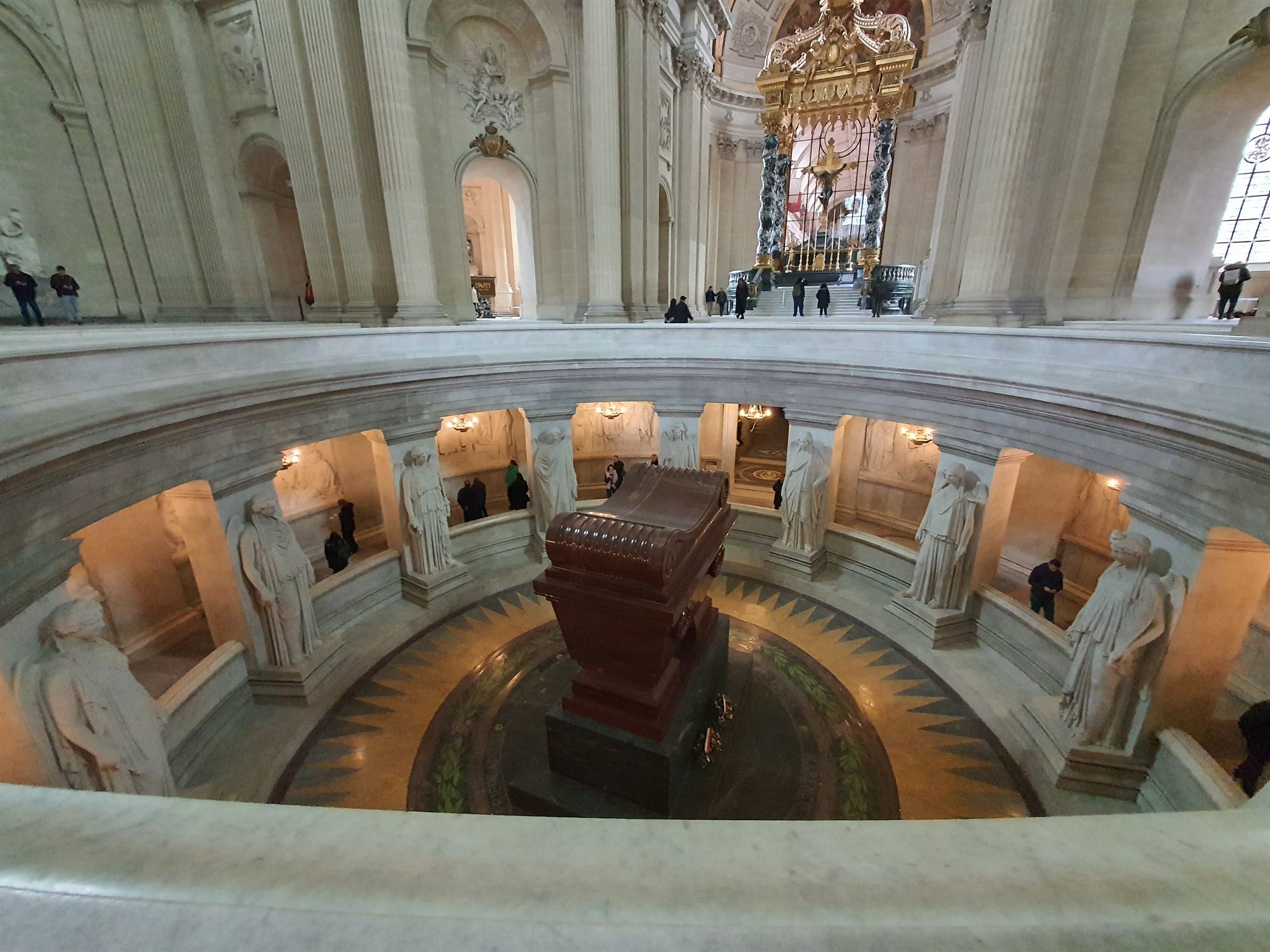
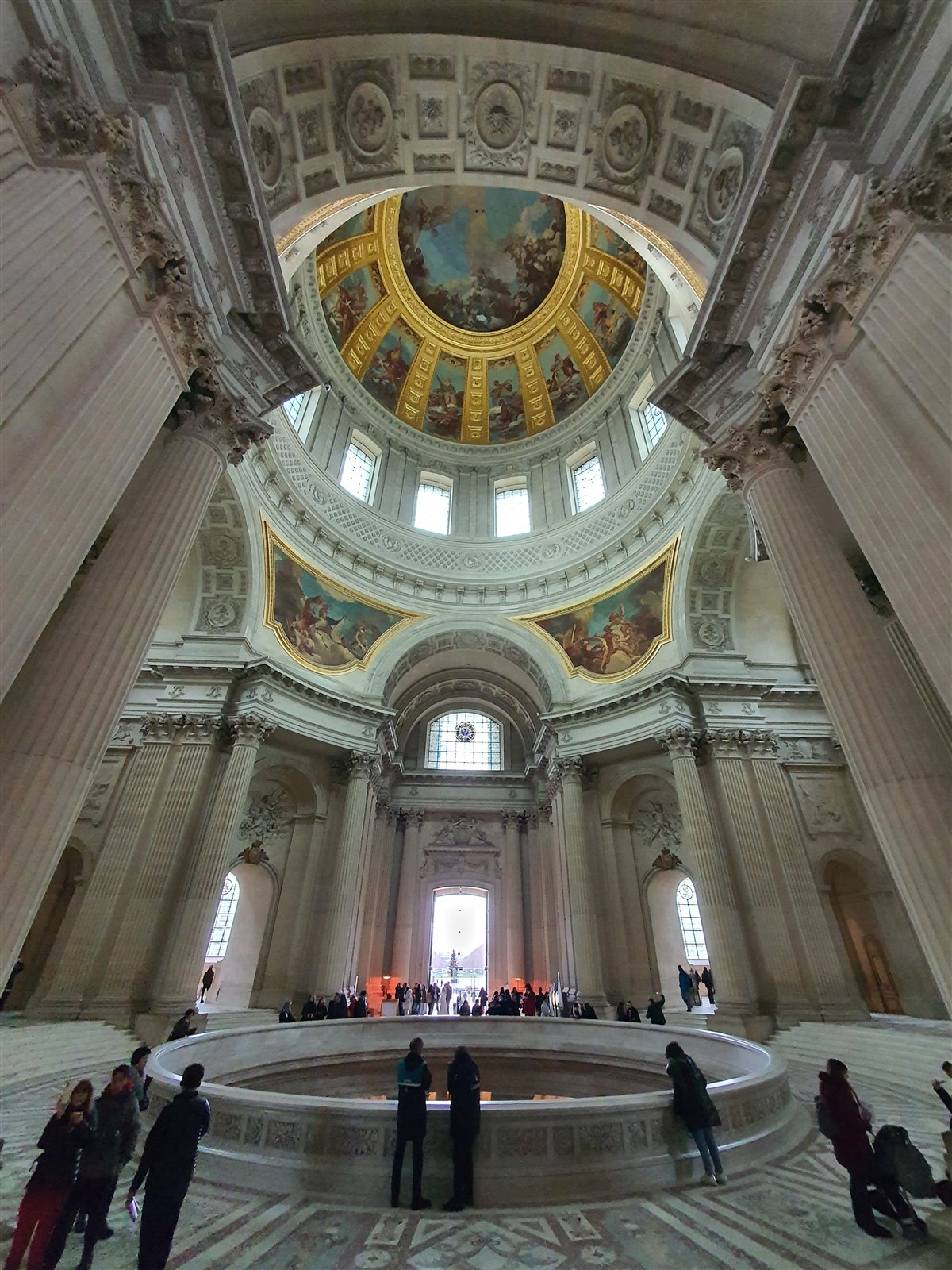 Looking up into the painted dome from the crypt.
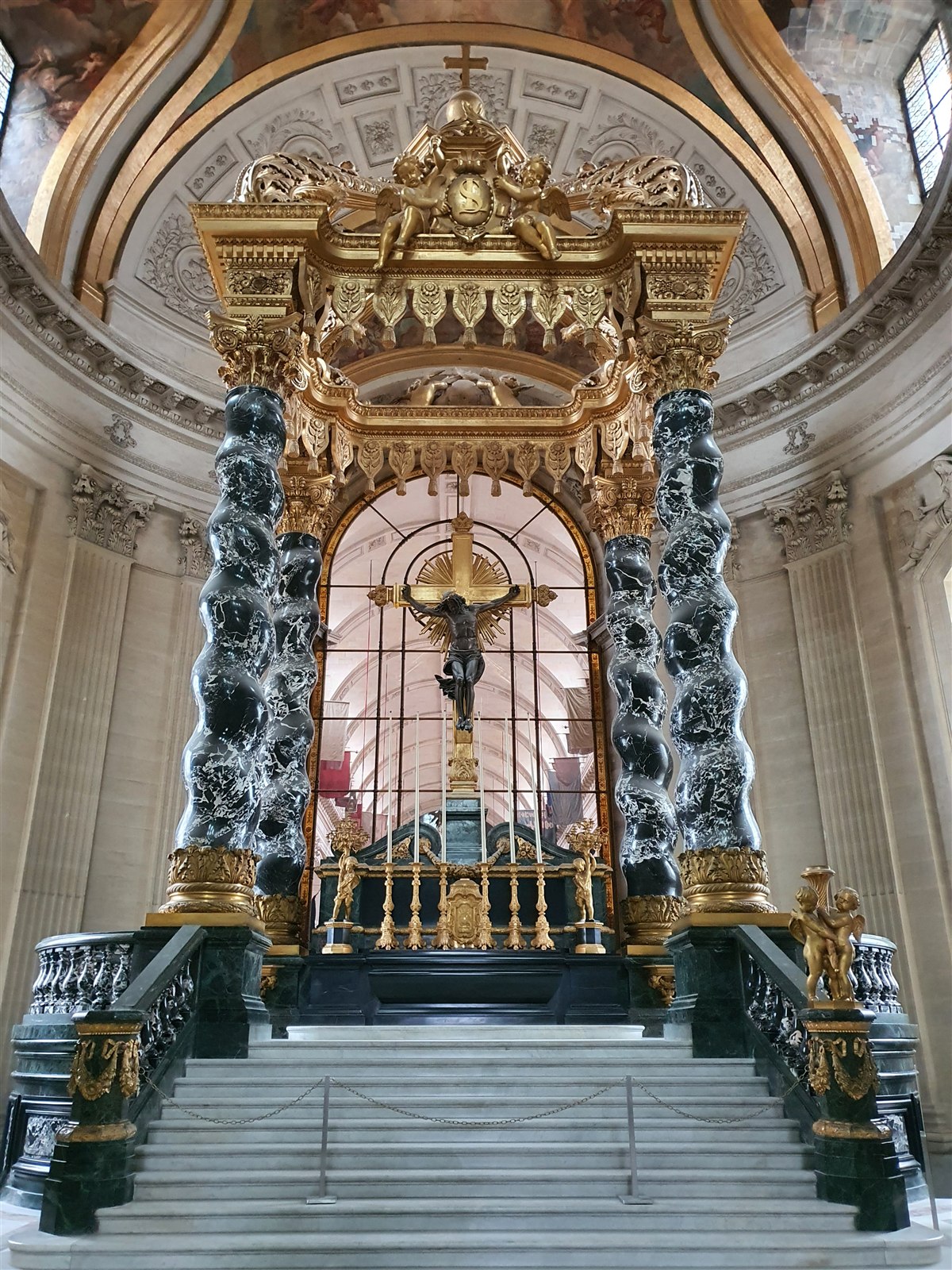 The gilded altar and canopy above the crypt.
Above the crypt, beneath the gilded dome itself, a smaller chapel houses a gold-columned altar and canopy over a crucifix — a striking contrast of religious stillness directly above the tomb of a man remembered mostly for war.
A Story Between Paris and Vienna
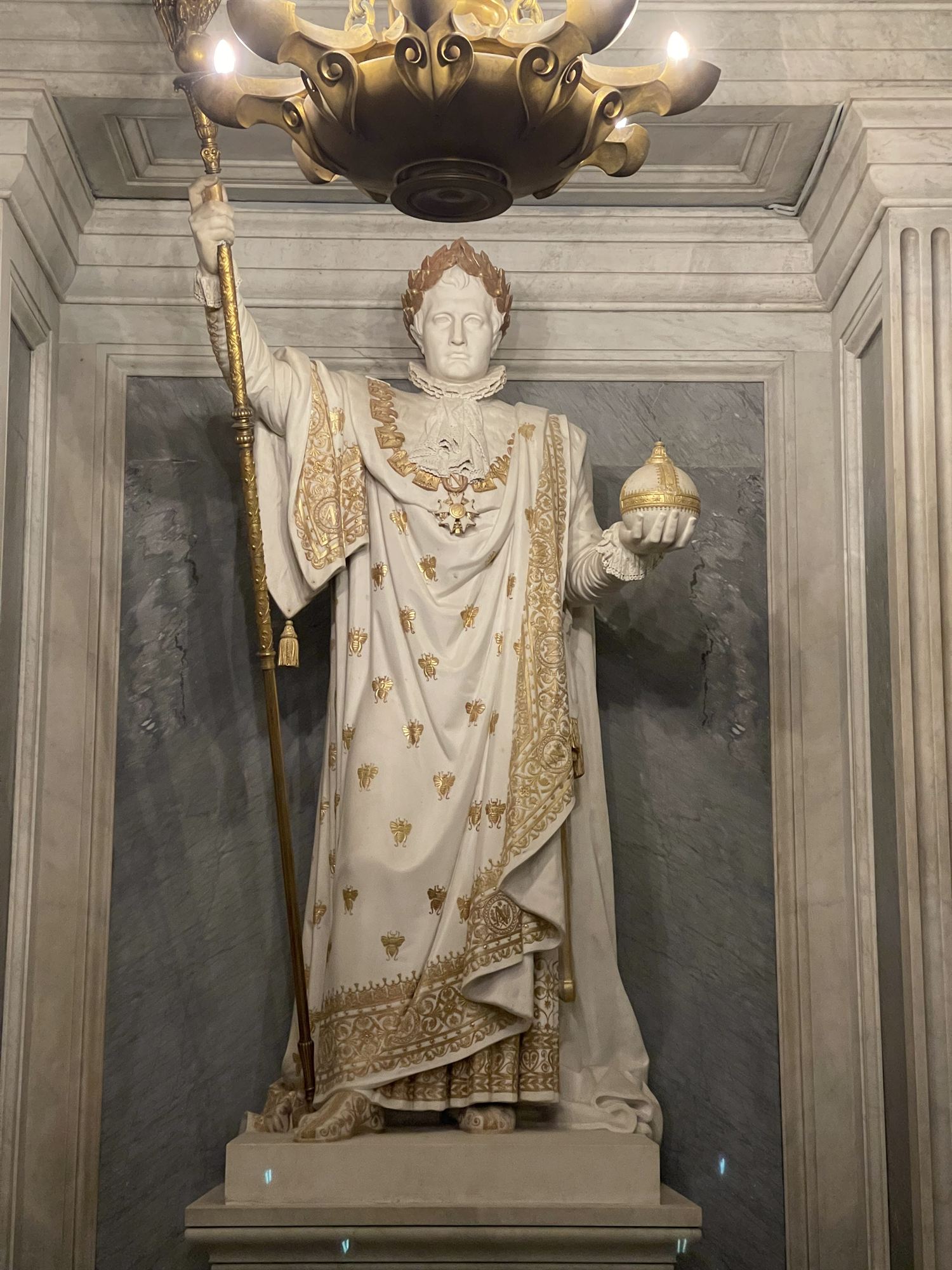
One quiet corner of the church holds the tomb of Napoleon II — his son, given the title "Roi de Rome" (King of Rome) at birth in 1811. After Napoleon I's final fall in 1815, the boy was raised in Vienna by his mother's Habsburg family and died there of tuberculosis in 1832, aged just 21, without ever ruling anything. His remains stayed in Vienna for over a century until 1940, when Adolf Hitler — during the German occupation of France — had them transferred to Paris as a political gesture, to be placed near his father. Under Habsburg burial custom, his heart and other organs remained behind in Vienna, split from the rest of his body according to tradition.
Marble, Reliefs, and Quiet Corners
Nearby, the quieter corridors around the tomb are lined with marble relief carvings and lesser-known statues — including a dark bronze figure of Jérôme Bonaparte, Napoleon's youngest brother. Napoleon made him King of Westphalia in 1807, and decades later, under the Second Empire, he was named a Marshal of France and President of the Senate before his death in 1860. He's buried here too, a side note to his brother's much larger legend.
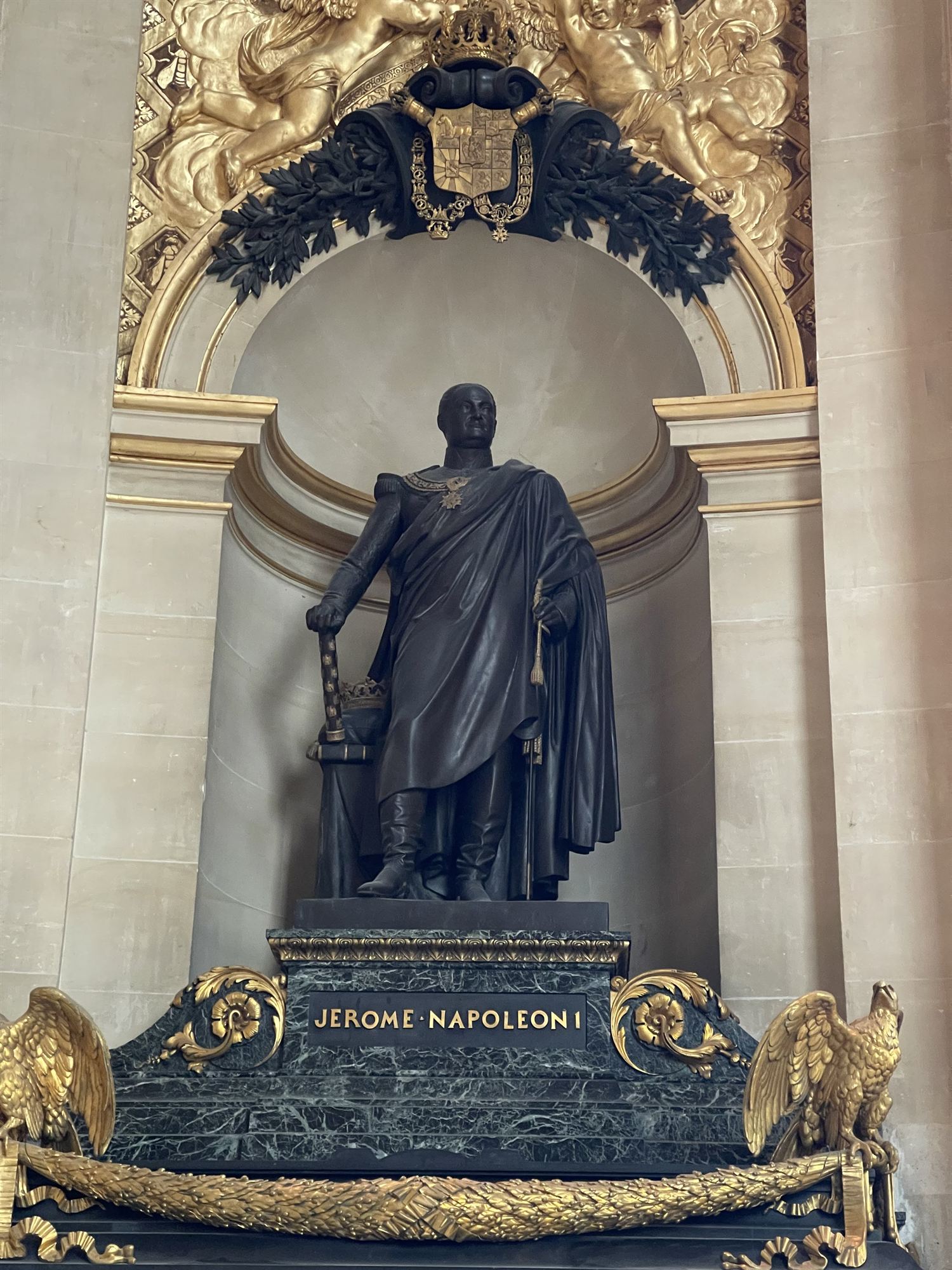

This is a heavier, more reflective museum than the average Paris stop — it works well scheduled the day after something lighter and more energetic, giving the day its own distinct mood rather than competing with a packed sightseeing itinerary.
The Weight of War and Memory
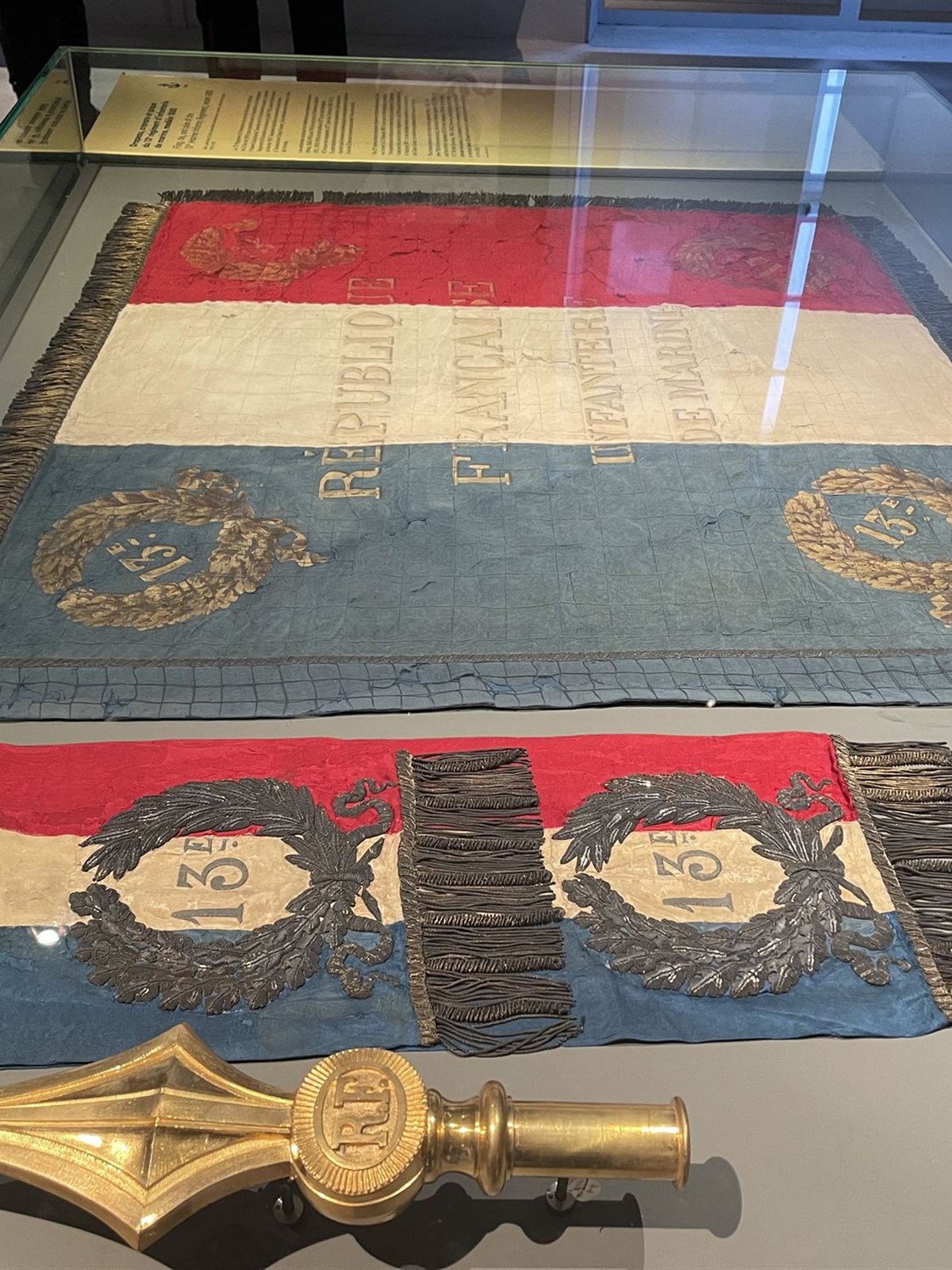
Having taken in the tomb and its quieter corners, we walked on into Musée de l'Armée itself, one of the largest collections of arms and armour in the world, spanning from medieval weaponry to the two World Wars. One gallery, dedicated to "Étiquette et Cérémonie," displays Napoleon's own ceremonial court dress — a heavy velvet coat trimmed in gold thread, worn at the imperial court, alongside ceremonial sabres. Nearby, regimental flags from the Republic's early infantry units, their silk faded and fringes tarnished with age, are laid out under glass.

Further into the museum, rows of artillery pieces and early military vehicles — some dating back to the horse-drawn era, others from the first mechanised armies of the early 20th century — trace how warfare itself changed shape over a few short decades.
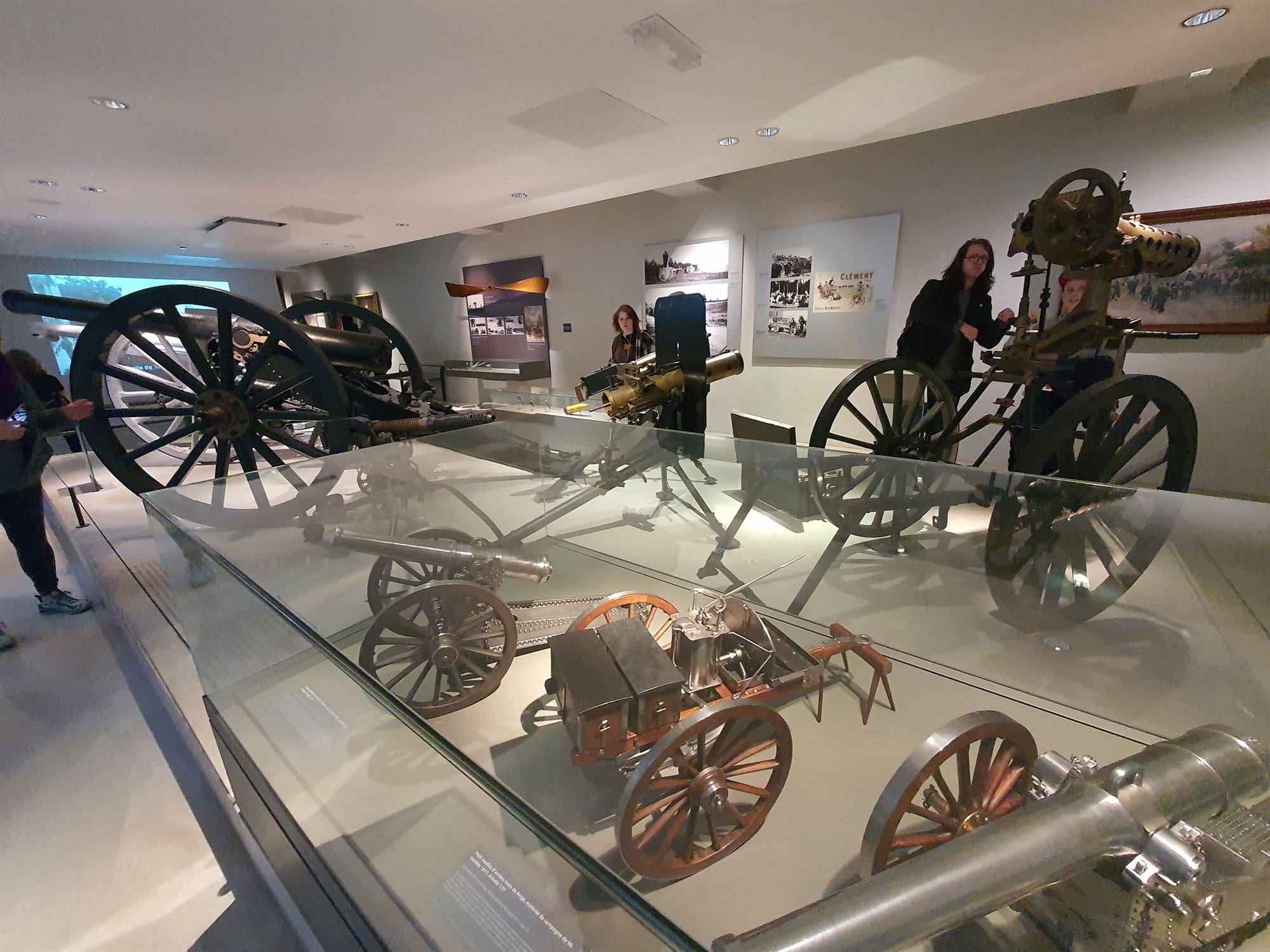
Some areas felt heavy to walk through. Yet the museum never felt overwhelming — it invited a slower kind of attention. Even our daughter became surprisingly curious, pausing to look closely at old vehicles, uniforms, and displays that brought history to life in a way classrooms sometimes cannot.
Leaving with Quiet Thoughts
By evening, we stepped back into the cold Paris air, tired after a long day at the museum. The city was still lively around us — cafés busy, streets glowing, people rushing past — but after spending hours surrounded by history that stretched from Napoleonic sabres to a Habsburg burial custom, we found ourselves walking a little more quietly. It had been one of the most substantial days of our Paris trip, not for the sights themselves but for how much they added up to.