
Quick Facts
- Date
- Tuesday, 27 December 2022 — Day 2 in Paris
- Region
- Central Paris, France
- Covers
- Trocadéro, Eiffel Tower, Champs-Élysées, Place de la Concorde, Pont Alexandre III, Palais Garnier
- Best time
- Morning for the tower, evening for the lights
- Good for
- A full first day in the city
We left Zurich by train on 26 December and reached Paris at about 8:30pm local time, tired from the journey and ready for bed. The first full day in the city was the next morning.
A City That Felt Alive Everywhere
Our first full day in Paris felt like stepping into a completely different rhythm of life. Everywhere we looked, there was something beautiful waiting to be noticed — elegant buildings with intricate balconies, golden statues glowing under the winter sun, cafés spilling onto busy streets, and little corners that made us stop and look twice.

Paris amazed us with its elegance and grandeur. Even an ordinary walk felt interesting because there was always something happening around us. The city felt alive in every direction.
An Unexpected Kindness in the Metro
Before reaching the Eiffel Tower, we encountered a small moment that quietly became one of the memories we treasured most from this trip.
At the metro gate, our prepaid tickets suddenly refused to work. We stood there confused for a while, trying to understand what had gone wrong while people rushed past us during the busy morning.
Then unexpectedly, a family of four walked over and offered us their extra metro tickets — enough for all three of us to enter. We were genuinely touched by the gesture. It was such a simple act of kindness, yet it warmed us deeply, especially being so far away from home.
That moment reminded us that no matter where you travel, good people can always be found.
Paris metro machines can be fussy with foreign chip cards and pre-loaded tickets. Carry a small amount of euro coins as backup, and budget a few extra minutes at the gates in case a ticket needs re-tapping.
Seeing the Eiffel Tower for the First Time
Gustave Eiffel's engineering firm built the tower for the 1889 World's Fair, to mark the centenary of the French Revolution. At 330 metres including its antennas, it was the tallest structure on Earth for 41 years, until the Chrysler Building overtook it in 1930. It was meant to be temporary, dismantled after twenty years, but it survived because it proved useful as a radio mast. Standing beneath it and looking up through the iron latticework, the history is easy to forget. It simply feels enormous.

We made our way up level by level, stopping at the glass floor panels on the first level — installed in 2014, 57 metres above the ground — for the slightly dizzying experience of looking straight down between your own feet.
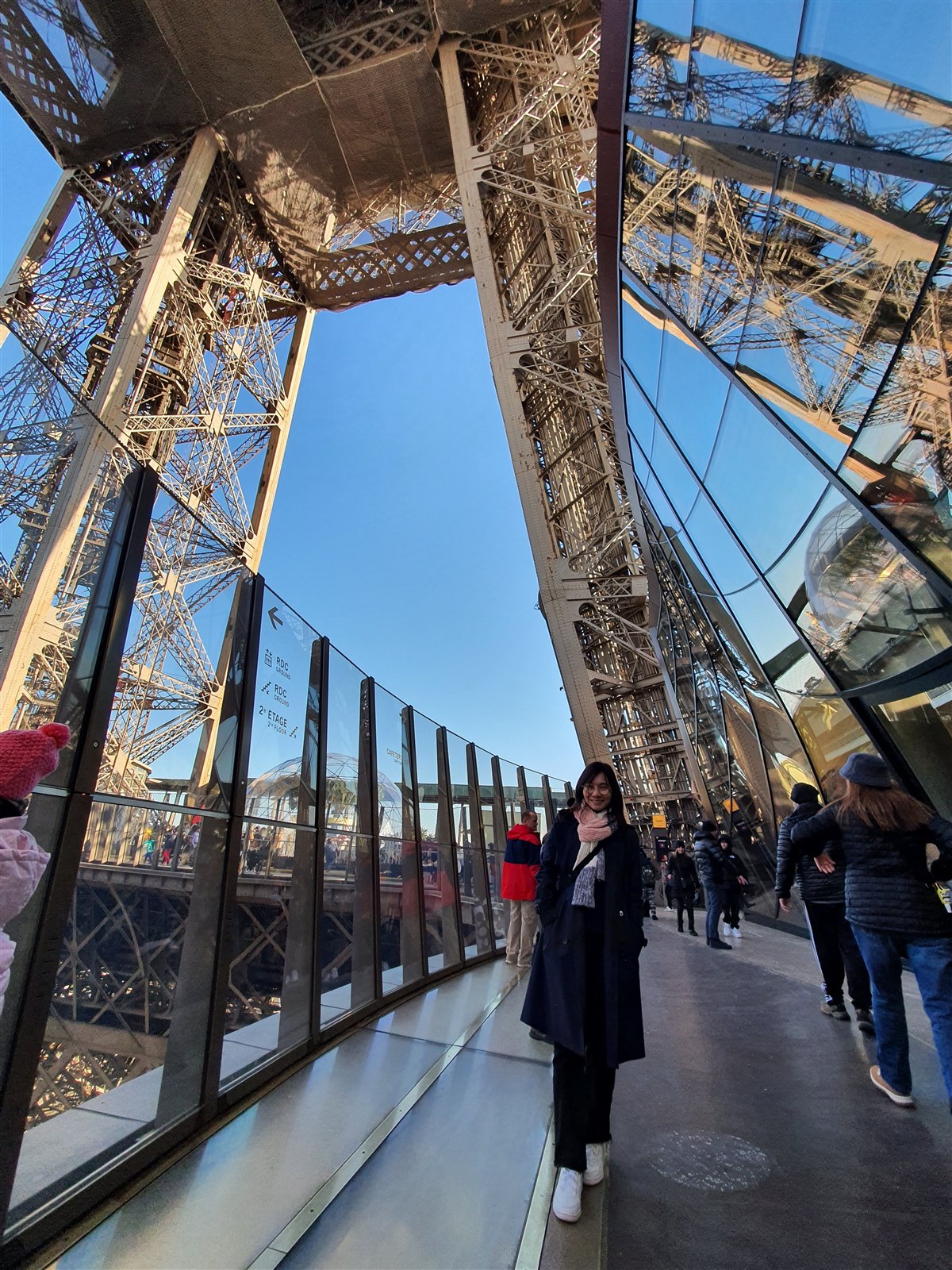 Walking the glass-walled gallery on the first level.
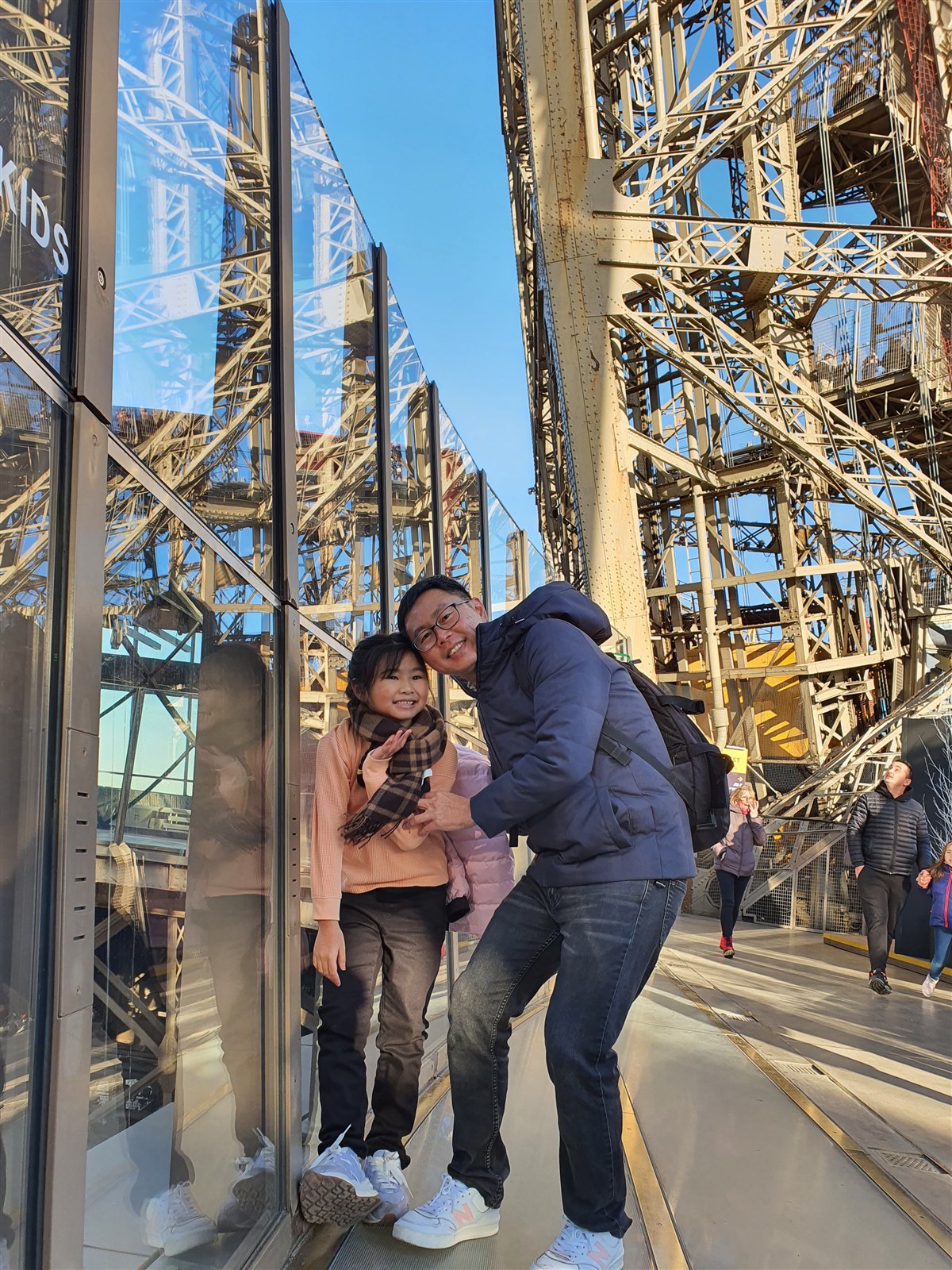 The two of us beside the glass panels.
The View From the Top
From the upper levels, Paris opens out in every direction — the Seine cutting through the city, bridge after bridge crossing it, and landmarks picking themselves out of the rooftops. Looking south, the gilded dome of Les Invalides, which holds Napoleon Bonaparte's tomb, catches the light from over two kilometres away.
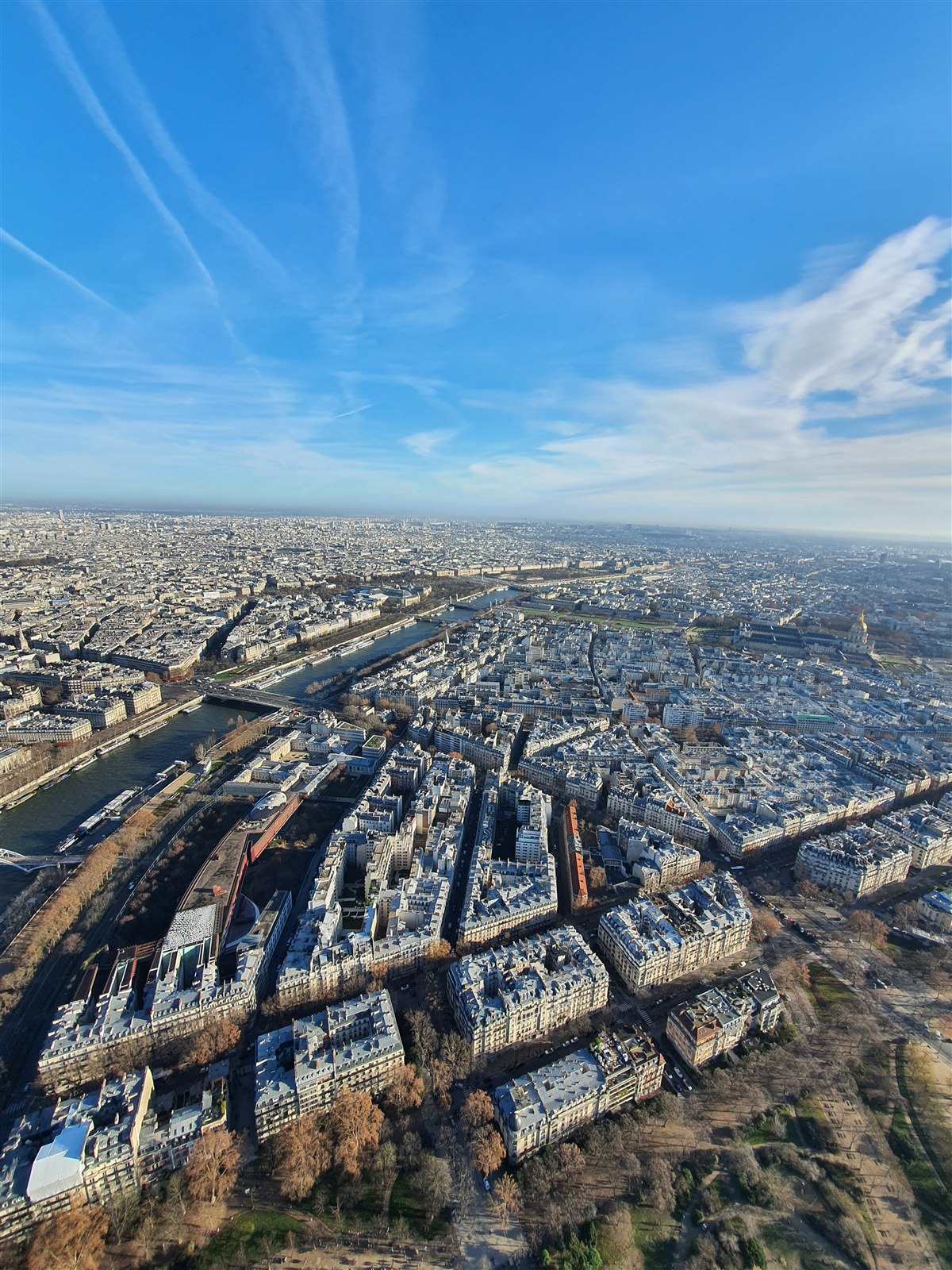 The rooftops of central Paris, with the Seine curving through the city.
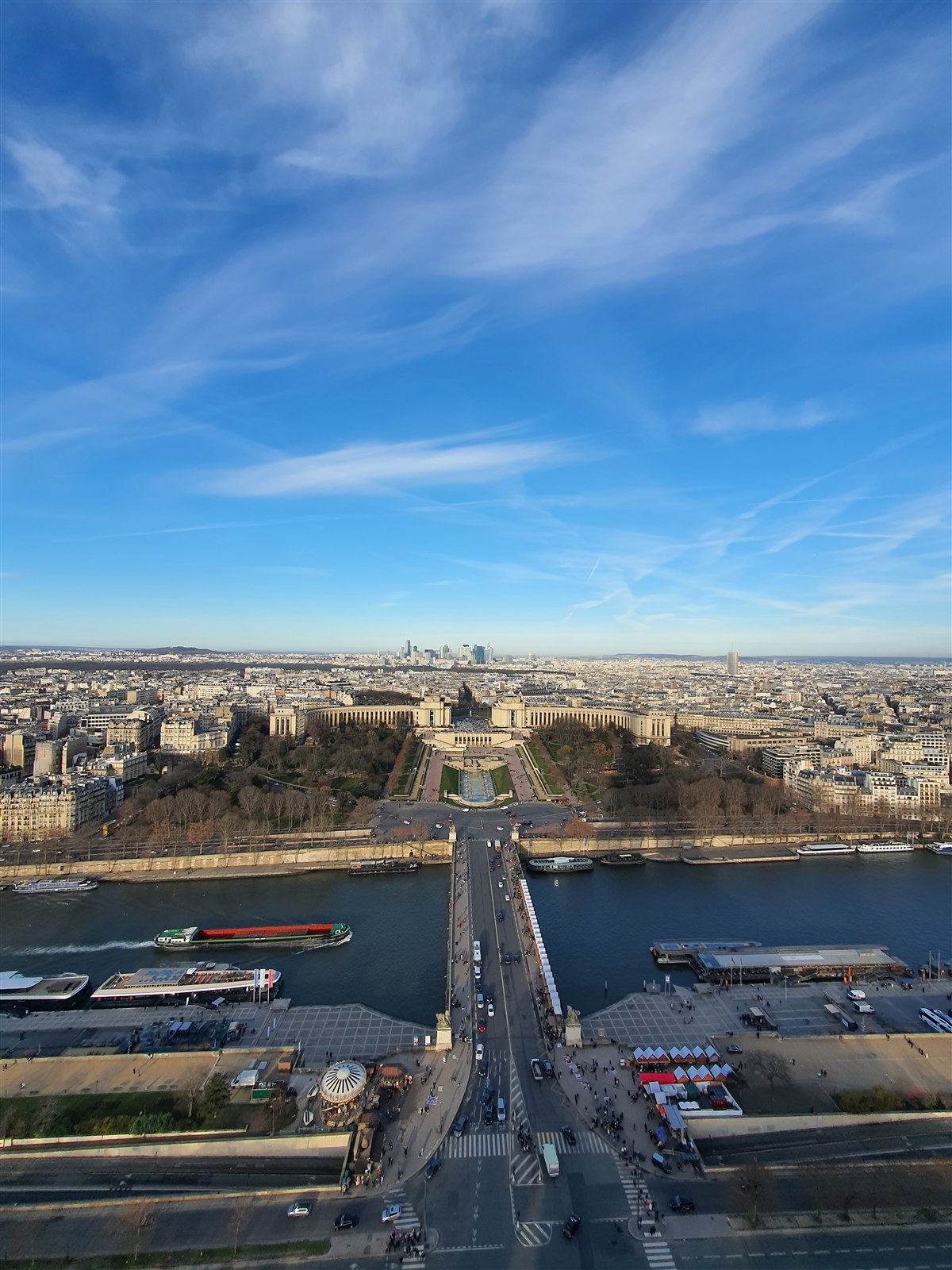 Looking across to the Trocadéro and the Seine bridge below.
Lunch Above Paris at Madame Brasserie
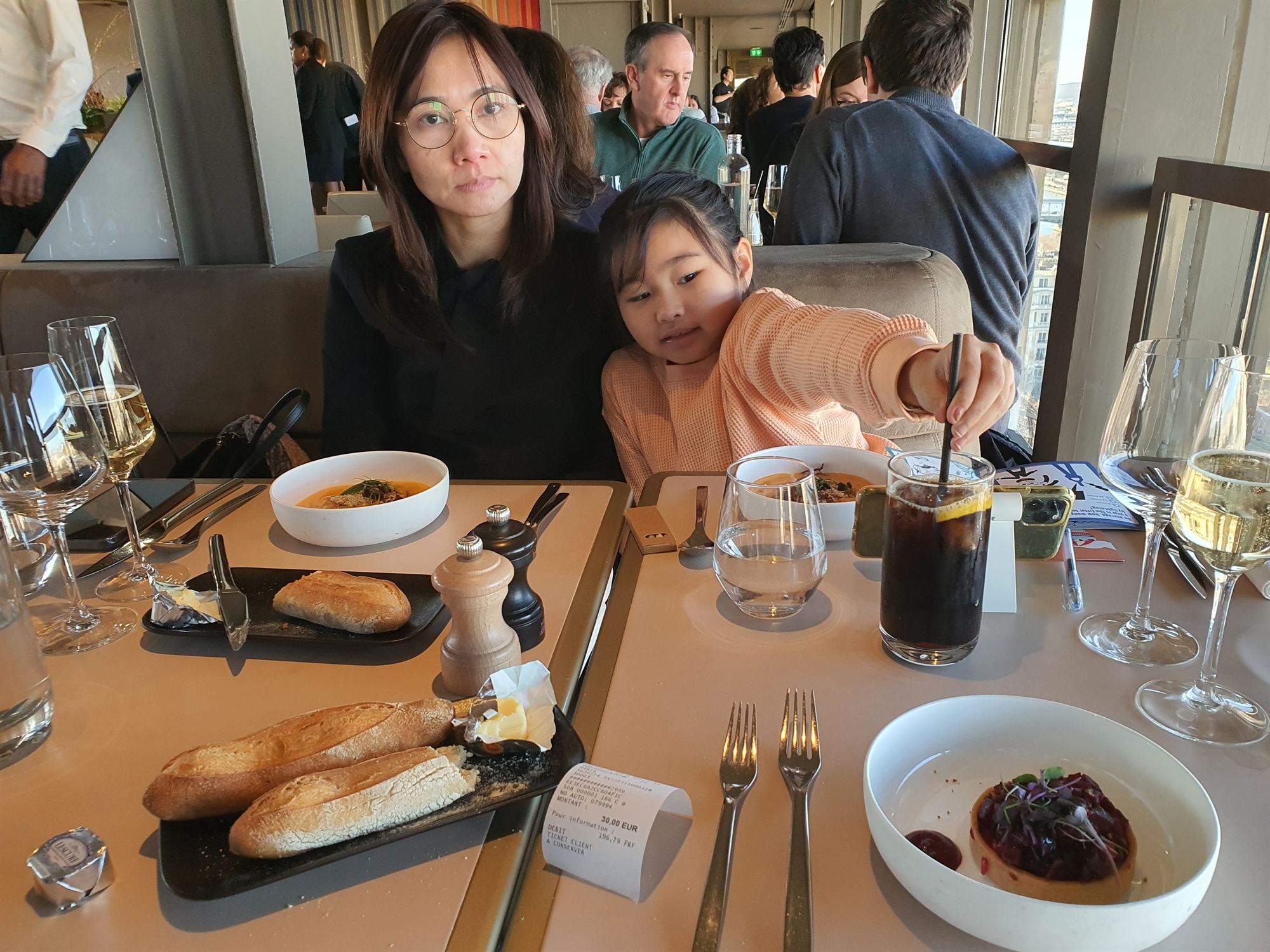
Around lunchtime, we made our way back down to Level 1 for our reservation at Madame Brasserie, the restaurant that opened on the tower's first floor in 2022 under chef Thierry Marx, replacing the previous restaurant on the same spot. We had booked a table with a view, and it turned out to be one of the most memorable meals of the whole trip. From our table, we could see the Seine flowing past, the Trocadéro gardens laid out below, and Parisian rooftops stretching into the distance under the winter sun.
Trocadéro — The View Everyone Comes For
After coming down from the tower, we stopped at the Trocadéro esplanade, framed by the curved wings of the Palais de Chaillot. The palace was built for the 1937 International Exposition, replacing an older structure from 1878, and its terrace has become the single most photographed vantage point of the Eiffel Tower — the view lines up almost too perfectly to be real.
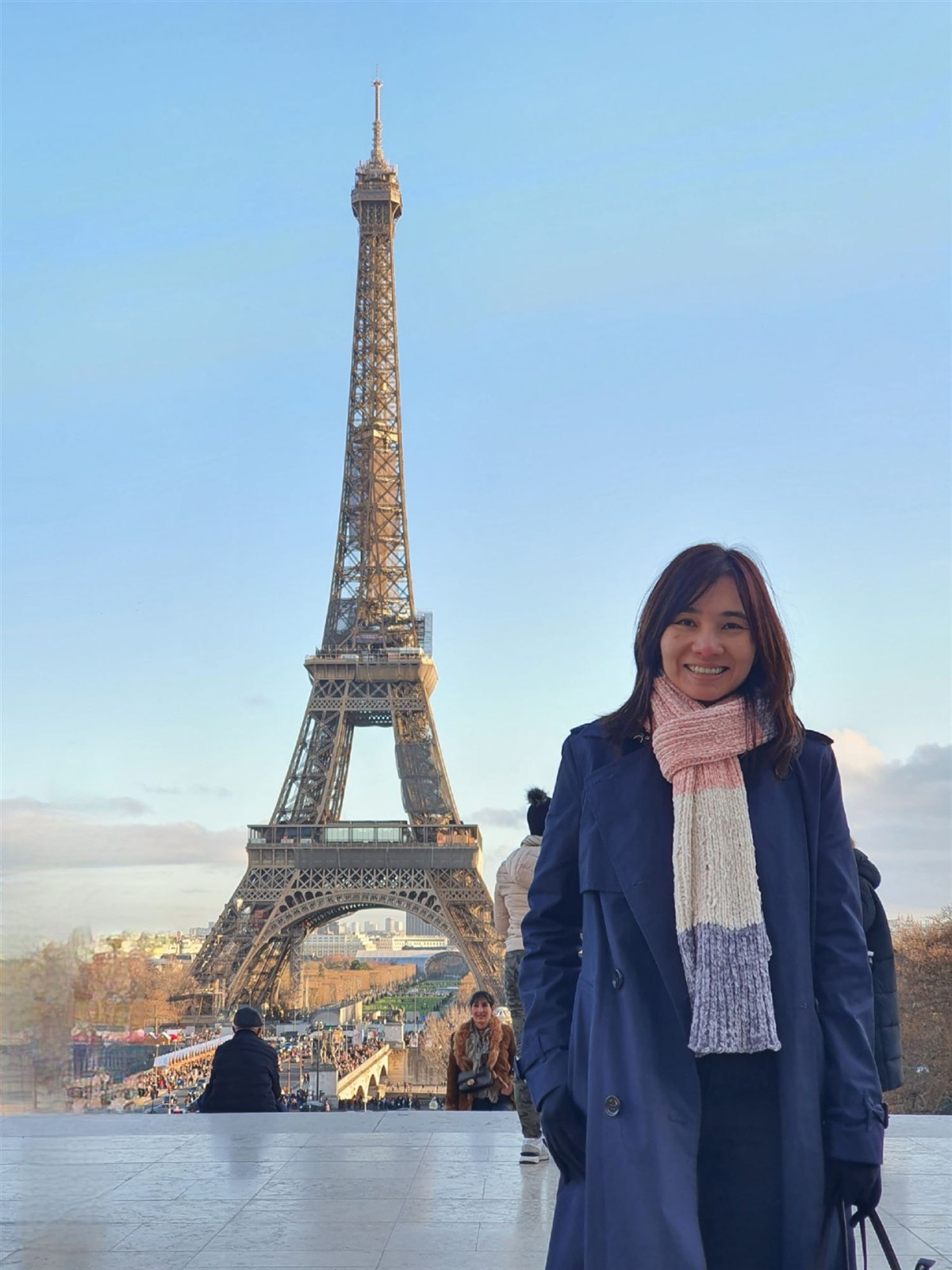 The classic view from Trocadéro, golden hour.
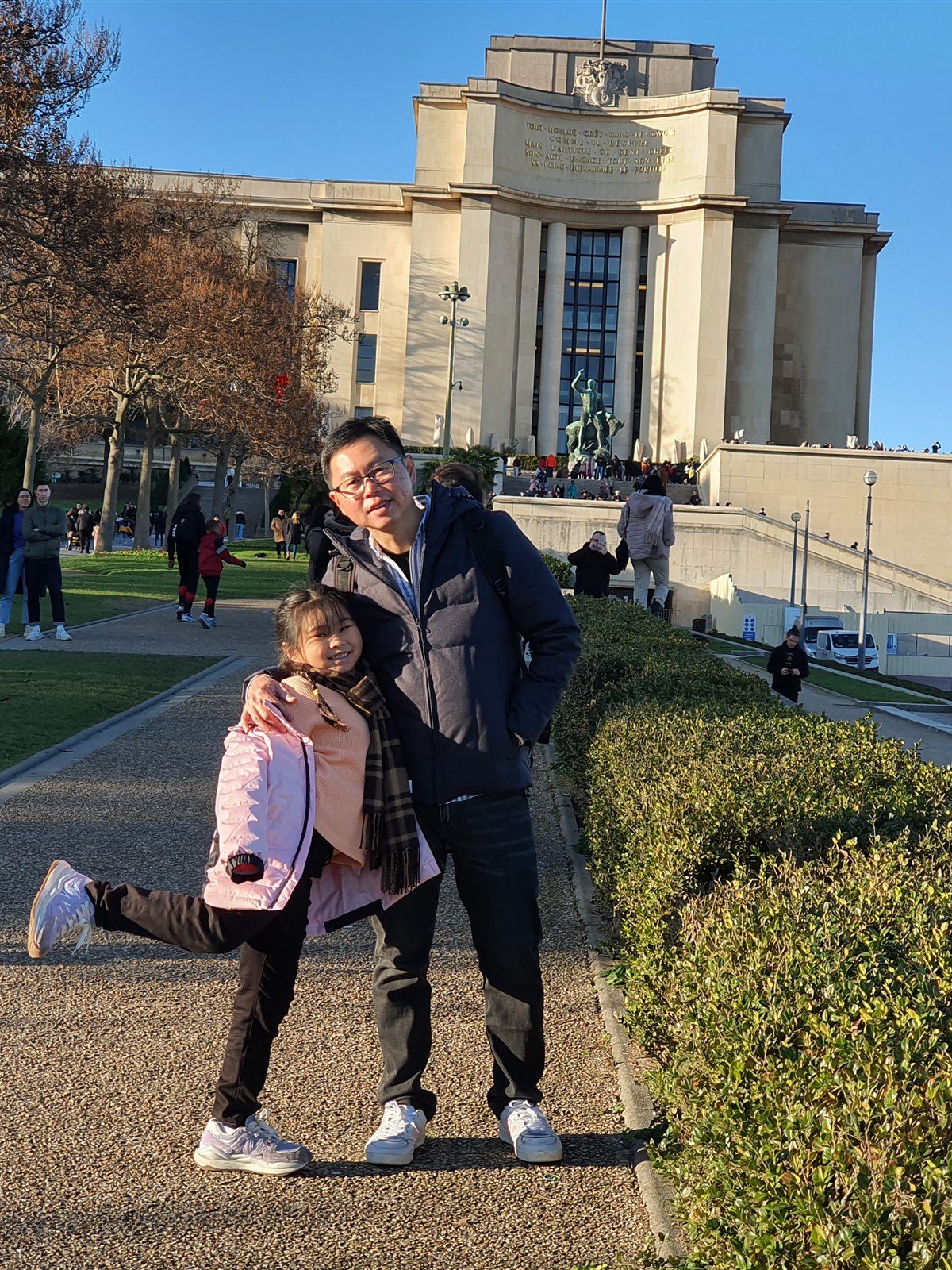 The two of us on the Trocadéro esplanade, the Palais de Chaillot behind us.
Wandering Through Grand Parisian Streets
In the afternoon, we explored the city at our own pace. We wandered near the elegant Champs-Élysées and the historic Place de la Concorde, surrounded by grand architecture, fountains, sculptures, and busy winter crowds.
We rode an open-top sightseeing bus, which gave us panoramic views across Paris. Our daughter sat quietly listening to the Paris history audio guide through her earphones while happily eating her snack at the same time, completely absorbed in both.
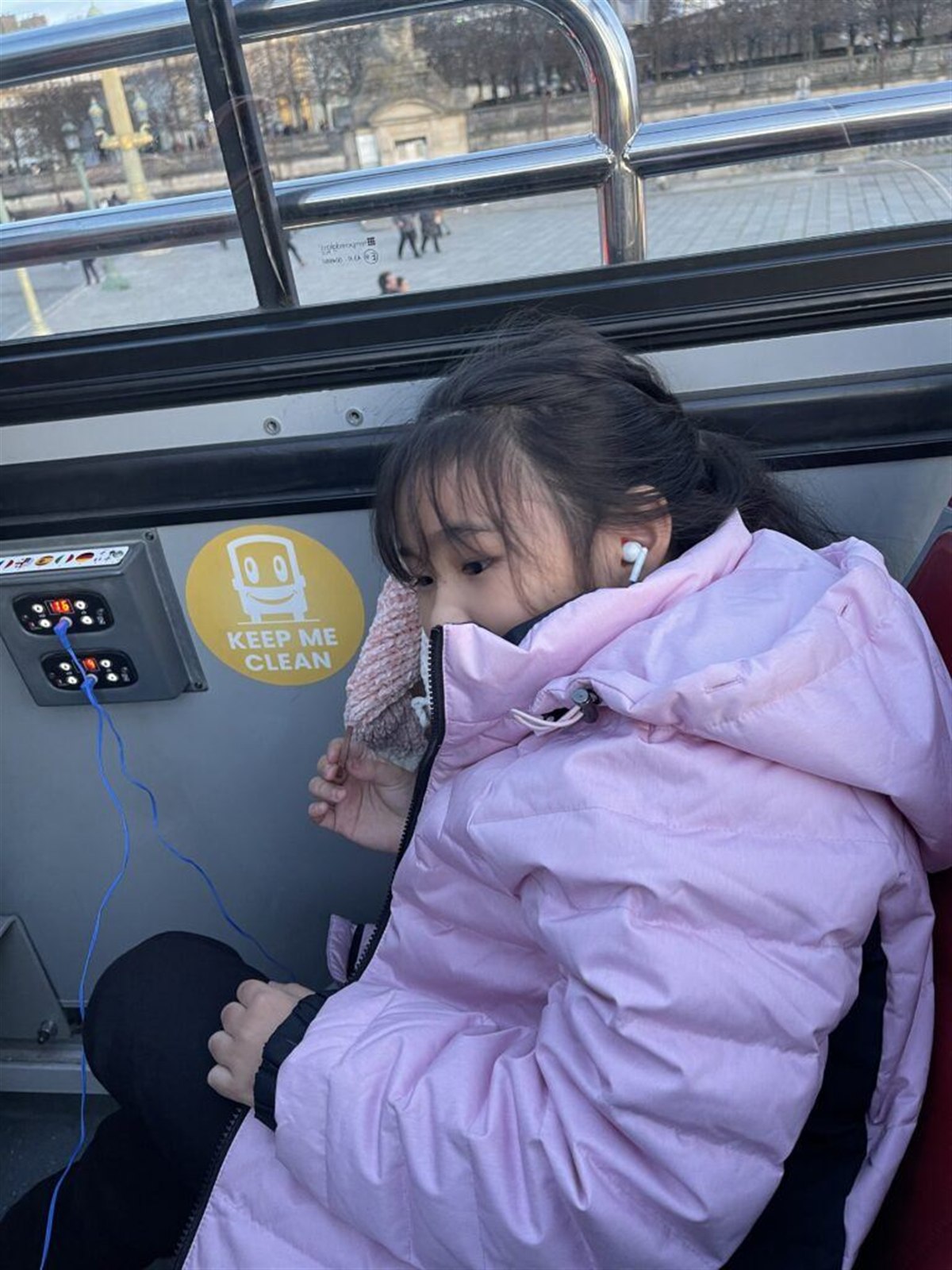 Listening to the history of Paris as the open-top bus rolled through the city streets.
 Crossing the beautiful Pont Alexandre III at dusk, with Paris slowly turning gold as night approached.
Along the Seine, the Pont Alexandre III stood out even among Paris's many bridges. It was built for the 1900 World's Fair, and its lamp posts are topped with gilded winged horses, or "Fames," that catch the last light of the day.
Paris After Nightfall
As evening arrived, Paris transformed again. We made our way to the Palais Garnier, the city's opera house since 1875, designed by architect Charles Garnier and famous today as the building that inspired The Phantom of the Opera. At night, its gilded rooftop statues — including Apollo raising his lyre — catch the floodlights against the dark sky, and the whole square in front of it still draws a crowd well after dark.
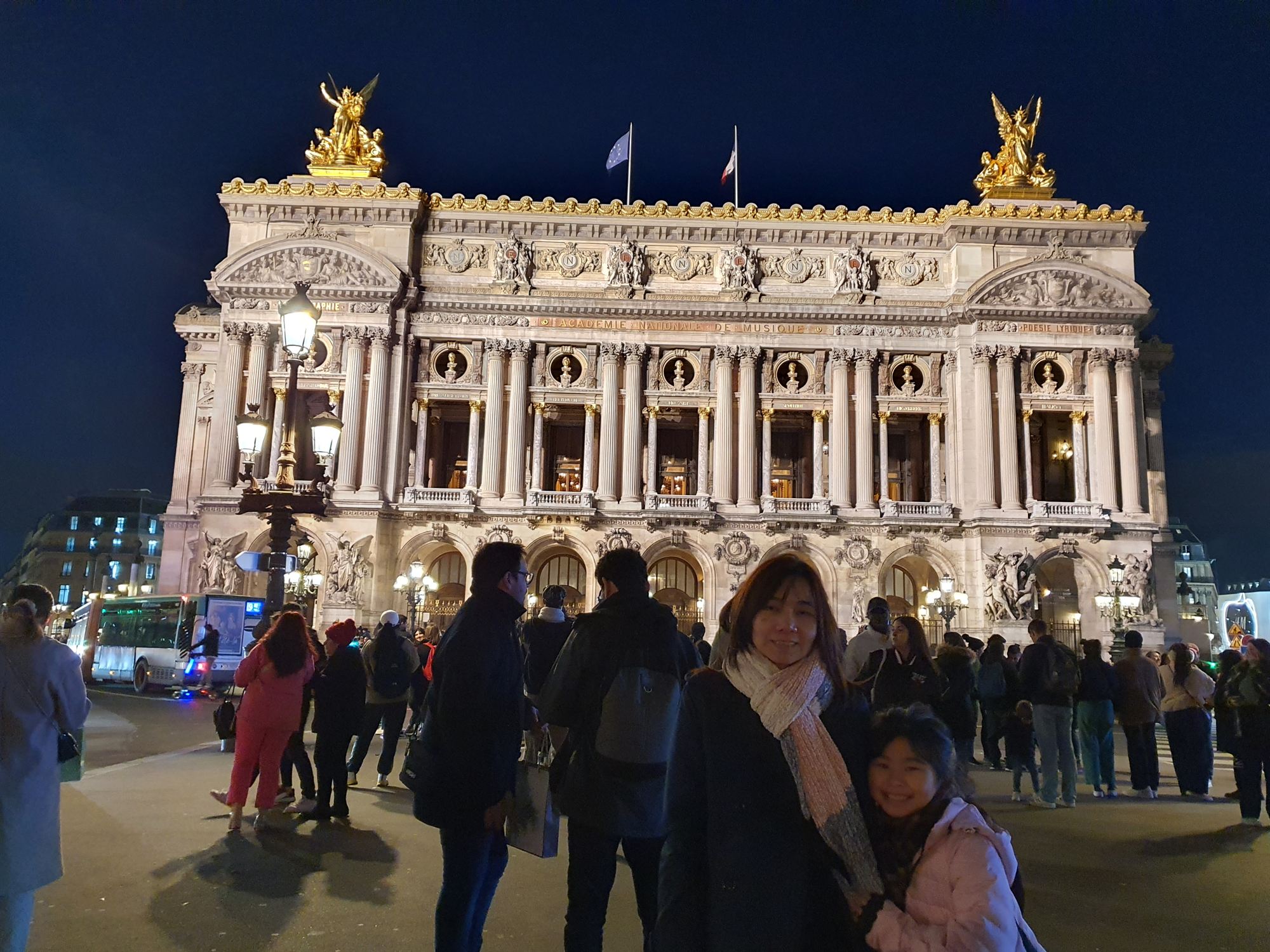
By the time we made our way back to the hotel, we were completely worn out from a full day of walking. It was the kind of tired that comes from a day well spent, with a metro gate rescued by strangers, a tower climbed level by level, and a city that looked just as good after dark as it did in daylight.