
Quick Facts
- Date
- Thursday, 22 December 2022 — Day 3 of 11
- Region
- Central Switzerland
- Covers
- Lucerne old town, Lion Monument, Chapel Bridge & Water Tower, Engelberg, Mt. Titlis (3,238m)
- Best time
- Winter for snow activities at the summit, year-round for the old town
- Good for
- A full-day guided coach trip from Zurich, with time in the old town and on the mountain
On the Road to Lucerne
Our coach left Zurich a little after nine and climbed over the Albis Pass, with the farmland opening out below the road. After the pass, the route ran along the shore of the Lake of the Four Cantons, and the water stayed in view for much of the way into Lucerne. The city tour began there, with a short walk through the centre before we had time on our own in the old town.
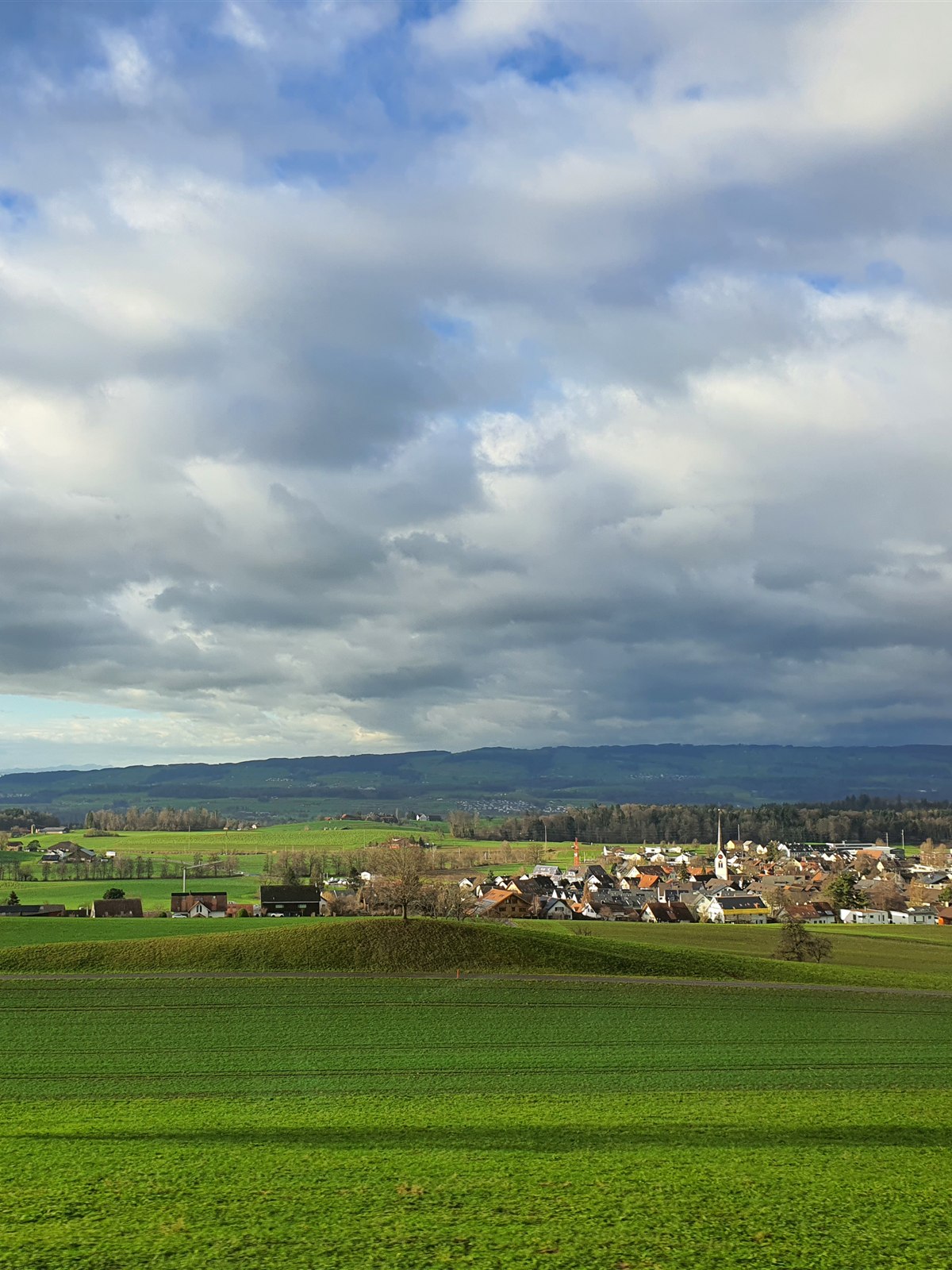 Green fields and a village church on the drive to Lucerne.
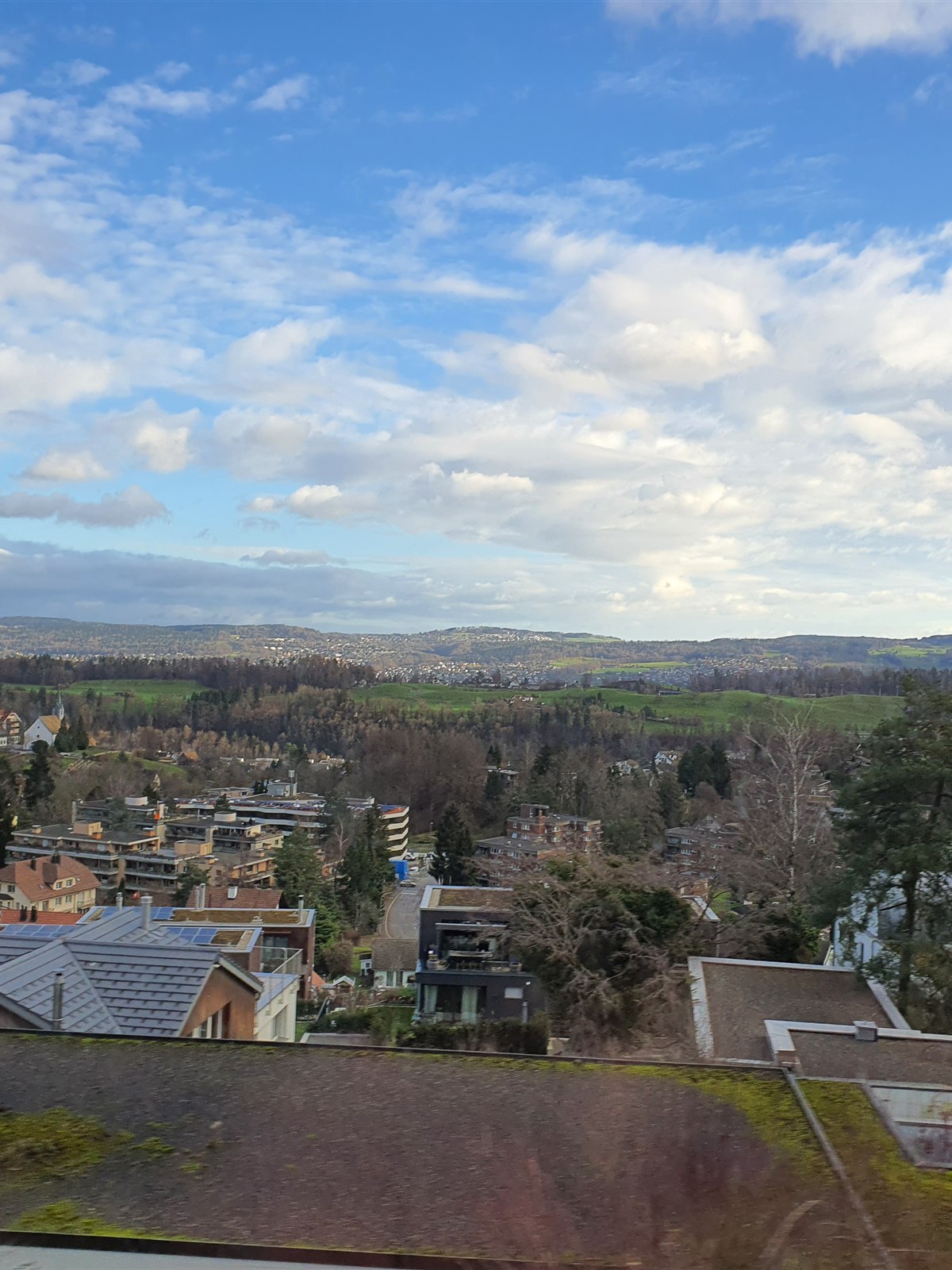 Hillside houses and forest, seen through the coach window.
A Quiet Pause — The Lion Monument
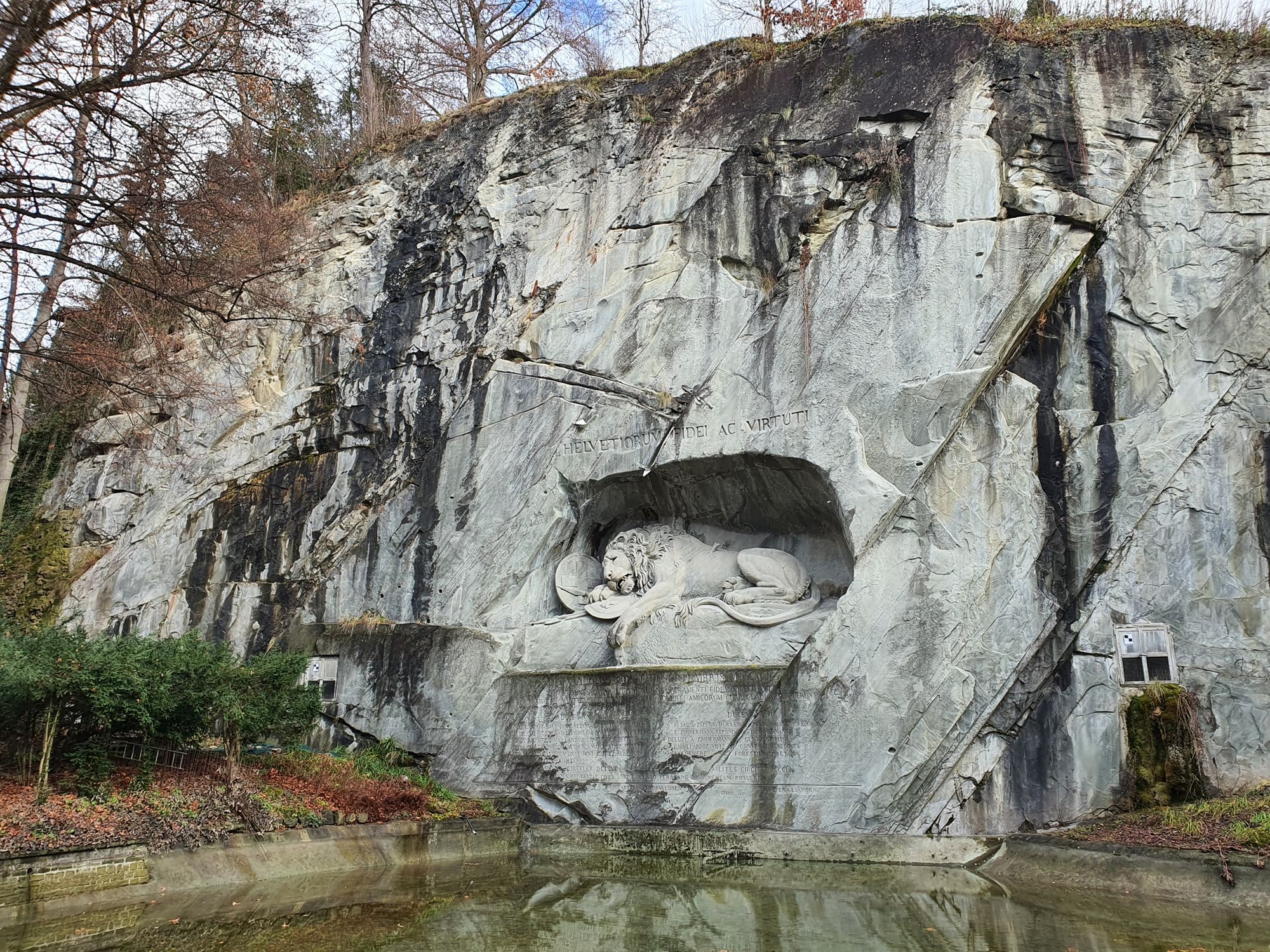
Our first stop was the Lion Monument, cut directly into a wall of sandstone in a quiet park just off the old town. Carved in 1820–21 by the stonemason Lukas Ahorn from a design by the Danish sculptor Bertel Thorvaldsen, it commemorates the Swiss Guards killed on 10 August 1792 while defending King Louis XVI at the Tuileries Palace in Paris during the French Revolution. Mark Twain, after seeing it on his own travels, called it "the most mournful and moving piece of stone in the world" in his 1880 book A Tramp Abroad — and standing in front of the dying lion, spear still in its side, it's easy to understand why the line has stuck for over a century.
A Stop at the Station Arch
From the monument we made our way to the main station, and stopped for photos at its grand arched entrance. The arch is the only part of the 1896 building that survived a fire in February 1971. It was later folded into the station that architect Santiago Calatrava completed in 1991.
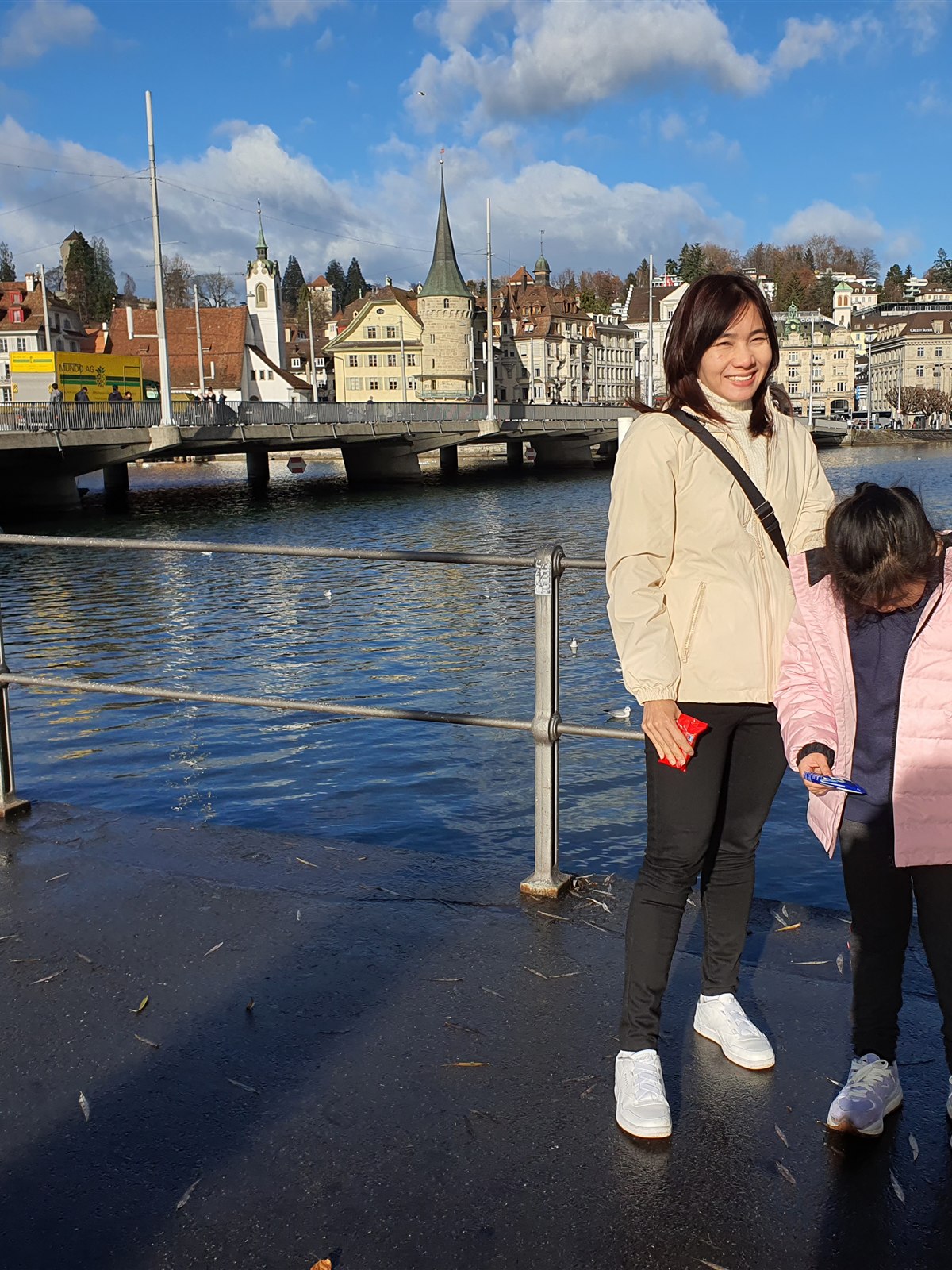 On the lakeside promenade, with the old town across the water.
 The station's surviving 19th-century arch, now the gateway to the old town.
Around the Old Town
From there we wandered the streets near the Reuss River, where the medieval Musegg Wall still climbs the hillside above the rooftops — a 870-metre stretch of 14th-century fortification with nine surviving watchtowers, several of which can still be climbed for a view over the whole city. Below it, the riverside is a run of tightly packed, brightly painted merchant houses that have barely changed in silhouette for centuries.


We also paused at one of the old town's ornate fountains near Kapellplatz.
 One of the old town's ornate fountains, near Kapellplatz.
 A cobbled lane in the old town, with a painted house at the far end.
Near the Lake
Our walk also brought us to the lakefront — boats moored along the quay, the Swiss flag snapping in the wind, and Mount Pilatus rising hazily on the far shore.

Crossing the Chapel Bridge
From the post office we walked to the Kapellbrücke, or Chapel Bridge, and crossed it on foot — a covered wooden footbridge first built in 1333, making it one of the oldest surviving bridges of its kind in Europe. It was originally part of the city's fortifications, and for centuries the interior gables carried a series of painted panels depicting Lucerne's history; a 1993 fire destroyed much of the bridge and many of the paintings, though it was rebuilt within months. Beside it stands the octagonal Wasserturm, or Water Tower, which dates to around 1300 and is actually older than the bridge itself. Over its long life it has served as a treasury, a city archive, a prison, and — grimly — a torture chamber; today it's simply the single most photographed silhouette in Switzerland.

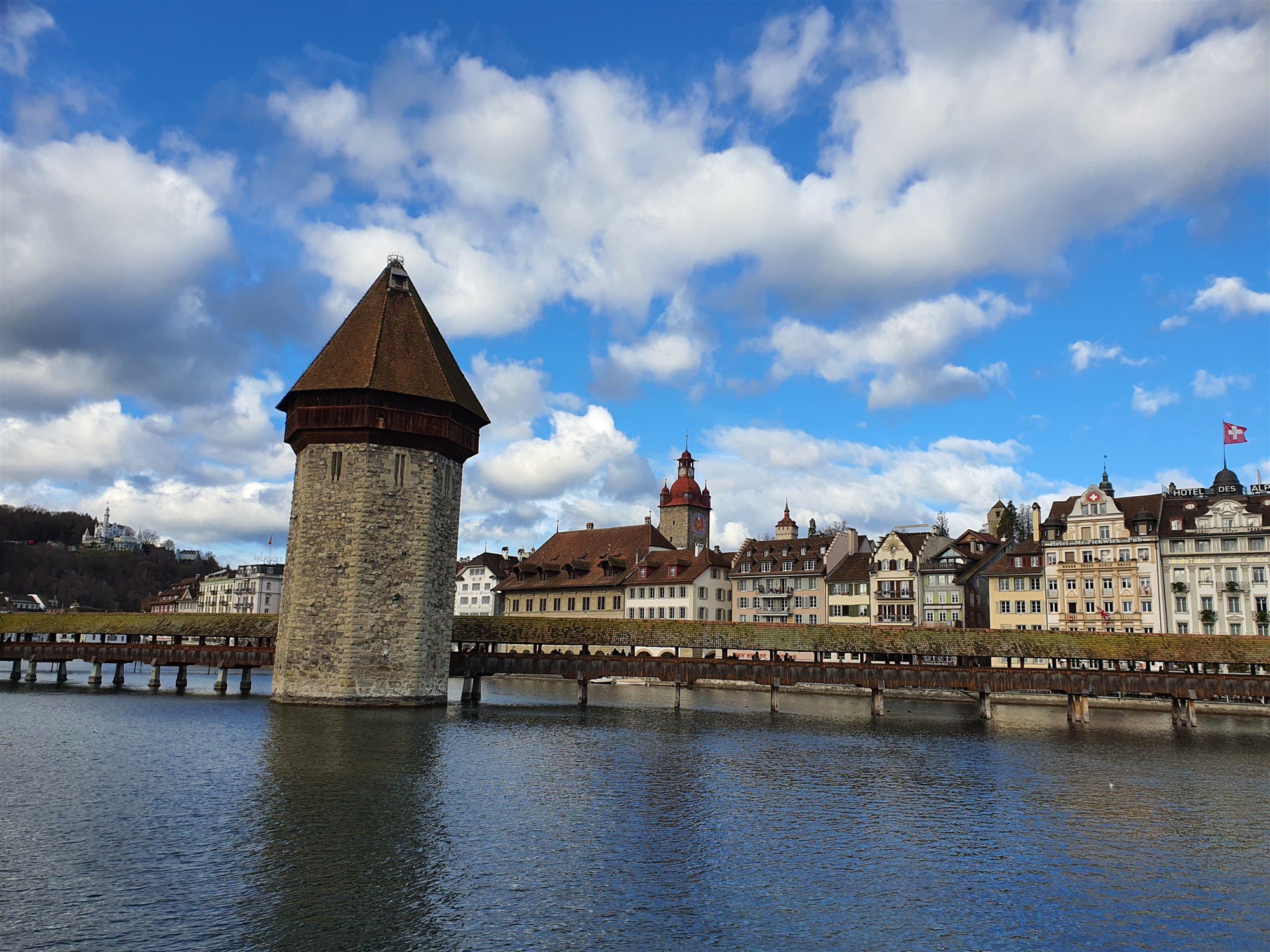
The old town is compact enough to cover on foot in two to three hours, which makes it easy to pair with the Titlis trip in a single long day — but if your kids tire easily, the Lion Monument, Kapellplatz, and Chapel Bridge are all within about ten minutes' walk of each other, so you can trim the route without missing the highlights.
Into the Valley Toward Engelberg
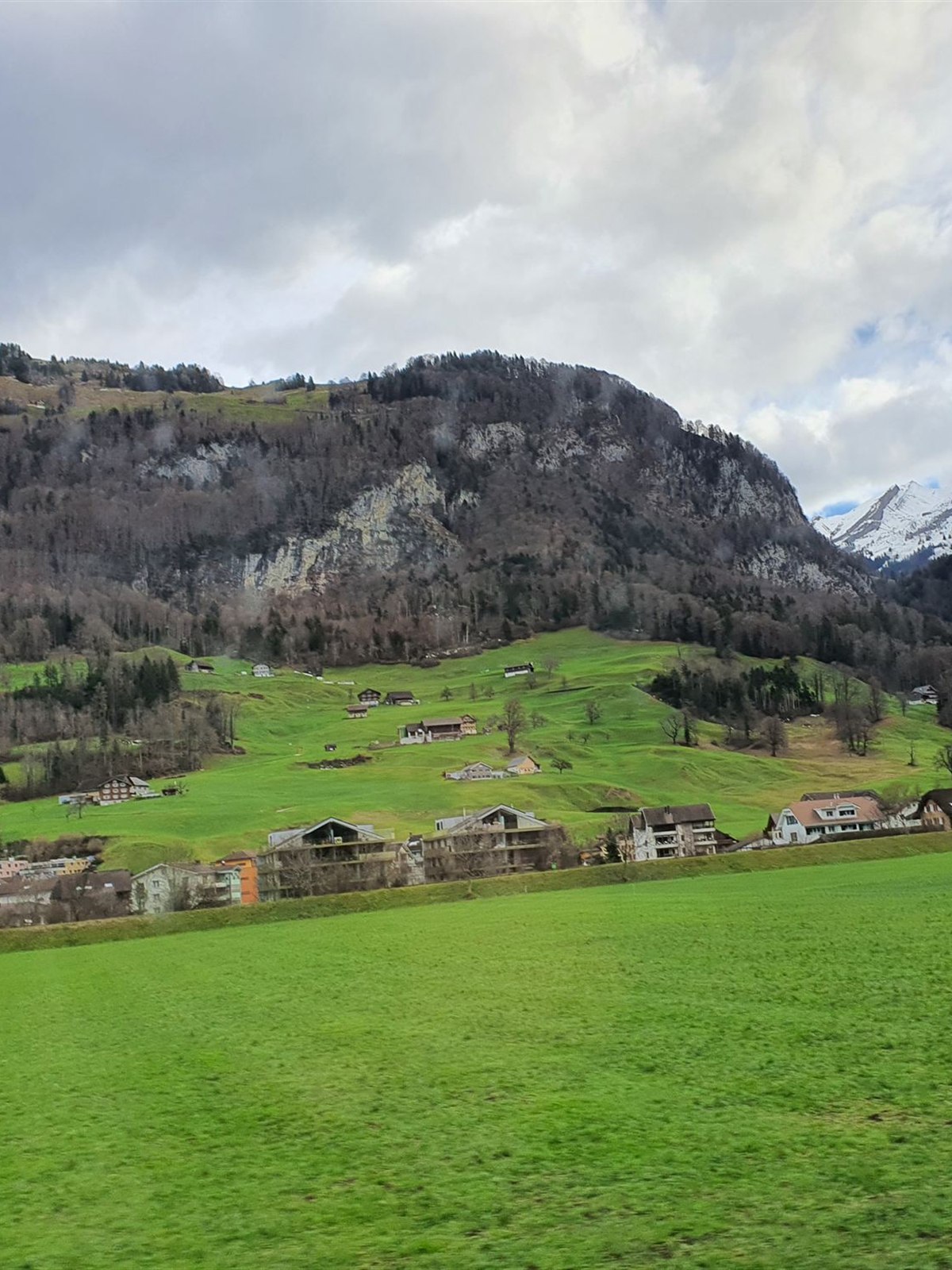
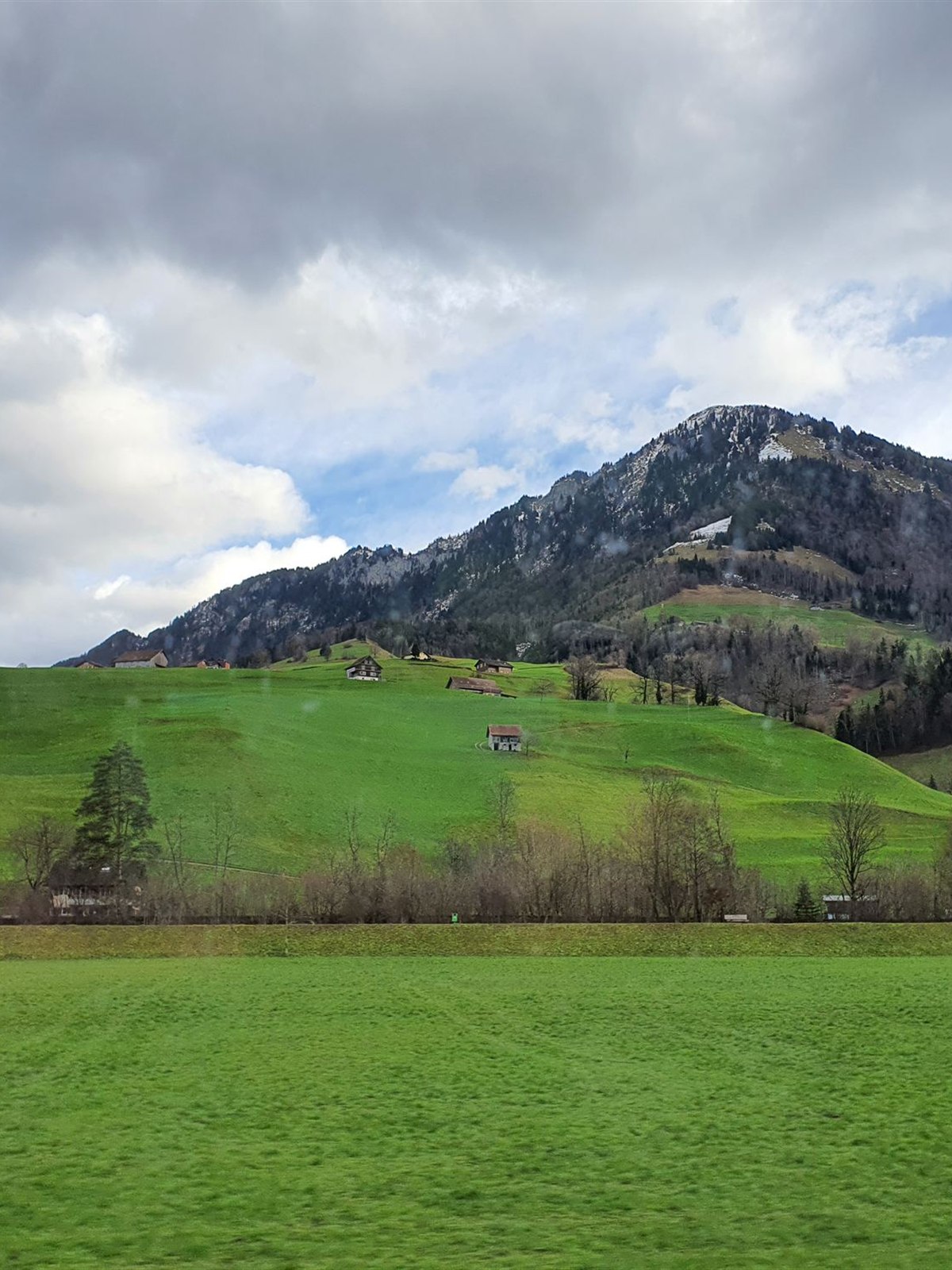
From Lucerne, we continued toward Engelberg, and the scenery slowly began to change. Lake plains gave way to steep green valleys, working farms tucked against the hillsides, and, further along, the first snow-capped peaks appeared above the tree line.
Journey Up to Mt. Titlis
At Engelberg, we boarded the rotating Titlis Rotair gondola — the world's first revolving cable car, introduced here in 1992. As it climbed the final stretch to the summit, the entire cabin floor slowly turns a full circle, so nobody is stuck facing the wrong direction. The view shifted with every rotation: valleys dropping away below, glacier ice ahead, and a quiet sense of anticipation building the higher we climbed.
 Our group in the Engelberg car park, with the snowy peaks behind.
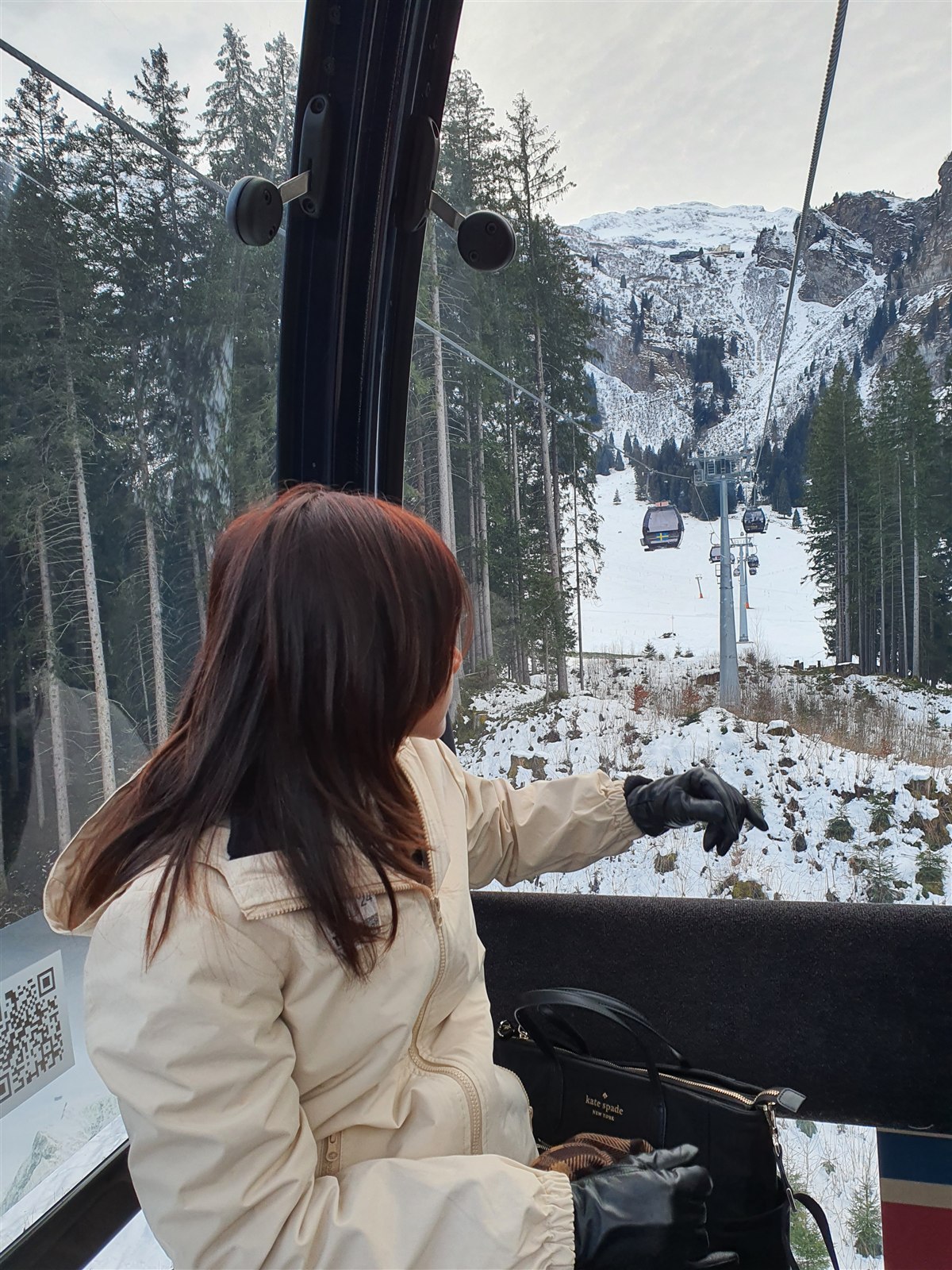 Pointing out the slopes from the cable car window.
At the Top — Snow, Sky, and Stillness
At 3,238 metres, the summit sits above the tree line year-round, with snow underfoot even in summer. We warmed up with lunch at the mountain restaurant — one of the highest in the Alps — sitting by the window and watching cloud banks drift below eye level rather than above it.
 Walking the summit platform, with the snowy peaks behind.
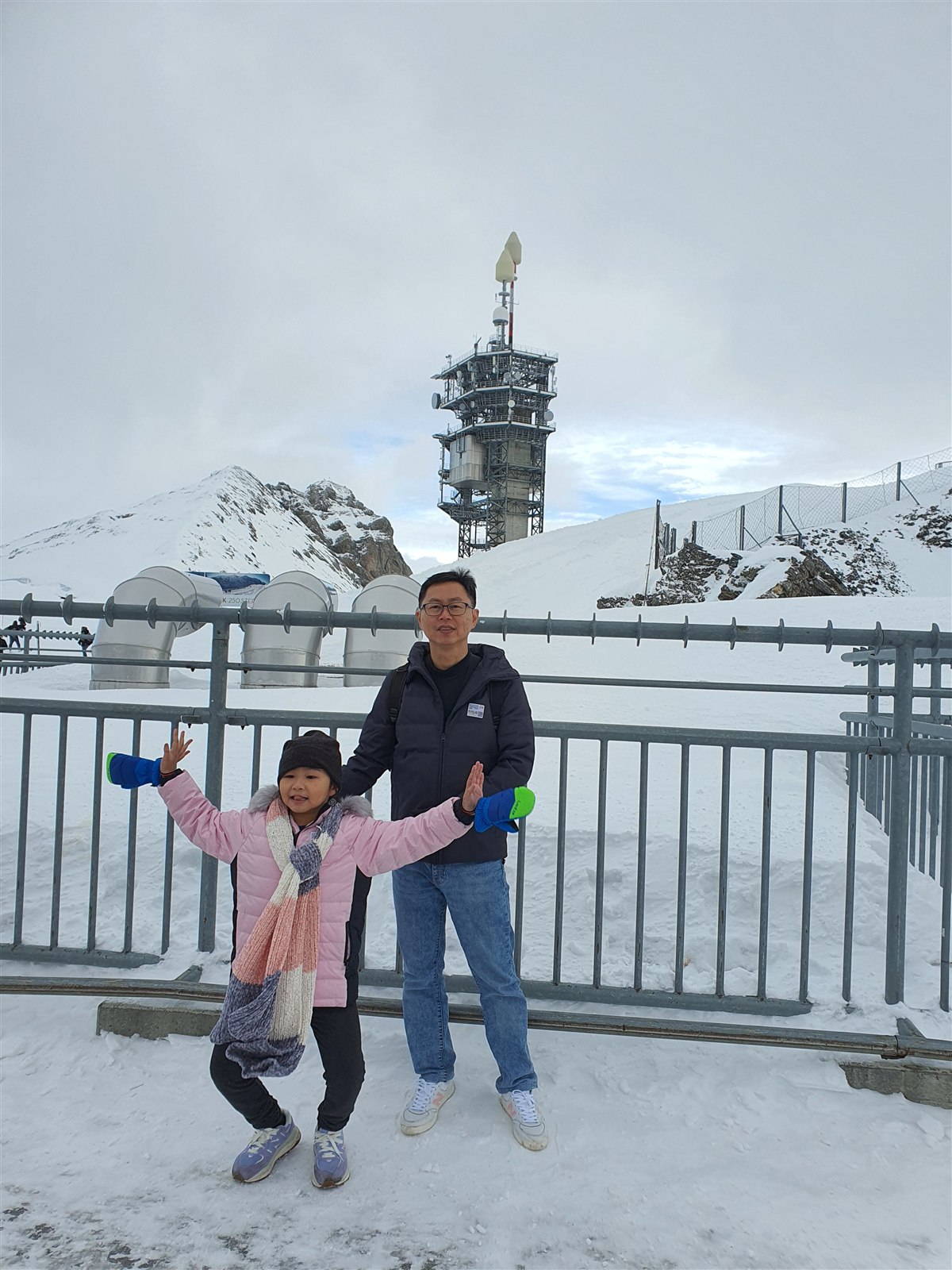 The summit tower behind us, arms out against the snow.
The summit sits at 3,238 metres and can be well below freezing even when Lucerne is mild. Pack proper gloves, hats and a warm layer for kids — the mountain restaurant is a welcome place to thaw out before heading back out to the Cliff Walk.
Ice, a Cliff Walk, and Snow Tubing
After lunch, we explored the summit's cluster of attractions. The Glacier Cave, carved roughly 15 metres beneath the surface of the Titlis Glacier, runs about 150 metres through blue-tinted ice. From there, the Titlis Cliff Walk — Europe's highest suspension bridge, a 100-metre span opened in 2012 — crosses a sheer drop with the glacier below, and the Ice Flyer chairlift carries riders directly over a field of crevasses that you'd otherwise never get close to on foot.
Snow tubing at Glacier Park rounded out the visit — a simple, low-effort activity that worked for every age in our group, and the closest thing to pure play the whole trip offered.
Heading Back Down
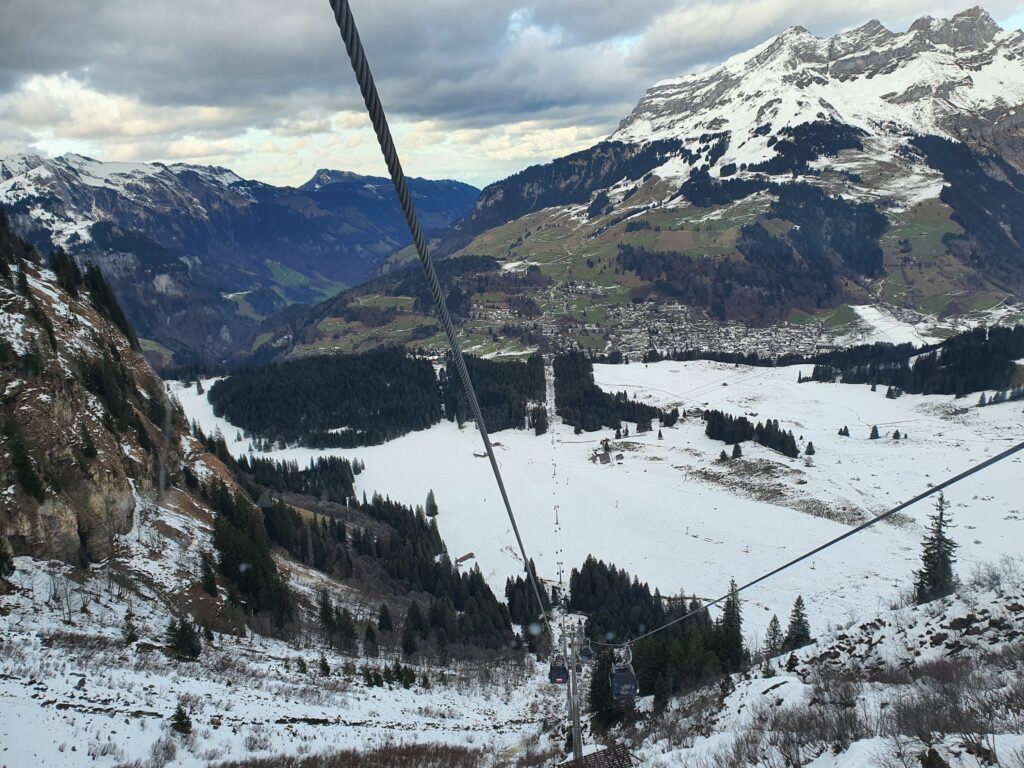
By the time we rode the Rotair back down to Engelberg, we'd covered a full range of what this part of Switzerland offers in a single day — a medieval old town, a 700-year-old bridge, and a glacier at 3,000 metres, all reachable from Lucerne without an overnight stay.