
Quick Facts
- Date
- Thursday, 19 December 2024
- Tour
- Neuschwanstein Castle + Linderhof Palace and Oberammergau — bundled with the Romantic Road tour, S$486.92 total
- Meeting point
- Karlsplatz 21, München — boarding from 8am, tour runs 8:15am–7pm
- Not included
- Entrance to both castles, €37 per person, paid by card on the bus
- Region
- Bavaria, Germany
- Covers
- Linderhof Palace, Hohenschwangau, Neuschwanstein Castle
- Best time
- Winter for fewer crowds and snow-covered views
- Good for
- A full day, starting early from Munich
Two Castles Built by One King
Day 11, 19 December, was booked as a Neuschwanstein and Linderhof coach tour, boarding at Karlsplatz 21 from 8am for a long day that ran through to 7pm — both of King Ludwig II's best-known building projects in a single trip.
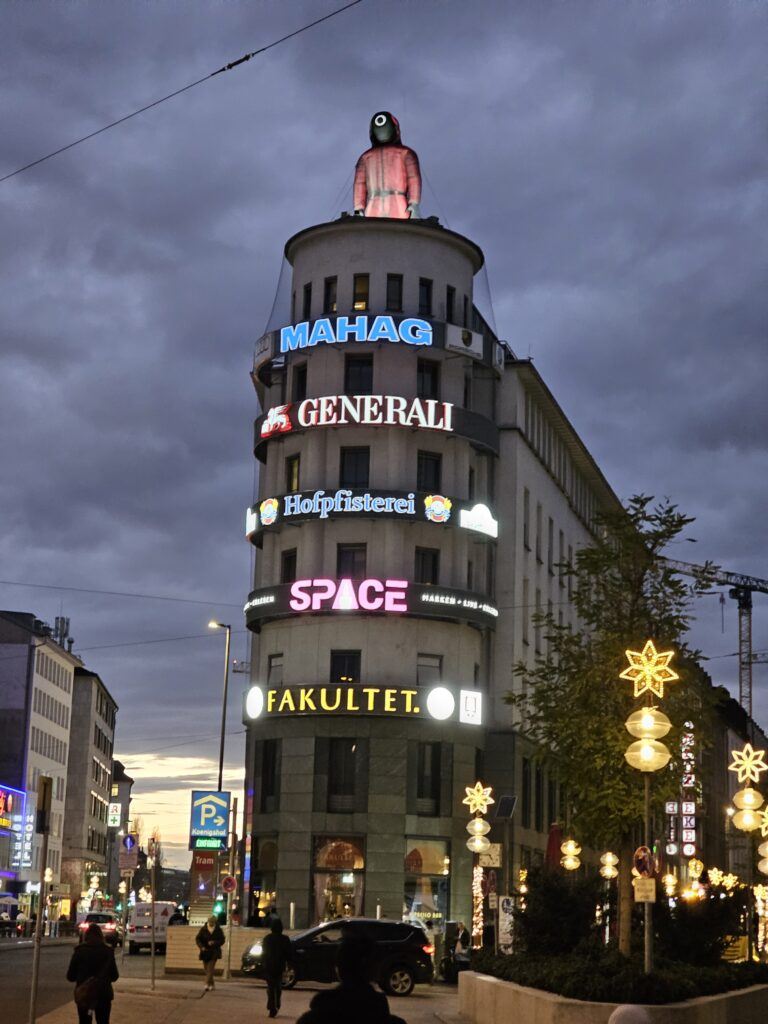 Karlsplatz, before sunrise.
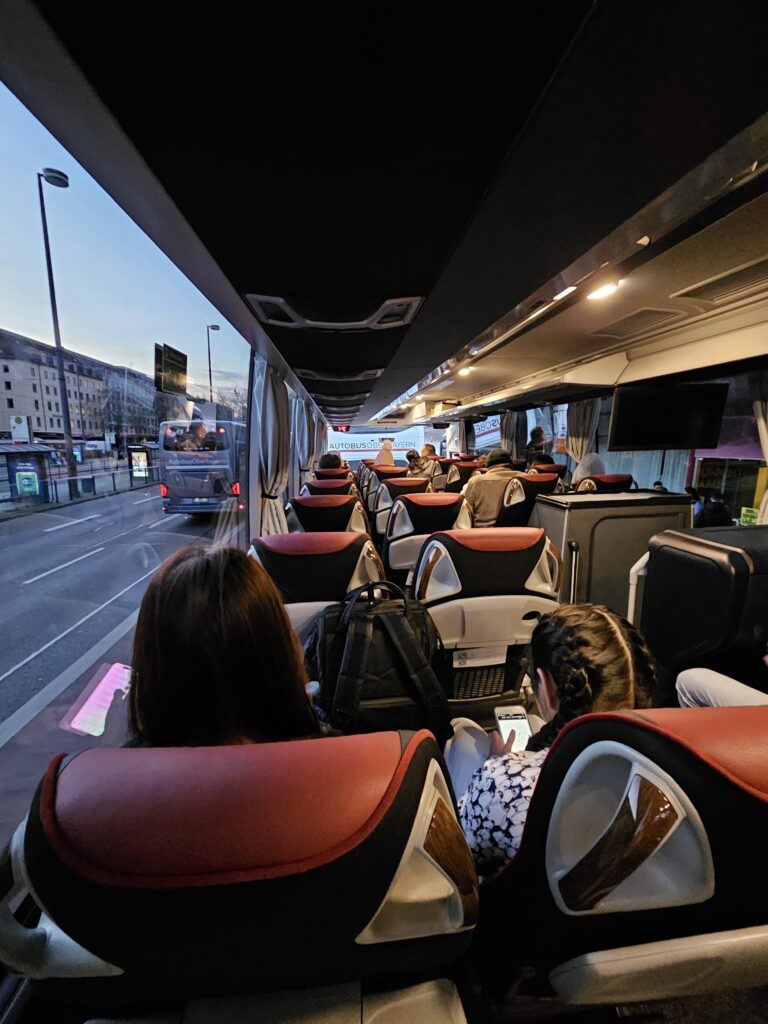 Boarding the bus for the day ahead.
Linderhof Palace
Our first stop was Linderhof Palace, a smaller but incredibly ornate palace built by King Ludwig II — and the only one of his three great building projects he actually lived to see finished. Modelled loosely on Versailles, it hides a private grotto behind the main house, an artificial cave complete with a rowable lake and a stalactite ceiling, built purely so Ludwig could stage private performances of his favourite Wagner operas whenever he liked. The elegant architecture, detailed interiors, and peaceful surroundings reflected his love for beauty and imagination — a king who reportedly preferred to sleep by day and hold court by night, all inside a palace built as an elaborate, private stage set.
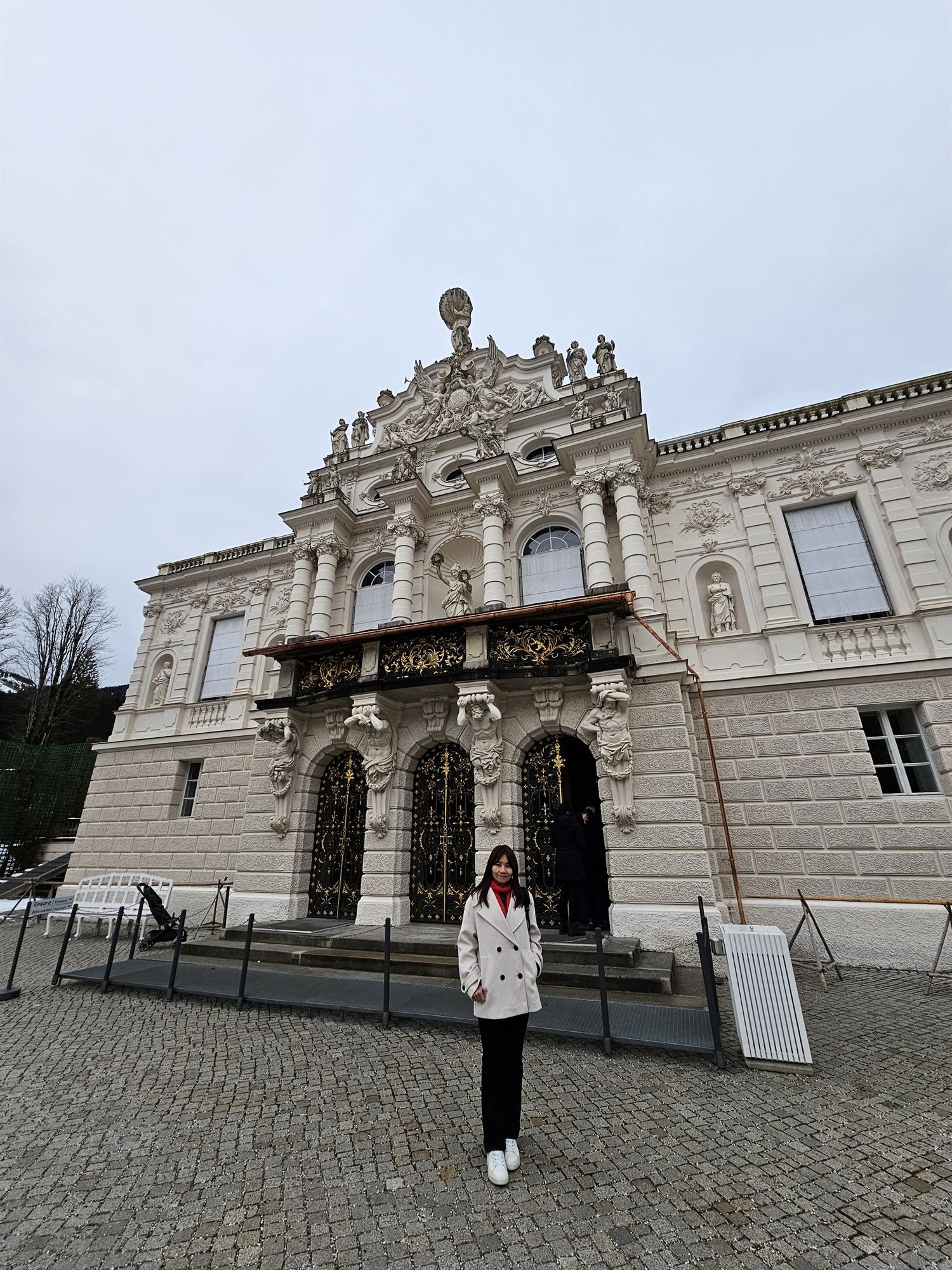 Linderhof — the only palace Ludwig II lived to see completed.
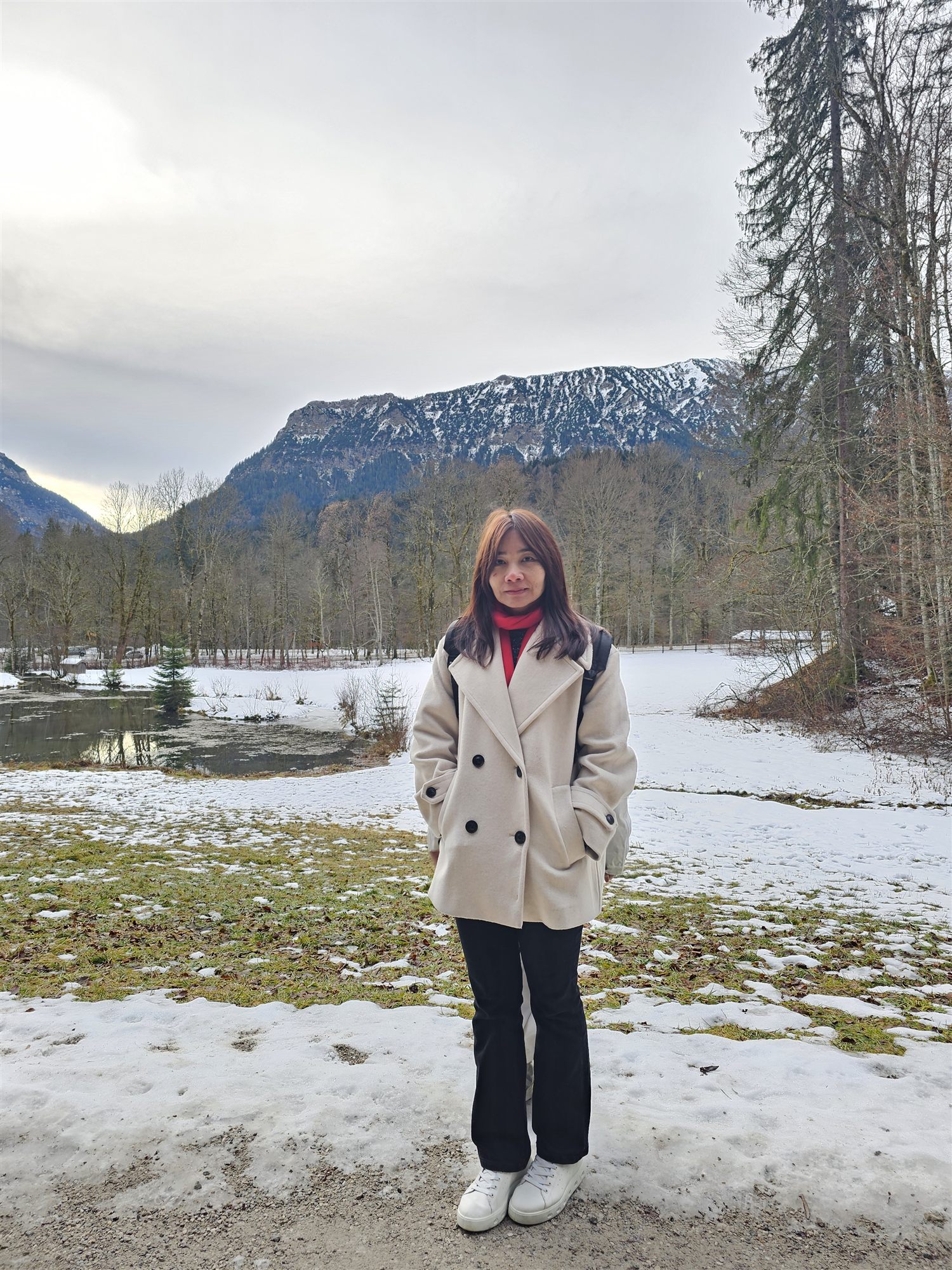 The snowy ridges and frozen ponds around the palace grounds.
Through Bavaria
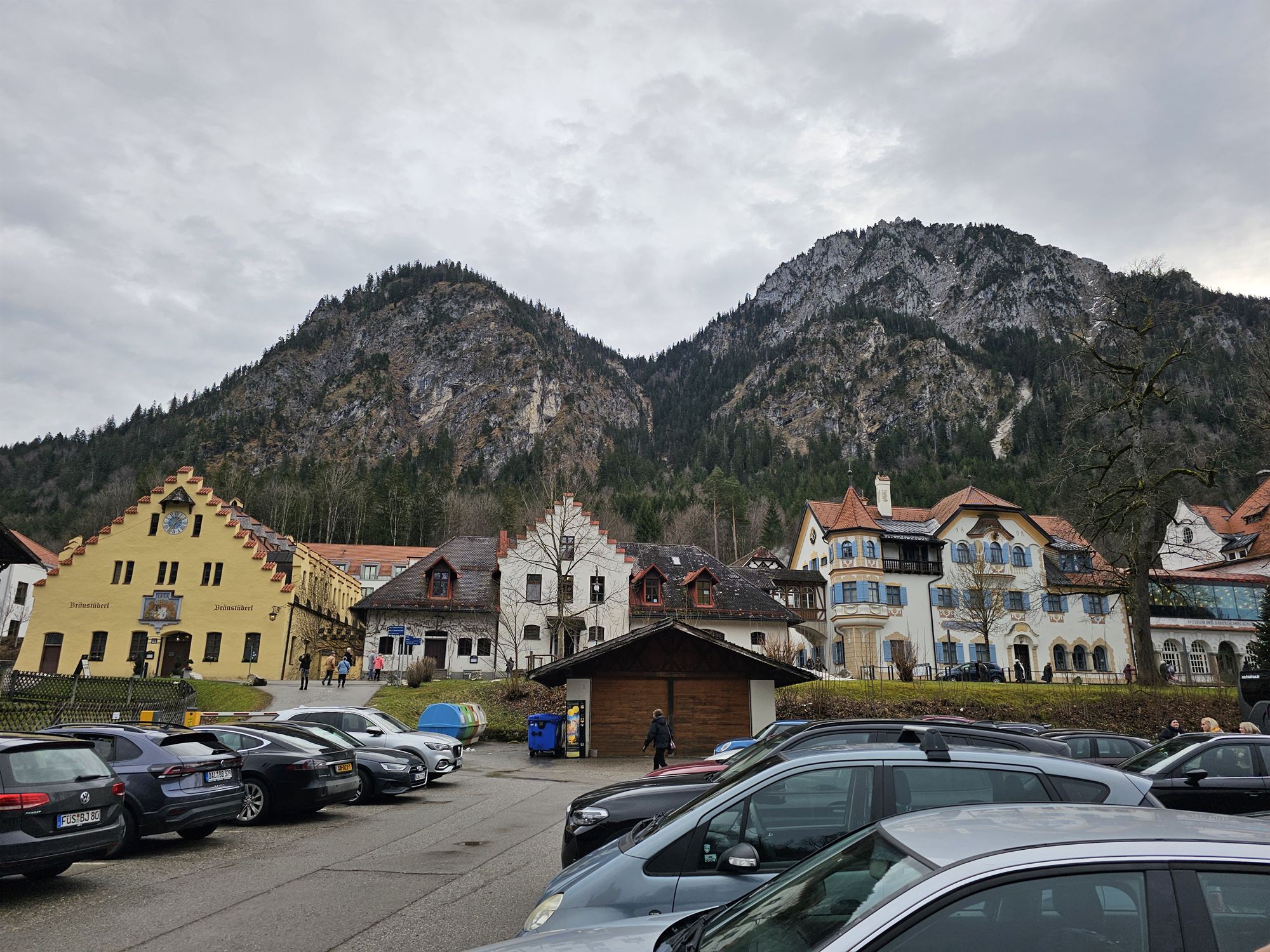
From there, we continued through the scenic Bavarian countryside toward Hohenschwangau, the village at the foot of Neuschwanstein. We took some time to explore the small village and nearby shops, a cluster of pastel-painted buildings tucked right beneath the mountains, before making our way toward the castle itself.
Neuschwanstein Castle
It was here that our admiration for King Ludwig II deepened. Construction started in 1869, and like Linderhof, it was built as a retreat from public life and a tribute to Wagner's operas — Ludwig never intended it to be seen by the public at all. He died suddenly and mysteriously in a lake in 1886, just days after being declared unfit to rule, with the castle still unfinished. It opened to visitors only seven weeks later, and the fairy-tale silhouette that resulted went on to directly inspire Disney's Sleeping Beauty Castle. What's striking standing there is the gap between intention and outcome: a private retreat Ludwig built specifically to avoid public life became one of the most photographed buildings in the world.
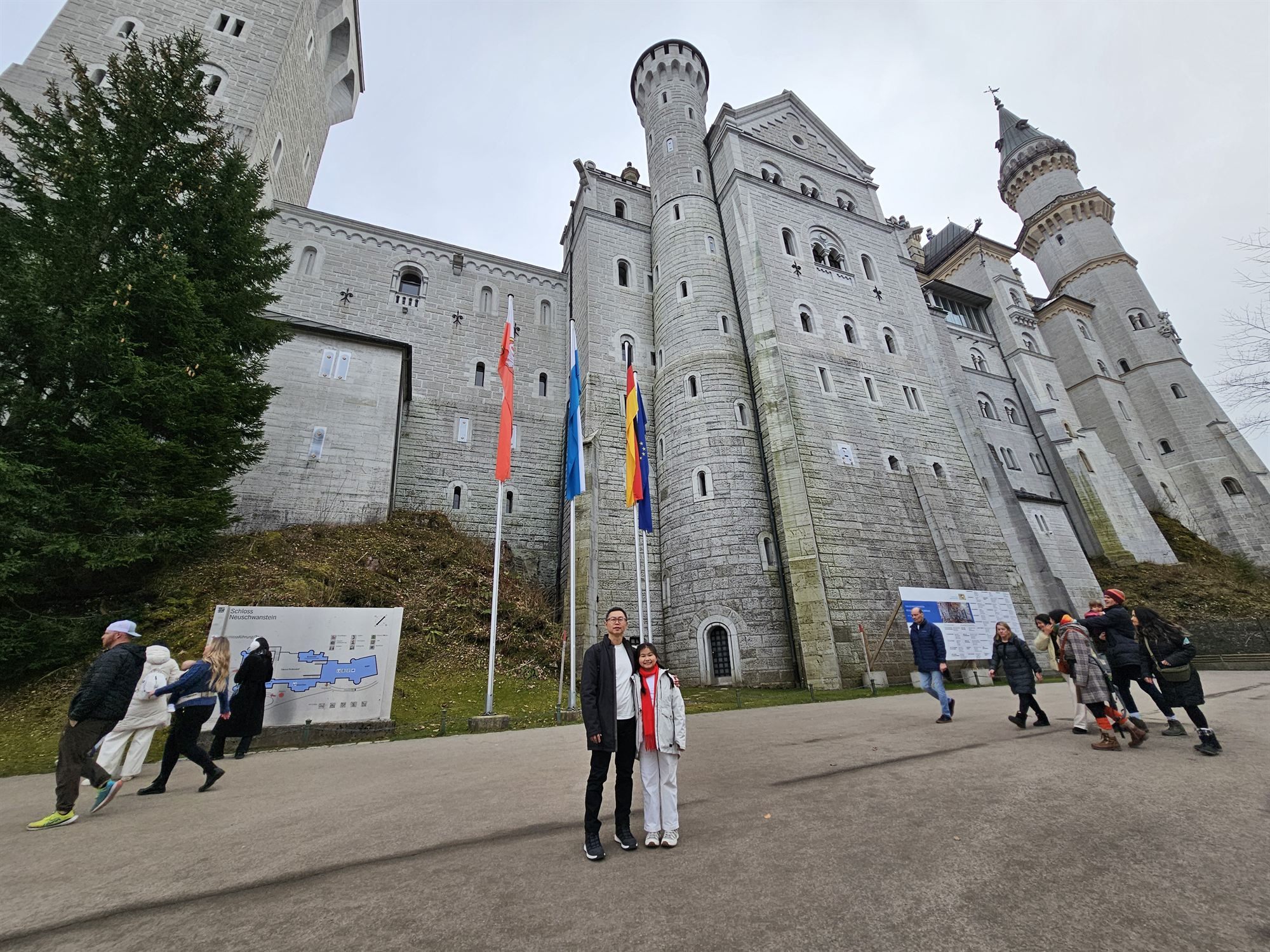
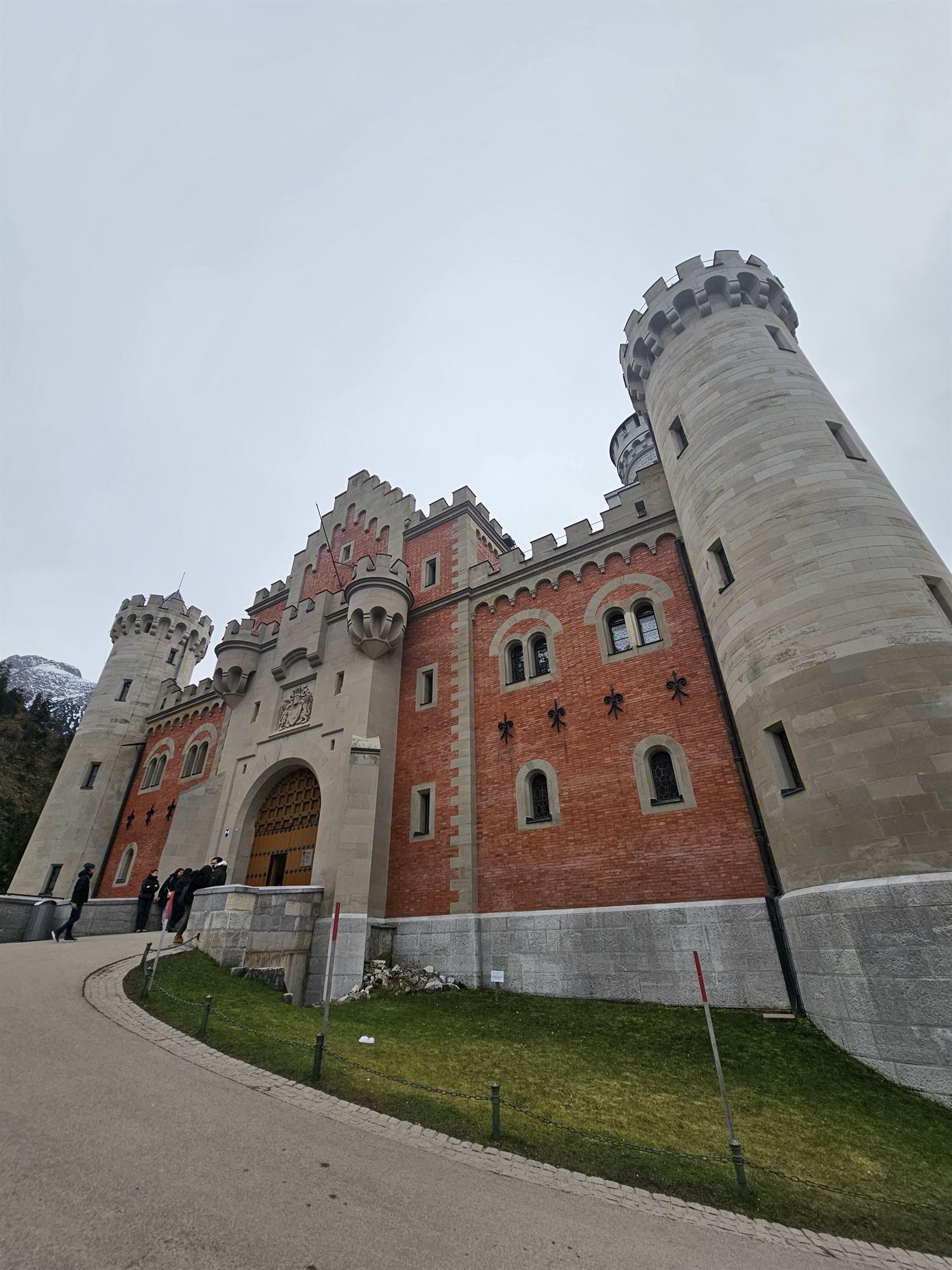 The gatehouse, the first proper glimpse of the castle.
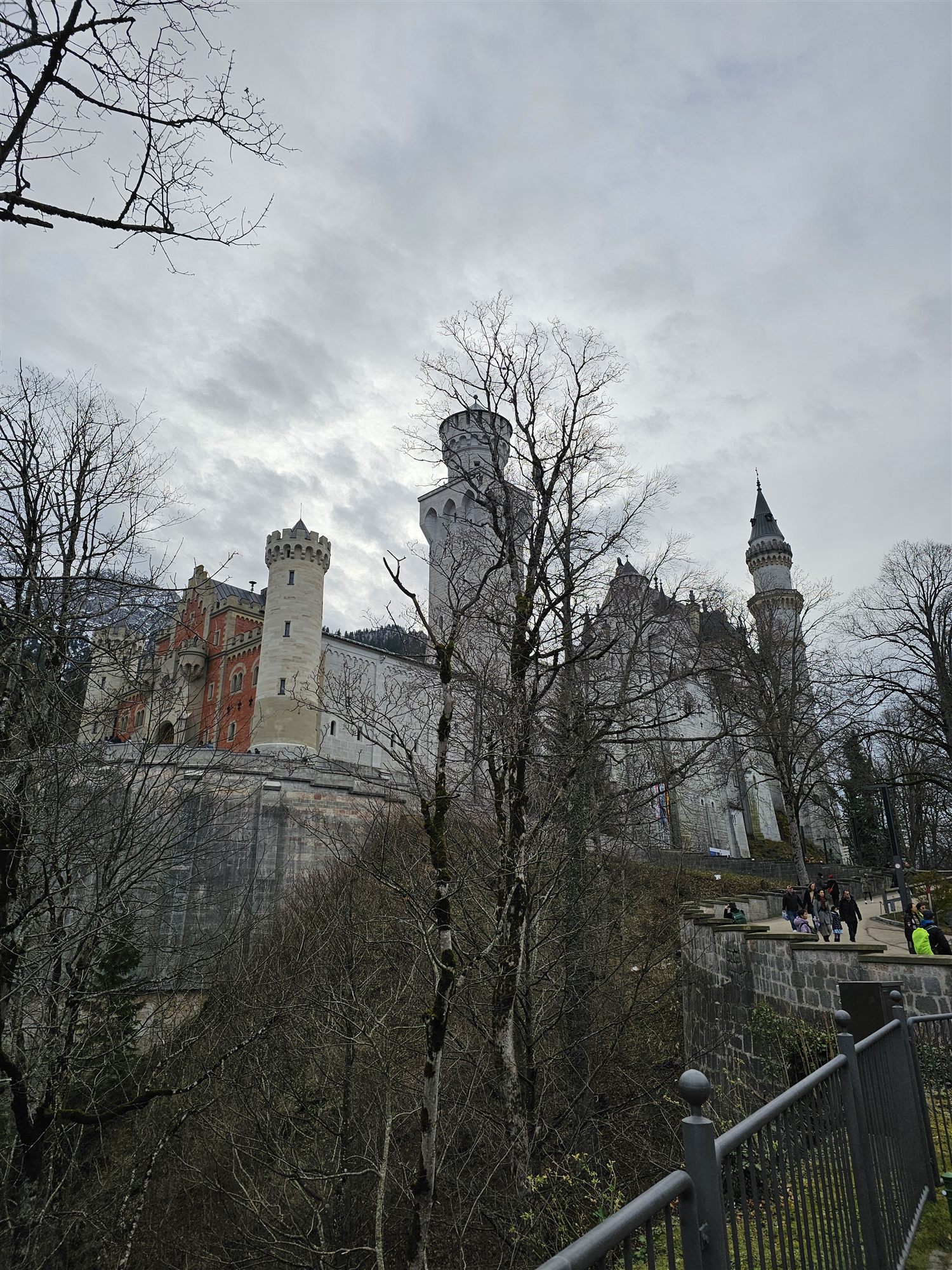 The castle rising above the bare trees on the hillside.
We stopped for lunch near the base — a warm and comforting break before continuing the climb. The walk up was gentle but steady, with crisp air and beautiful mountain views all around.
The walk up to Neuschwanstein is uphill and can take 30–40 minutes at a child's pace. A horse-drawn carriage or shuttle bus runs partway up for those who'd rather save their energy for exploring the castle itself.
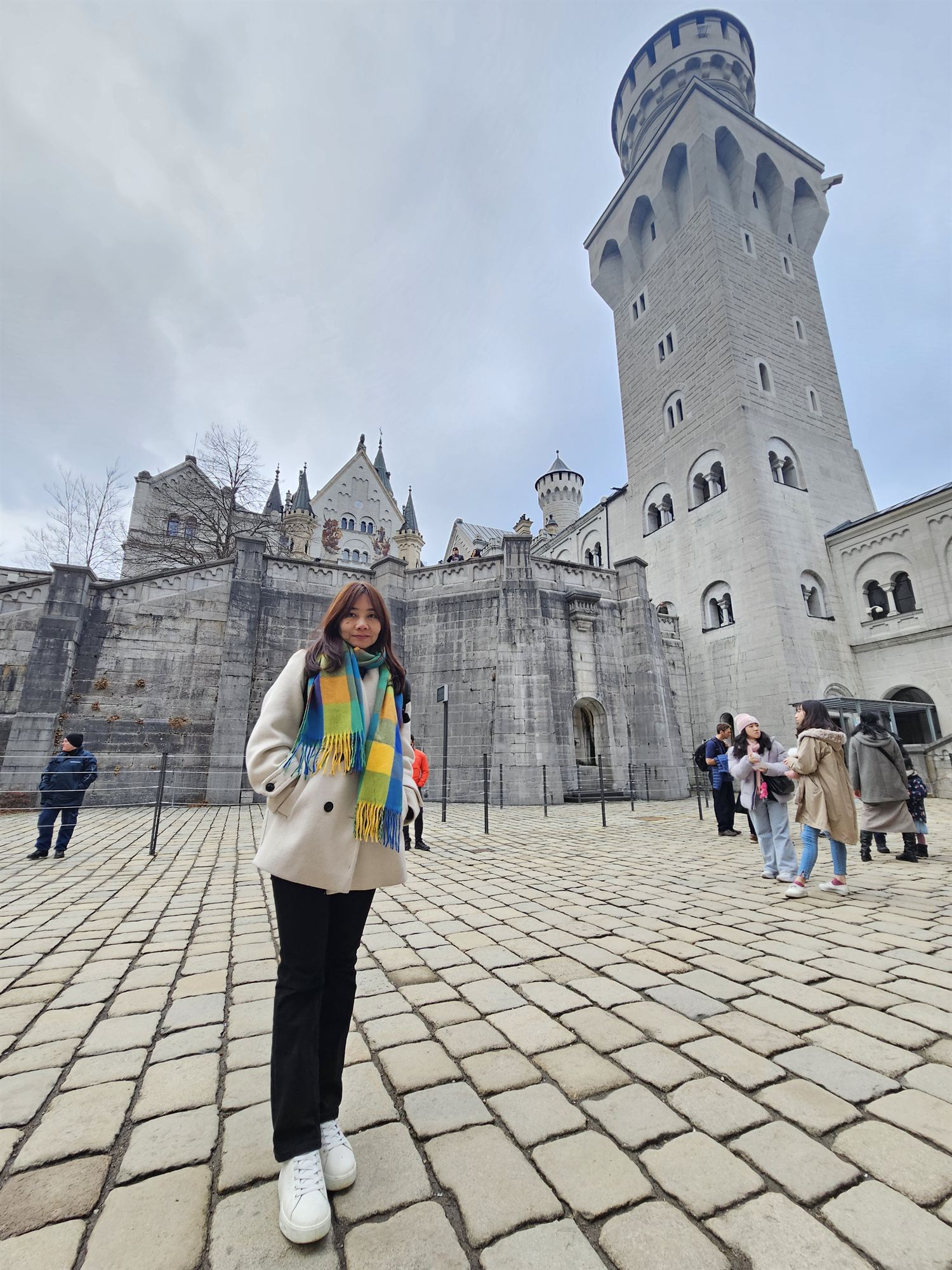 One of the castle's towers, up close.
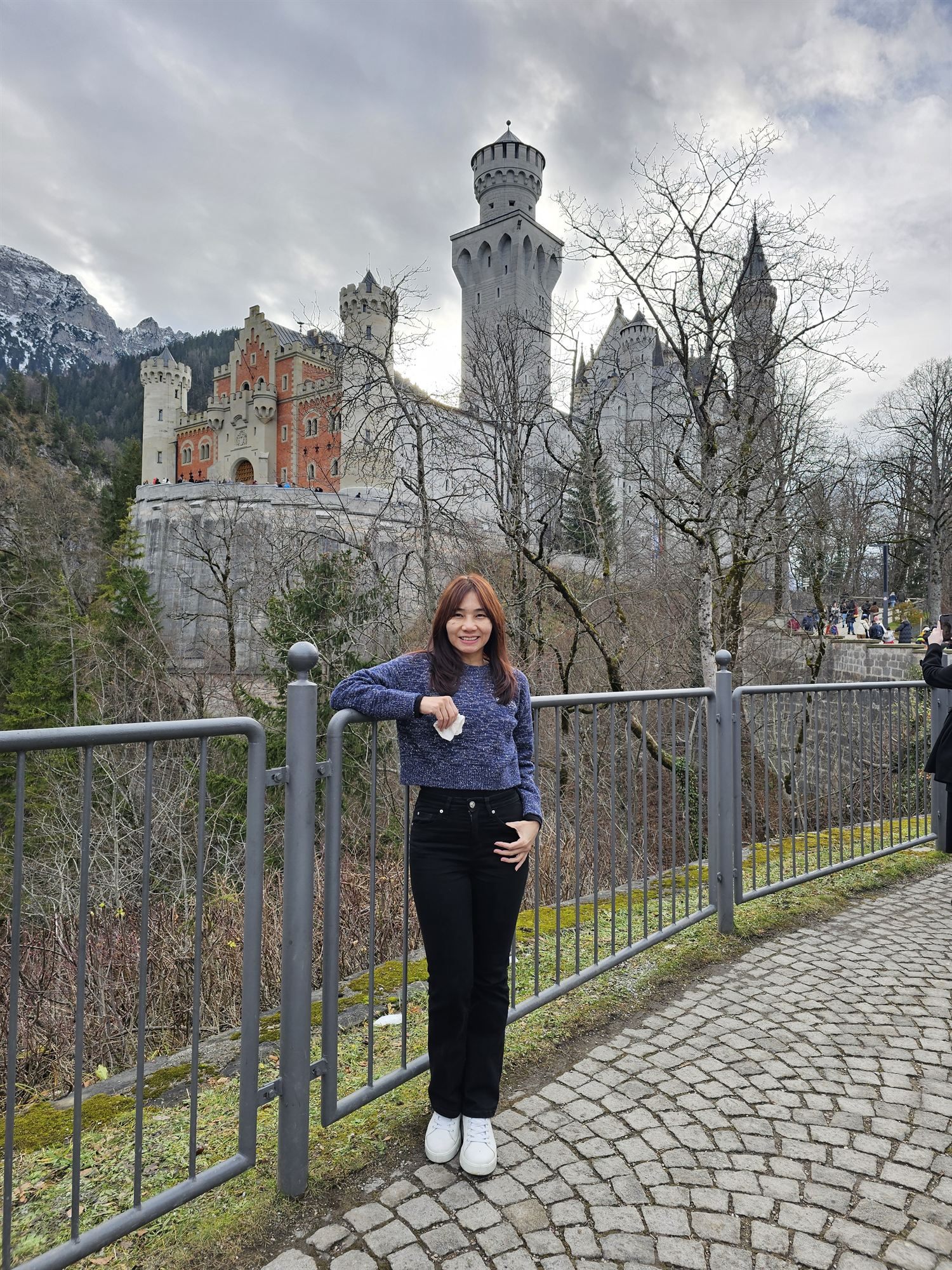 Through the archway, into the courtyard.
The View from the Marienbrücke
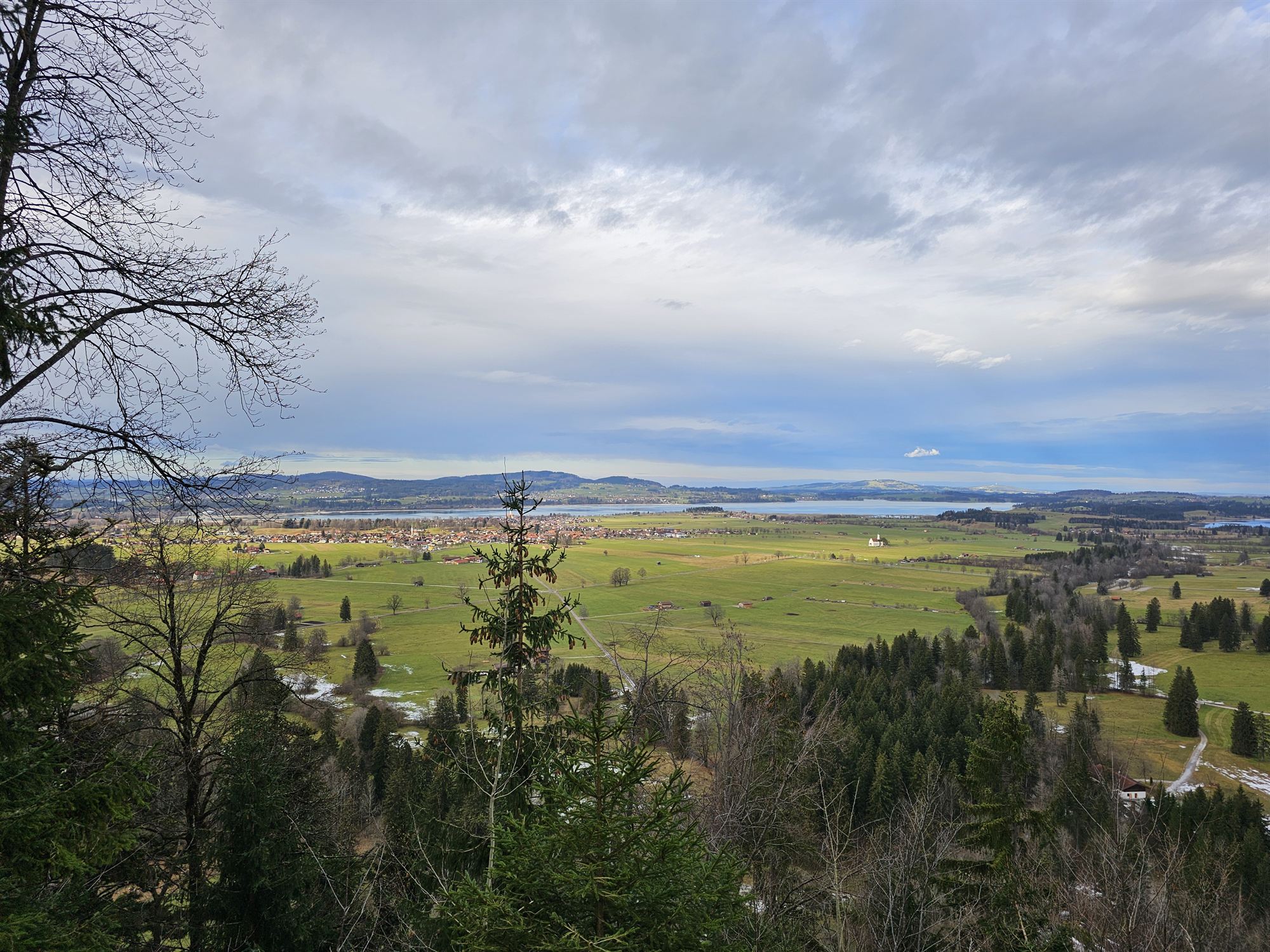
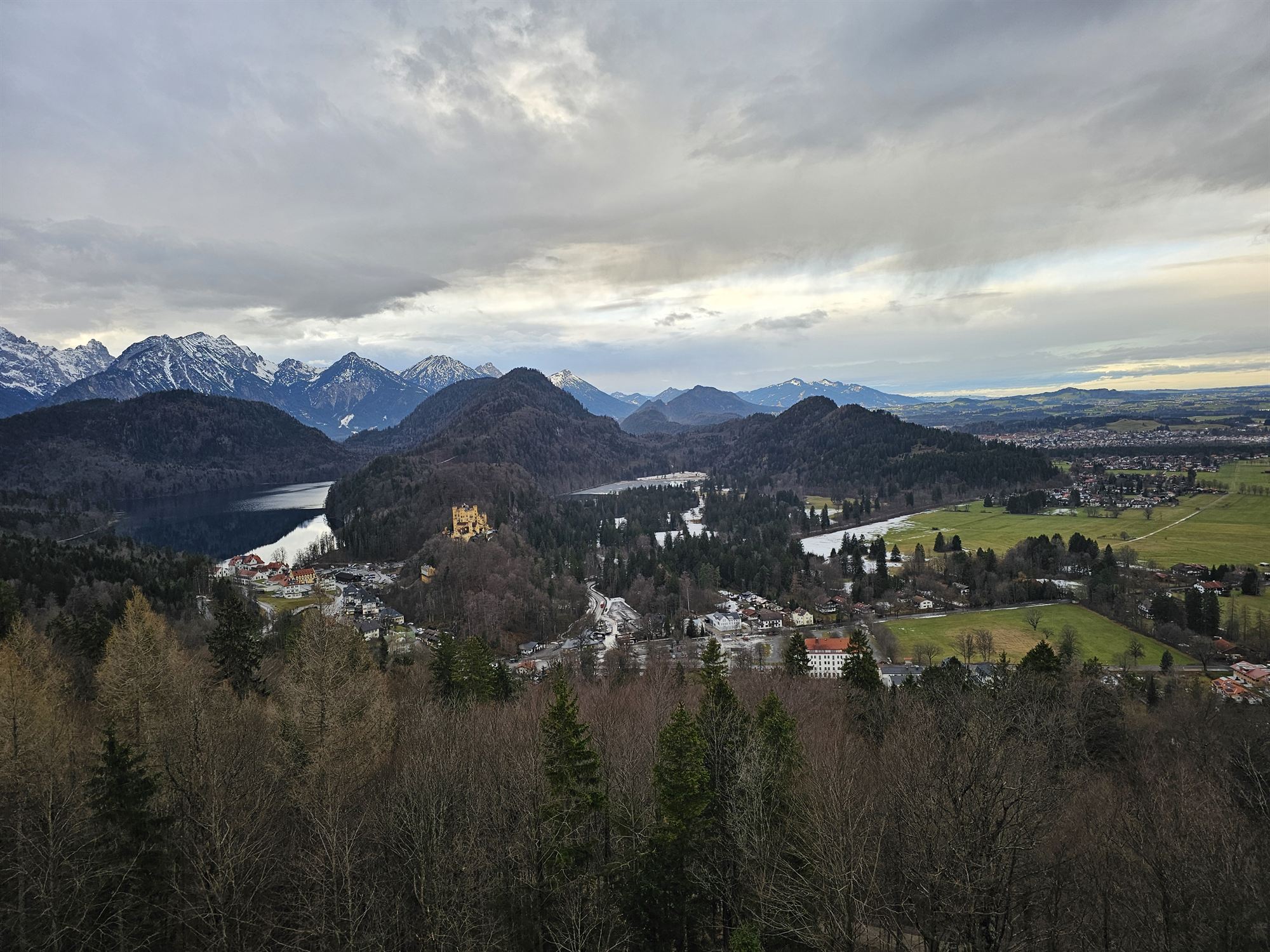
We crossed the Marienbrücke, the iron bridge slung across the Pöllat gorge just behind the castle, for the view Ludwig himself was said to favour most — the one used on most postcards of Neuschwanstein, looking back at the castle rather than out from it. From there, the scenery opened up into wide valleys and distant lakes.
A Lasting Feeling
One king, two castles, and a reminder that the most photographed building in Bavaria was never meant to have visitors at all. We'd go back, if only to walk up that hill again slower.
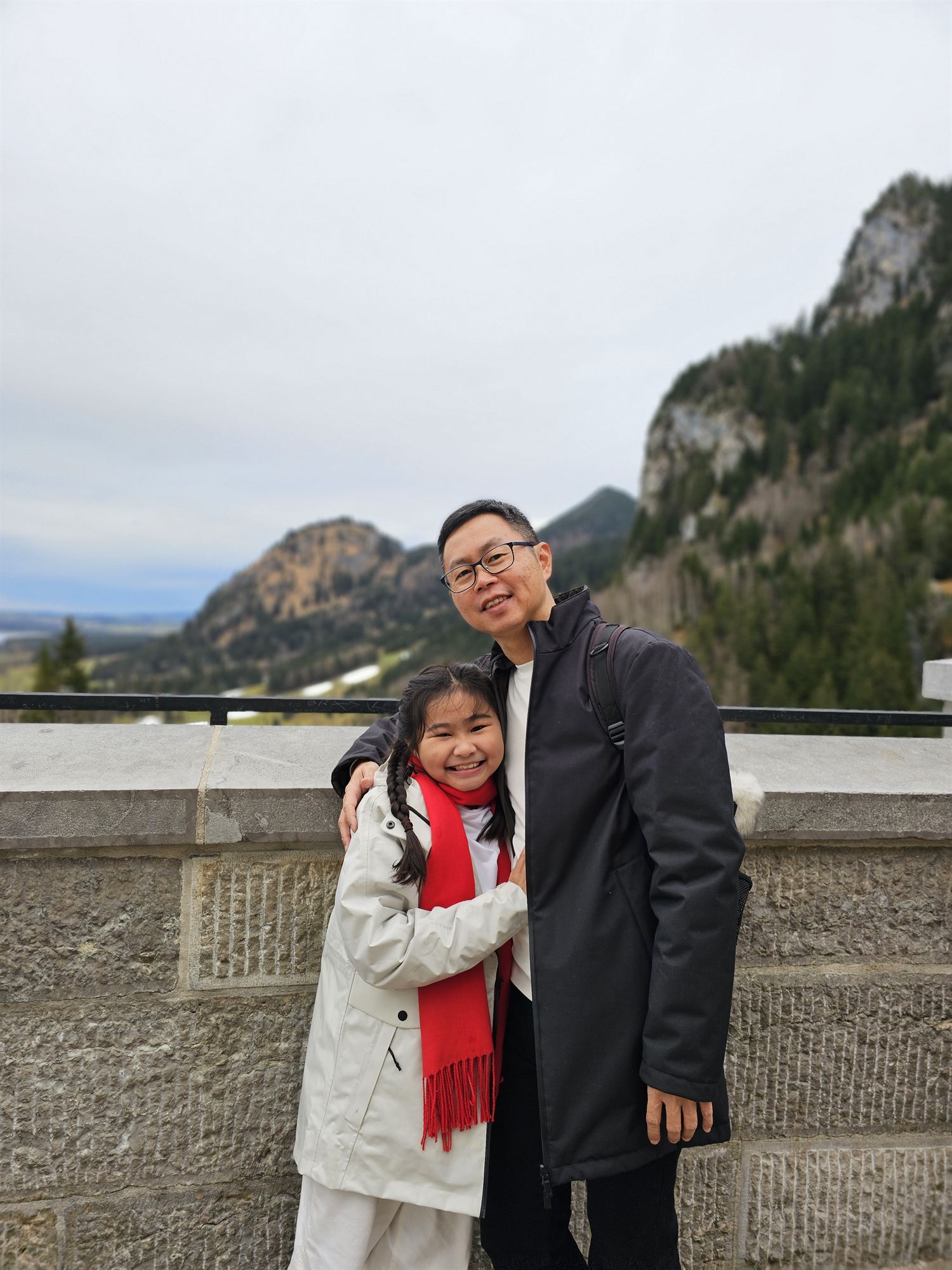 The day that stayed with us longest.
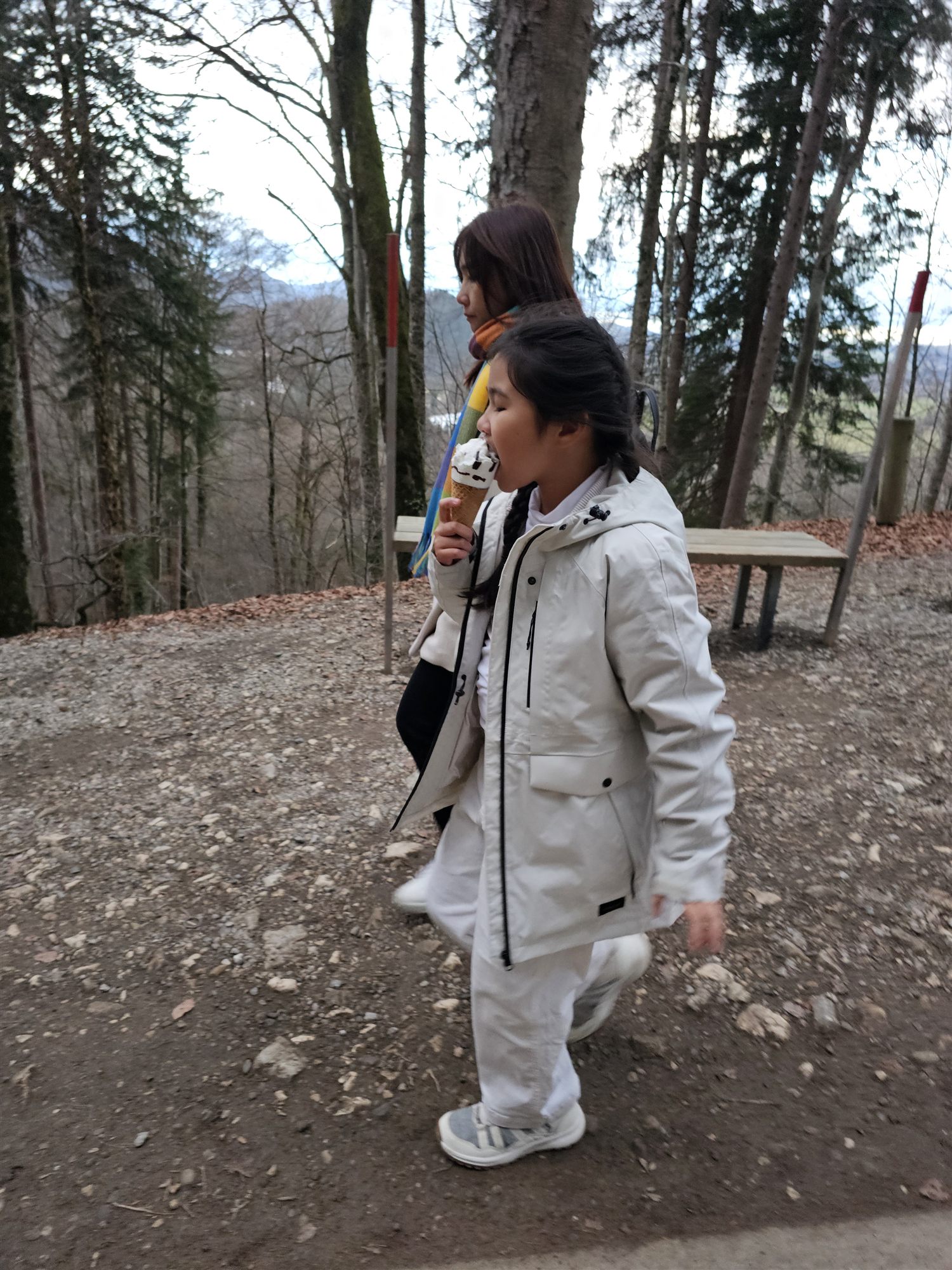 An ice cream cone, eaten on the forest path down.