
Quick Facts
- Date
- Wednesday, 13 December 2023 — Day 3 of a 14-day Italy trip
- Region
- Historic centre, Rome, Italy
- Tour
- Guided Colosseum tour (2.5–3 hours), followed by Palatine Hill & Roman Forum, booked as part of a private family package
- Meeting point
- Just outside the Colosseum, with the guide
- Covers
- Colosseum, Roman Forum, Palatine Hill, Altare della Patria
- Ticket tip
- A combined Colosseum + Forum + Palatine Hill ticket is valid for 24 hours and single entry to each site
- Best time
- Early morning, before the tour groups arrive
- Good for
- A full day of walking on uneven ancient stone — comfortable shoes are non-negotiable
Meeting the Guide Outside the Colosseum
Day 3 of our Italy trip started right outside the Colosseum, where we met the guide for a 2.5-to-3-hour tour that would cover both the amphitheatre and, afterwards, the Palatine Hill and Roman Forum. Rome's traffic and crowds build up fast, so an early start meant we were walking in before the tour buses had properly unloaded.
A few numbers worth knowing before you go: the Colosseum had 80 entrances and could seat around 65,000 spectators, and the games staged here weren't a quick afternoon event — some festivals ran for up to 100 days straight. Construction began under Emperor Vespasian around 72 AD and finished under his son Titus in 80 AD. None of that fully prepares you for standing under the arches in person, but it does explain why the place still feels so absurdly large.
 Right where the tour started, before the crowds caught up.
 The arches, close up, in three tiers.
Inside the Colosseum
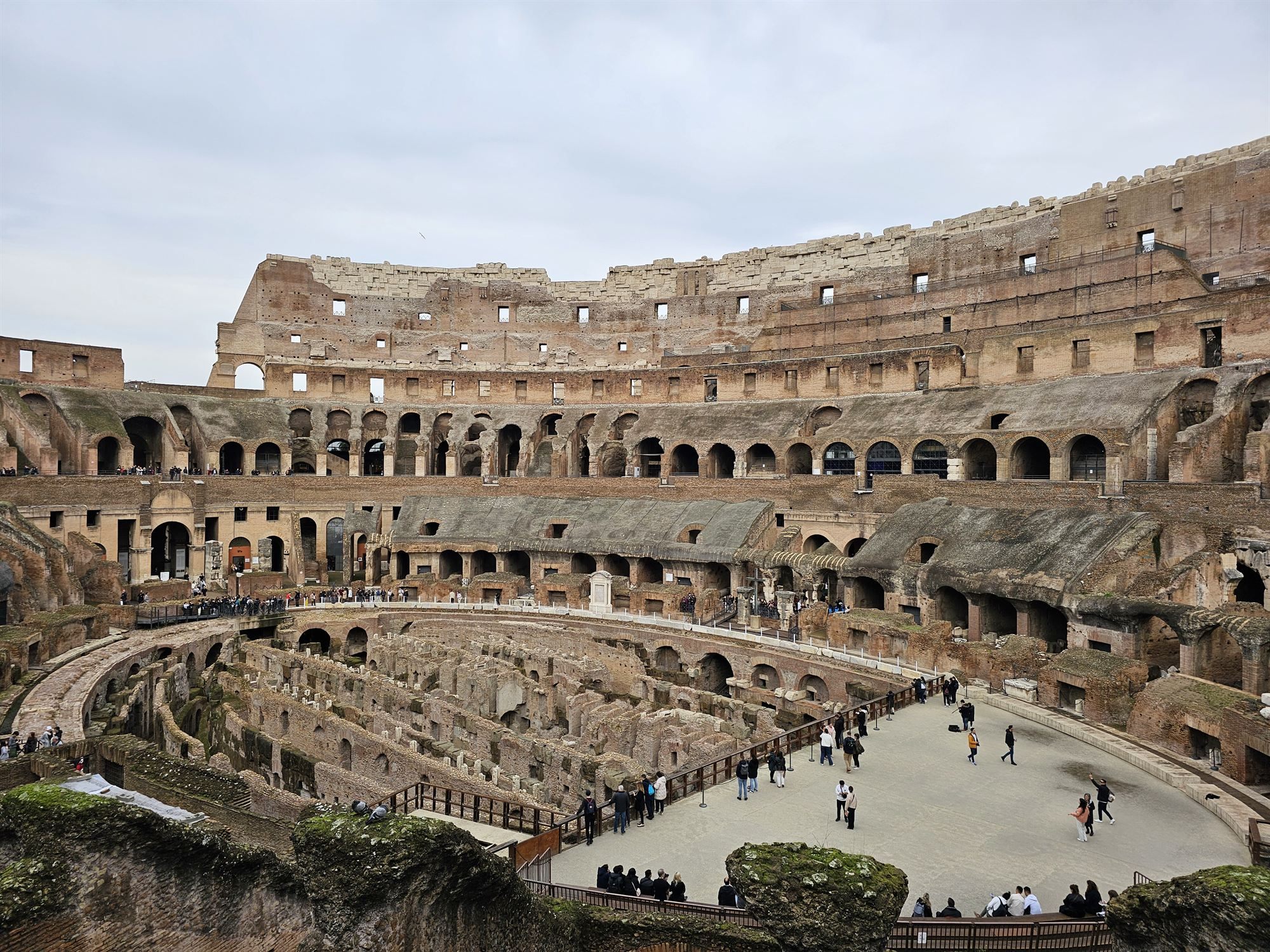
Once inside, the guide walked us through the different tiers — where senators sat closest to the arena floor, where the general public was seated higher up, and what's left of the hypogeum, the underground network of tunnels and cages where gladiators and animals waited before being lifted into the arena on wooden platforms. Our daughter was more interested in spotting the trap doors in the floor than the history lecture, which honestly is a completely reasonable way for an 8-year-old to enjoy the Colosseum.
Through Palatine Hill
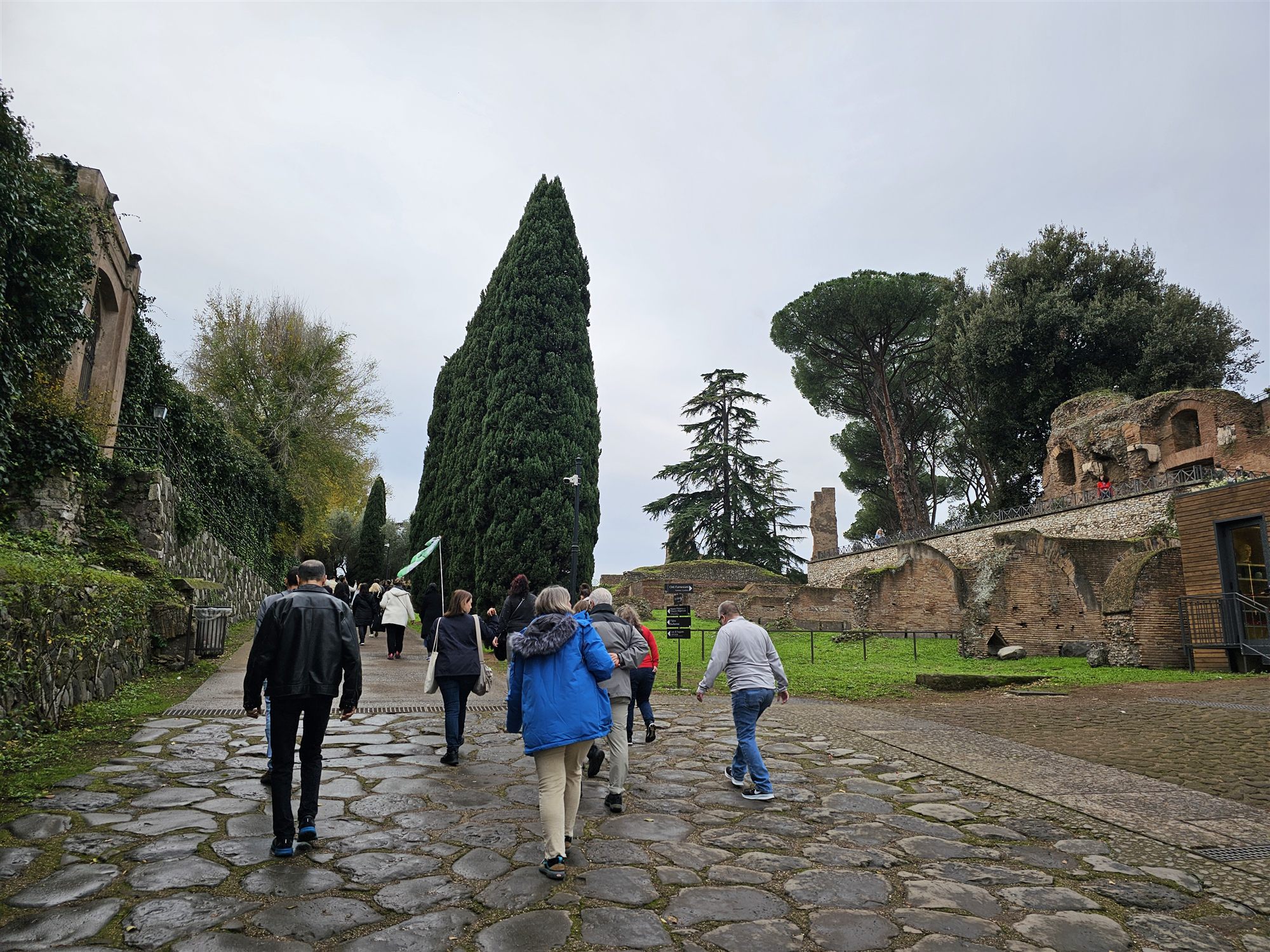
From the Colosseum, the guide led us up the path toward Palatine Hill, the hill where Rome's emperors actually lived. It is where the word "palace" comes from. The approach is lined with tall cypresses and umbrella pines, and the cobbles are worn smooth by two thousand years of footsteps.
Partway up, the path passes under an old wisteria vine. In December the leaves had turned bare and gold and lay scattered underfoot. It is one of the quieter corners of the site, and far fewer people make the climb than stay among the main ruins.
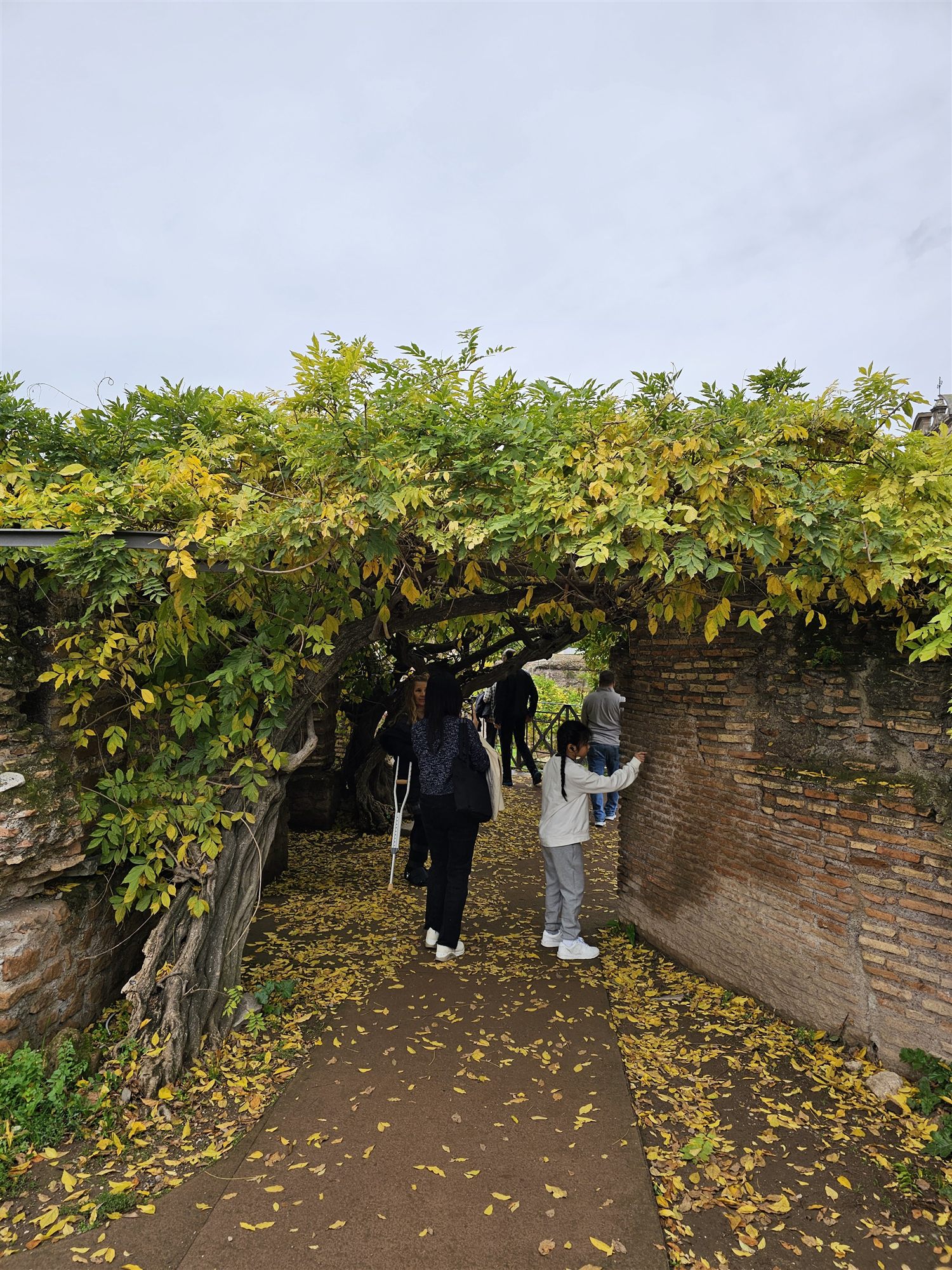 The wisteria walk, bare and gold with autumn leaves.
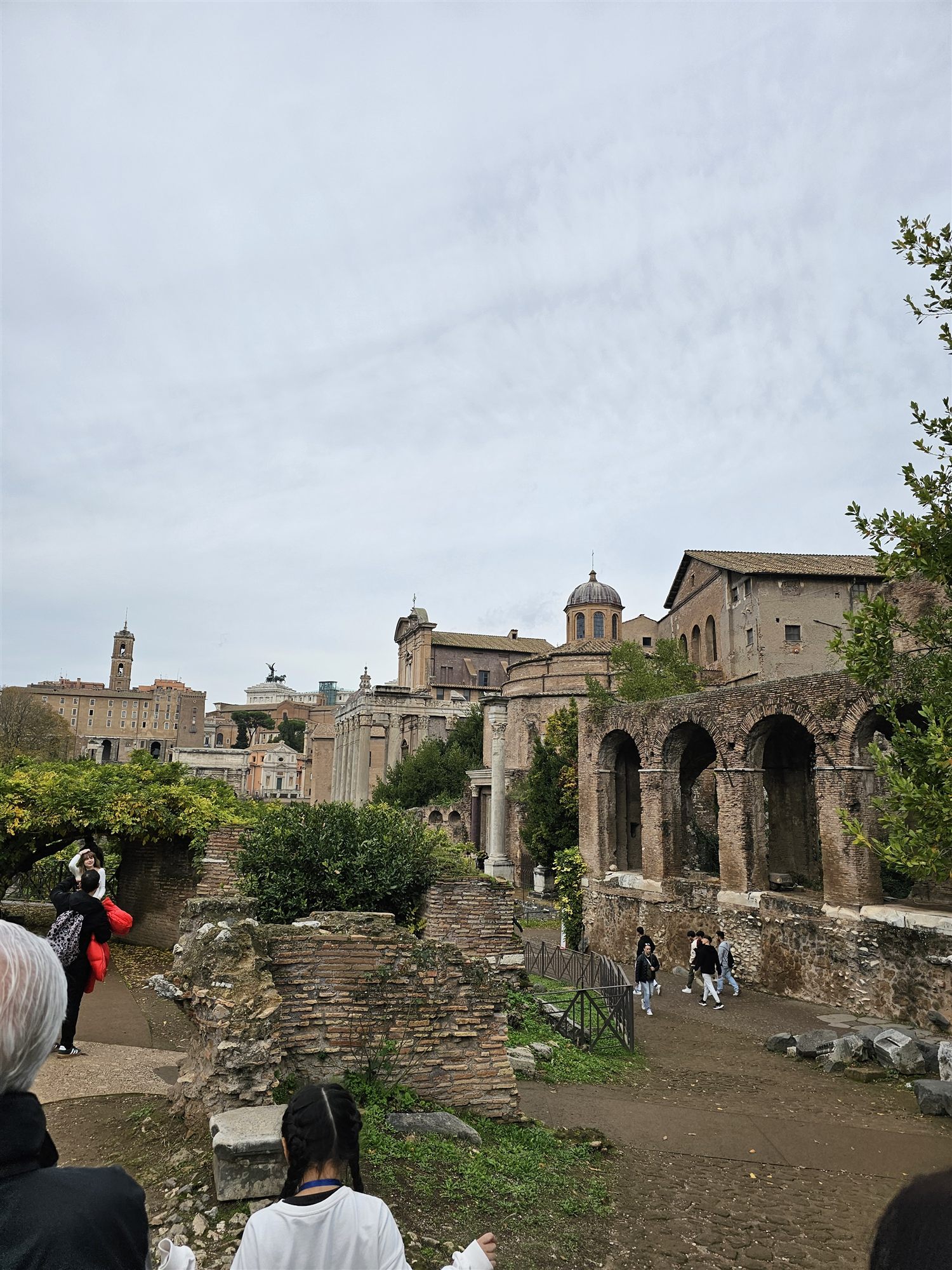 The Temple of Antoninus and Faustina, from the path.
The Roman Forum, in Layers
The Roman Forum felt less like a single site and more like a landscape of history. It was the political, religious and commercial centre of ancient Rome for close to a thousand years, so ruins from different centuries sit stacked on top of each other. Among the survivors is the Temple of Antoninus and Faustina, built in 141 AD by Emperor Antoninus Pius for his wife Faustina. Around the 11th century it was converted into the church of San Lorenzo in Miranda, which is why a Baroque facade now sits on top of its Roman columns.
The combined Colosseum, Forum and Palatine Hill ticket is valid for 24 hours, so you do not have to rush all three in one go. We covered the Colosseum, Forum and Palatine with the guide in one day, with breaks on the steps and benches along the way. Splitting the visit across two days would be easier on an 8-year-old's attention span.
A Different Kind of Perspective
From higher ground, the view across the Forum gave us a better sense of its scale. The Farnese Gardens on the Palatine were laid out in the 1550s over the ruins of the imperial palace, and they are one of the few spots on the site where you can sit down for a minute. From up there the Forum reads as one street plan rather than a scattered pile of stones.
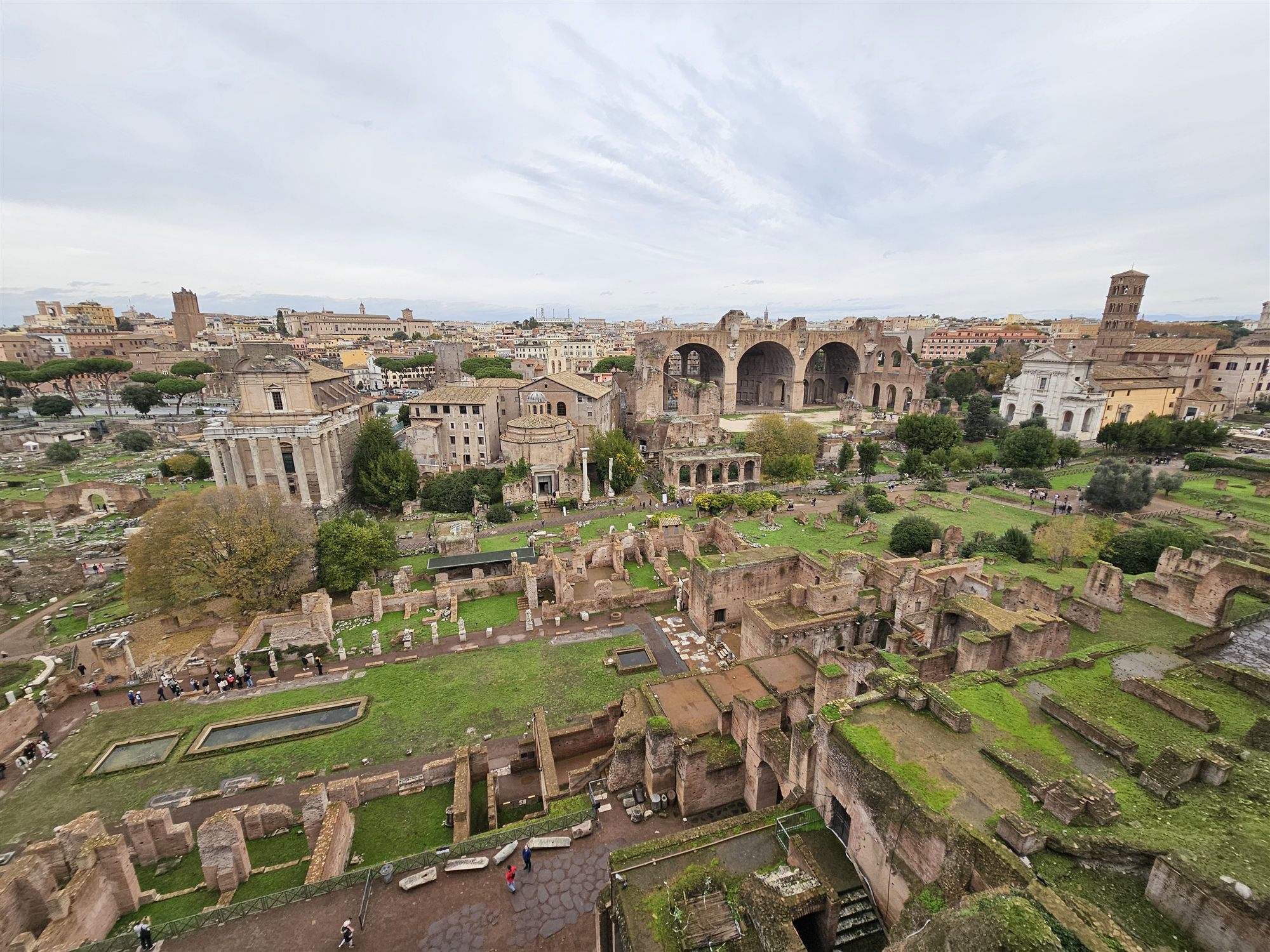
Back down among the stones, the guide stopped us at the Ara di Cesare, the altar that marks where Julius Caesar's body was cremated in 44 BC after his assassination. The bronze plaque in front of it, quoting the historian Appian, says the crowd piled tables, benches and wood on the spot, set it alight, and stayed through the night. A temple to Caesar, honoured as a god, was later built there.

A Stop at Altare della Patria
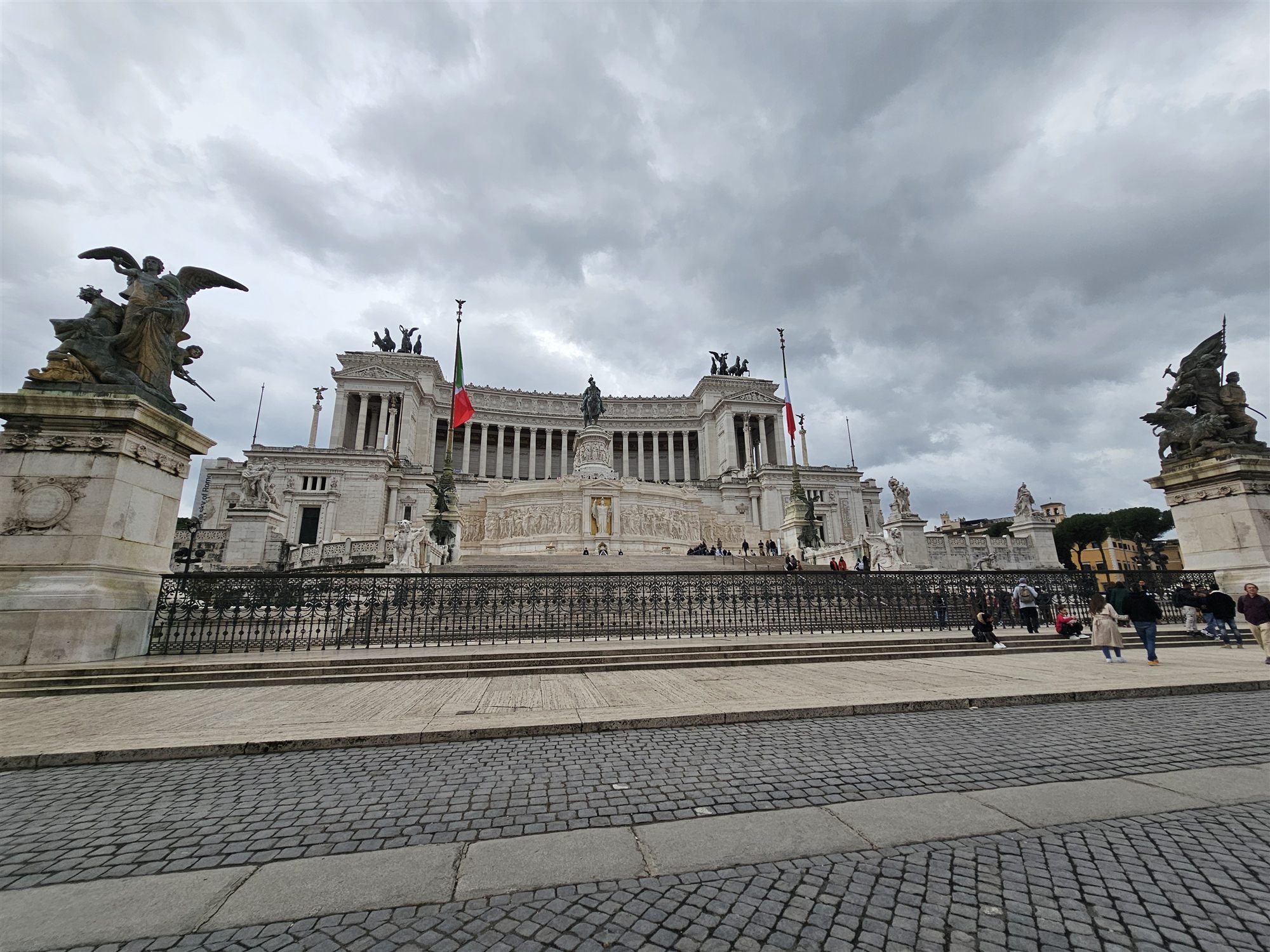
Before heading back, we stopped at the Altare della Patria, the Altar of the Fatherland, also known as the Vittoriano. It is a gleaming white marble monument built between 1885 and 1935 to honour Victor Emmanuel II, the first king of a unified Italy, and it houses Italy's Tomb of the Unknown Soldier. After a day of weathered stone, its wide staircase was a welcome break.
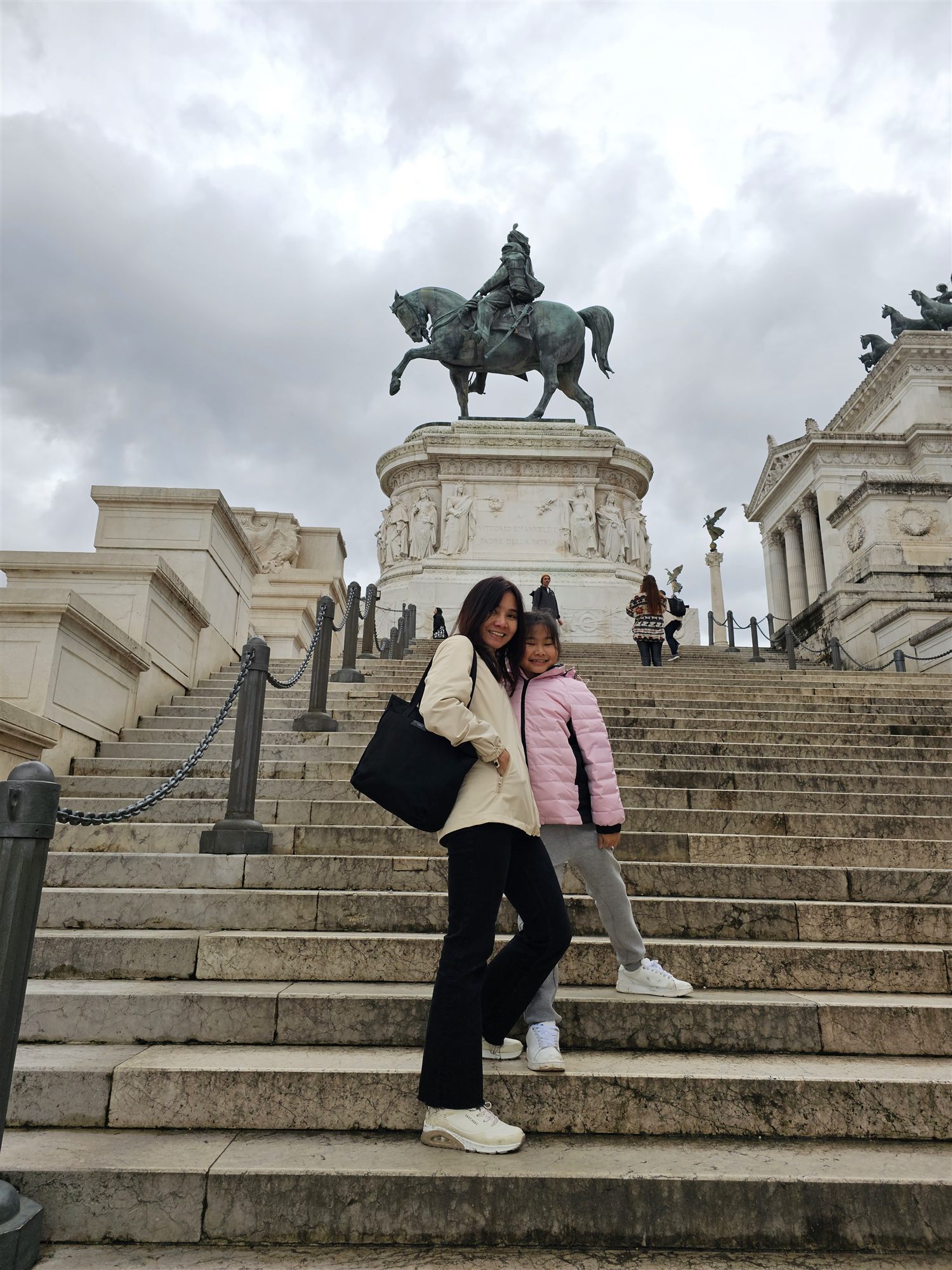 On the steps, with the equestrian statue above us.
 Our daughter on the marble steps, the sculpted reliefs behind her.
Small Moments That Stay
By the end of the day we were tired, but it was a good kind of tired. The ruins, the wisteria, the bronze chariots and the steps all blur together now, and the moment we remember most is our daughter, leaning on the marble steps to catch her breath.
Planning Your Own Day
If you're building this into your own Rome itinerary, budget a full day rather than a half-day: the Colosseum alone can take two hours before you've even started on the Forum, and Palatine Hill involves genuine uphill walking on uneven ground. Bring water, wear shoes you don't mind getting dusty, and don't try to read every information panel — between the Colosseum, the Forum and Palatine Hill, there's easily a week's worth of history packed into one afternoon.