
Quick Facts
- Date
- Wednesday, 17 December 2025
- Region
- Ambras, just outside Innsbruck, Austria
- Getting there
- A short public transport ride from Innsbruck
- Covers
- Ambras Castle, castle gardens, the Golden Roof, Hofkirche
- Cost
- Covered by the Innsbruck Card (S$336.03 for 72 hours), which also included our Nordkette, Alpenzoo, and Swarovski days
- Good for
- A calm half-day, easy to combine with an Innsbruck evening
A Morning at Ambras Castle
On 17 December, we took public transport out to Ambras Castle, just a short ride from Innsbruck. Entry was covered by the 72-hour Innsbruck Card, S$336.03 in total, which we'd bought ahead of time and which also covered public transport, the Nordkette cable car and Alpenzoo, and Swarovski Crystal Worlds over the following two days. The approach alone set the tone: a long tree-lined drive, the castle's pale walls rising above manicured grounds, hardly another visitor in sight.

Inside the gatehouse, the castle's inner courtyard — pictured above — is painted almost entirely in grisaille, grey-on-grey murals designed to look like carved stone relief, a decorating trick popular in the 16th century that's cheaper than actual stonework but every bit as striking up close.
A Story That Stayed With Us
Inside, we found the tale of Archduke Ferdinand II and Philippine Welser laid out on the castle's own family tree display. Ferdinand, who governed Tyrol from 1564, married Philippine — the daughter of an Augsburg merchant family, well below his rank as a Habsburg archduke — in 1557, and kept the marriage secret for years rather than risk the political fallout. It wasn't the kind of arranged match that defined most royal marriages of the period, and Ambras Castle itself, which Ferdinand rebuilt as their home, stands as a kind of monument to that choice. Philippine died in 1580; Ferdinand outlived her by fifteen years.
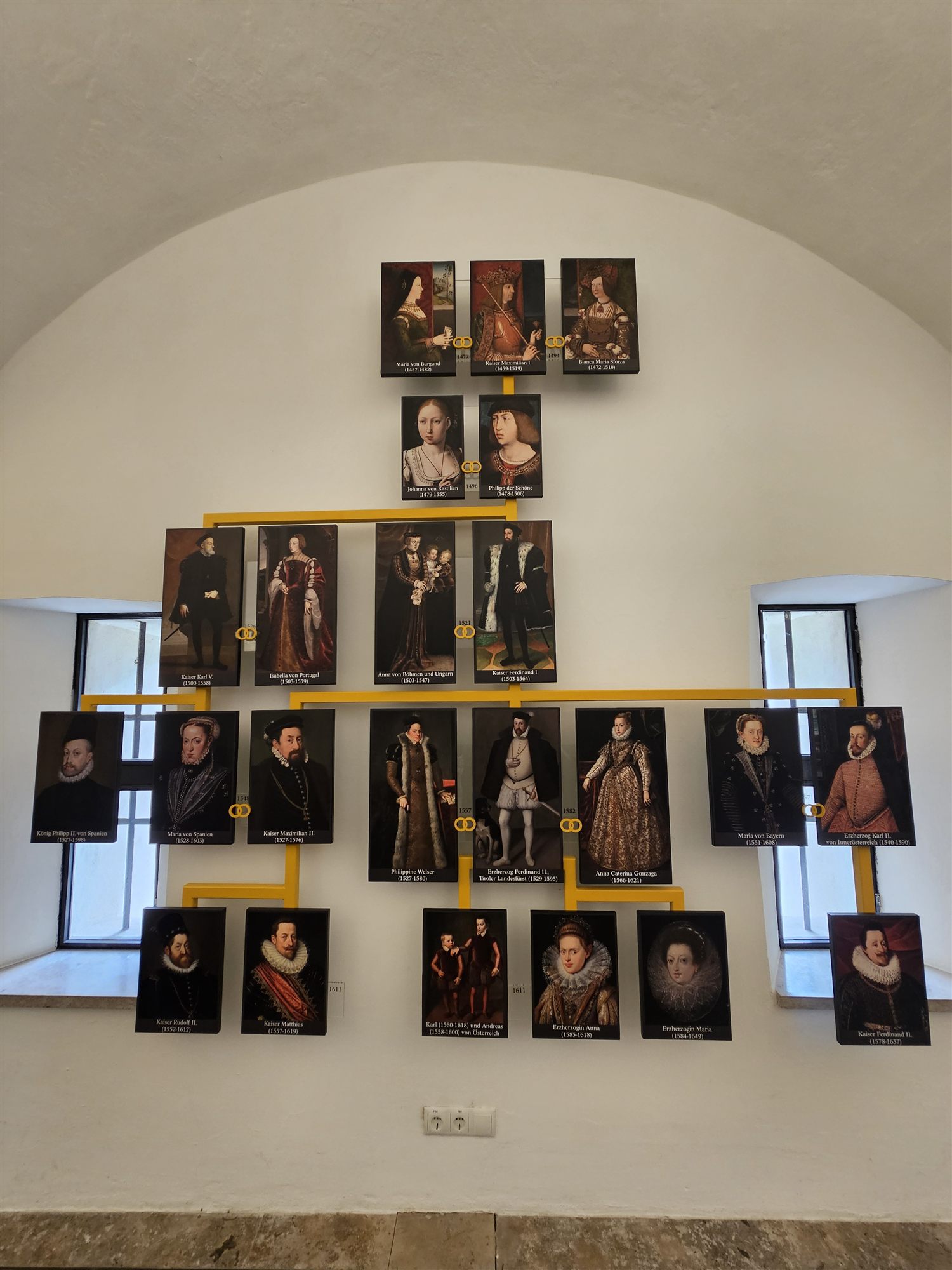 Philippine Welser and Archduke Ferdinand II, married 1557.
 A scale model of the castle, upper keep and Spanish Hall marked out.
The Spanish Hall
The Spanish Hall (Spanischer Saal) was the highlight of the visit — a long Renaissance ballroom built between 1569 and 1572, with a coffered wooden ceiling and a run of full-length portraits of Tyrolean rulers painted along both walls. It's considered one of the most significant Renaissance halls north of the Alps, and standing at one end looking down its full length, that reputation makes sense.

Rooms Full of Detail
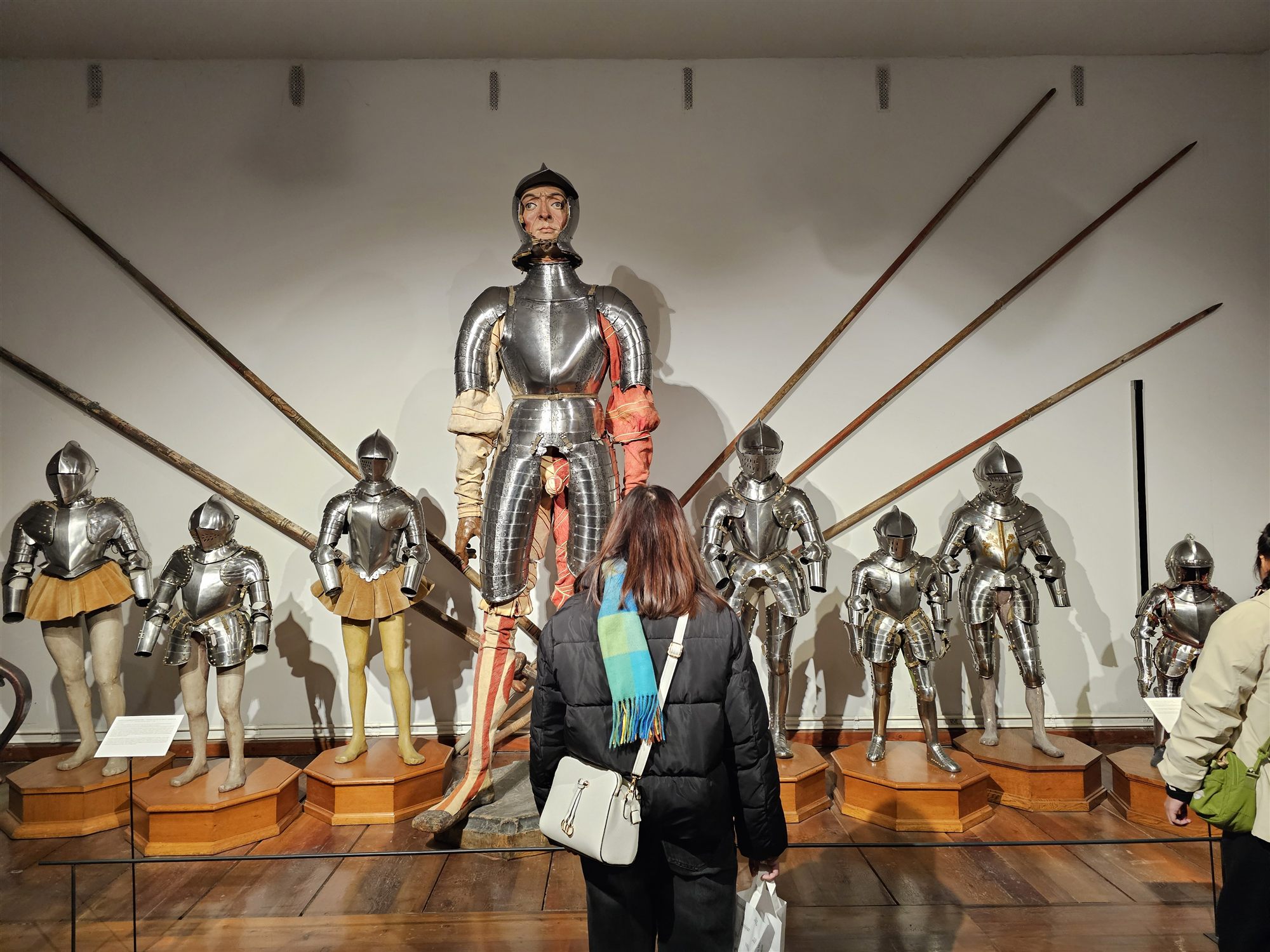
Beyond the Spanish Hall, the castle's Kunst- und Wunderkammer (Chamber of Art and Wonders) is one of the oldest surviving collections of its kind anywhere — assembled by Ferdinand II himself in the 16th century, before "museum" was even a word anyone used. Suits of armour stand in quiet rows, and tucked among the display cases is the "Tödlein" (Small Death), a skeletal figure carved from a single block of pear wood before 1519 and attributed to the Bavarian woodcarver Hans Leinberger — considered the single most significant artefact from Emperor Maximilian I's era still held at the castle.
 The Tödlein — carved from a single block of pear wood before 1519.
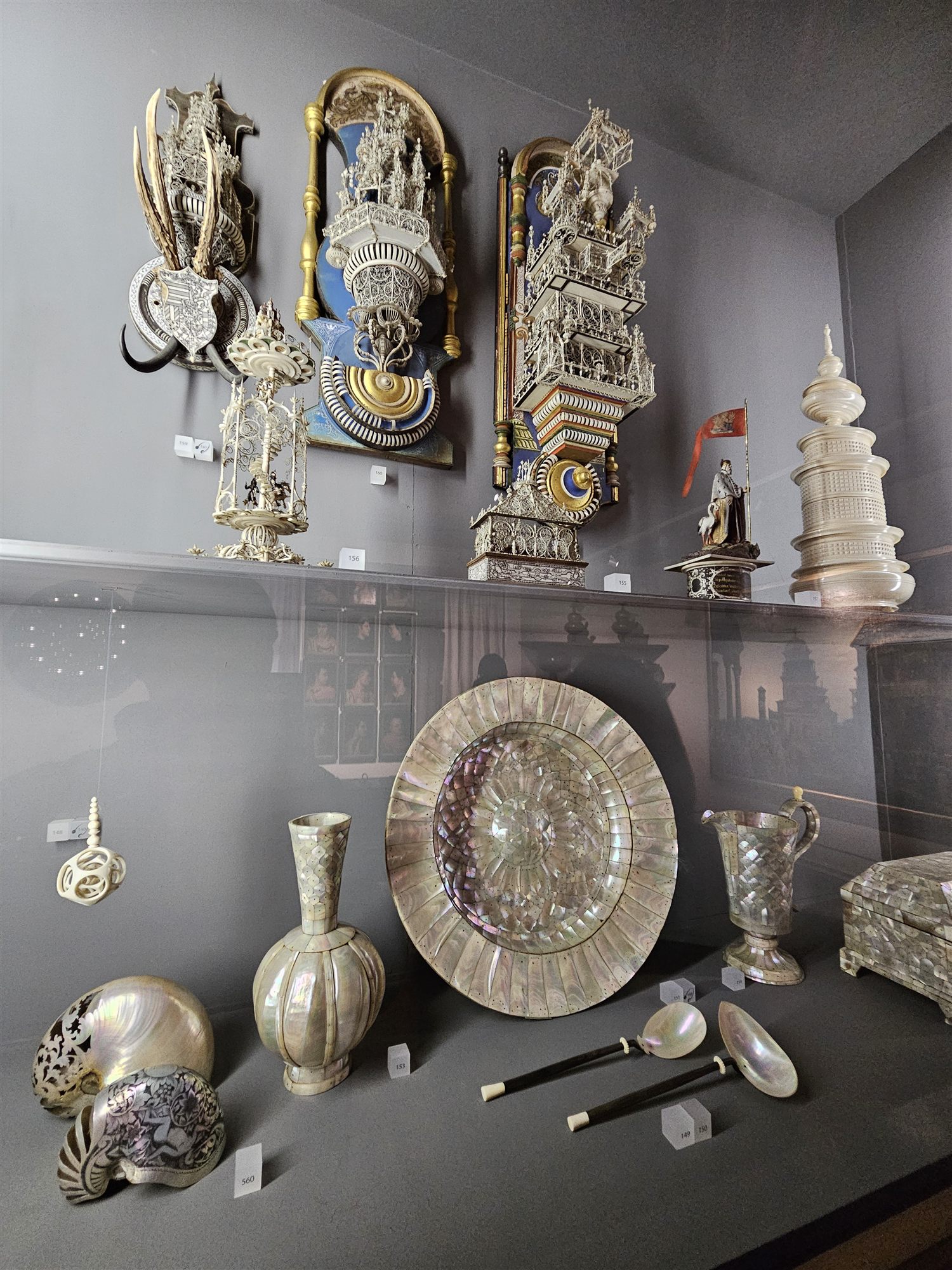 More of the Kunstkammer — carved ivory and mother-of-pearl.
A Simple Lunch Break
After the visit, we had lunch at Café Ferdinand, the castle's own restaurant tucked into one of the old courtyard buildings — Kaiserschmarrn and apple strudel, simple and warm after a cold morning of wandering stone corridors.
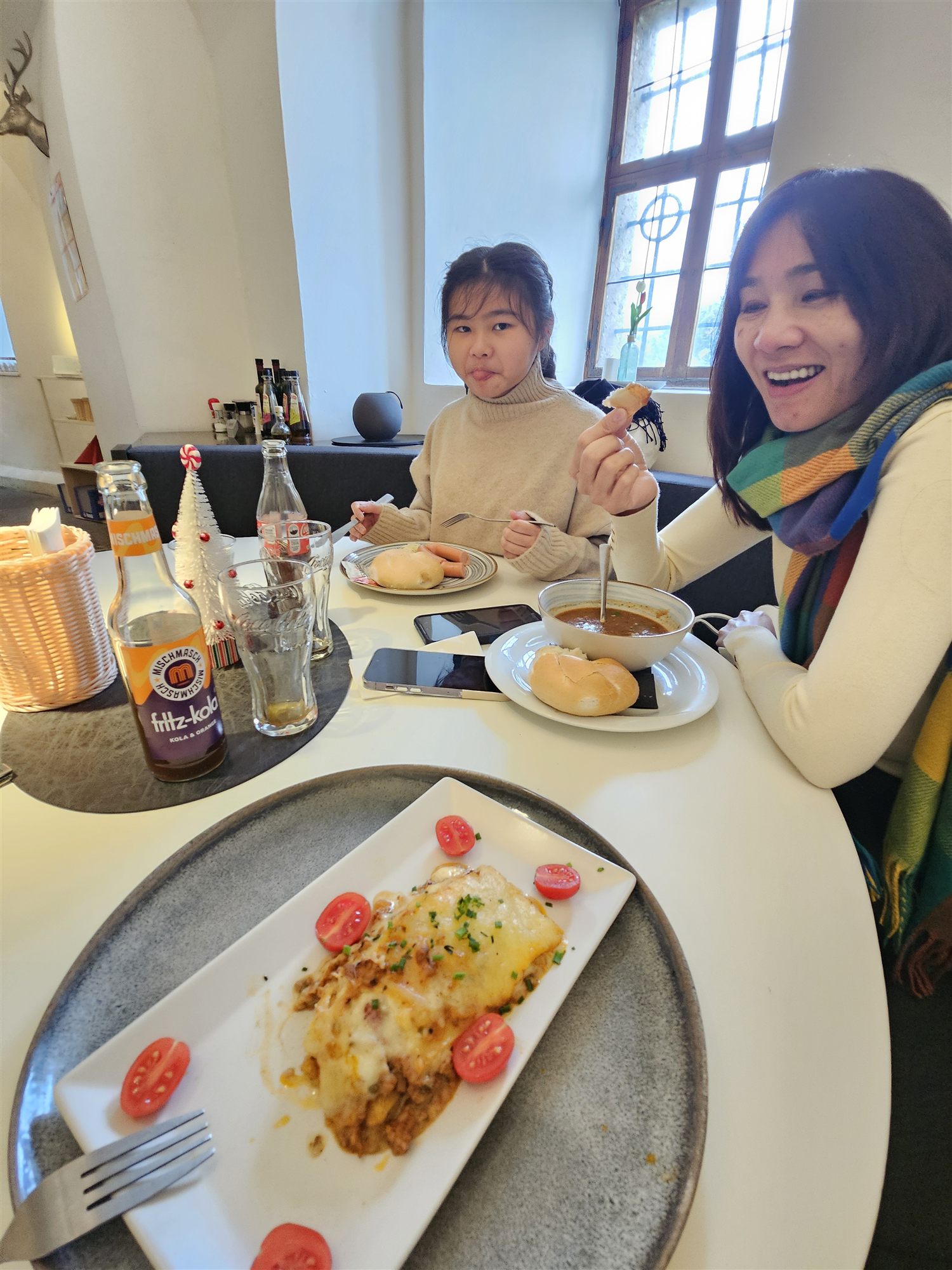 Lunch at Café Ferdinand.
 Apple strudel with vanilla sauce.
Walking Through the Gardens
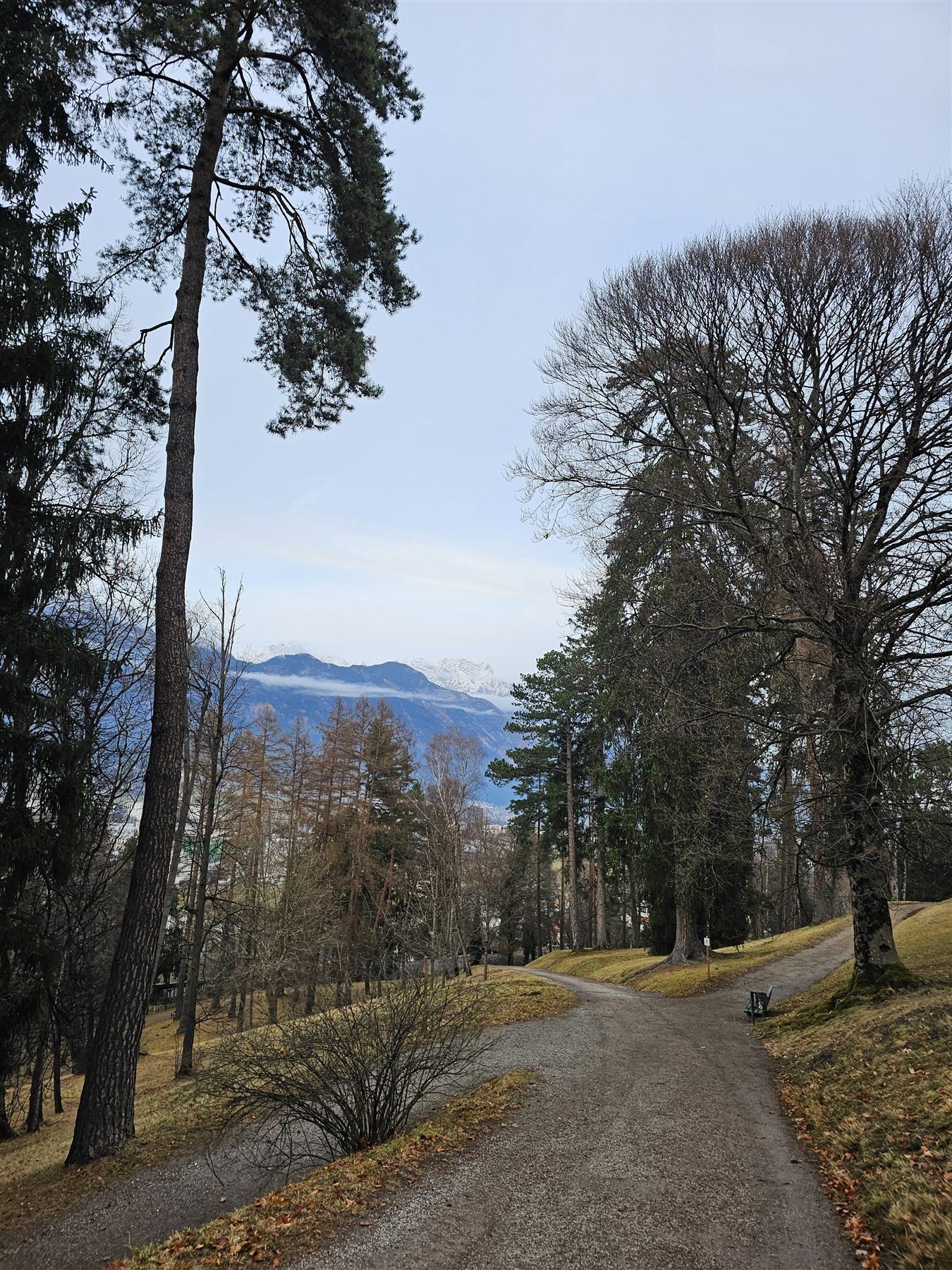
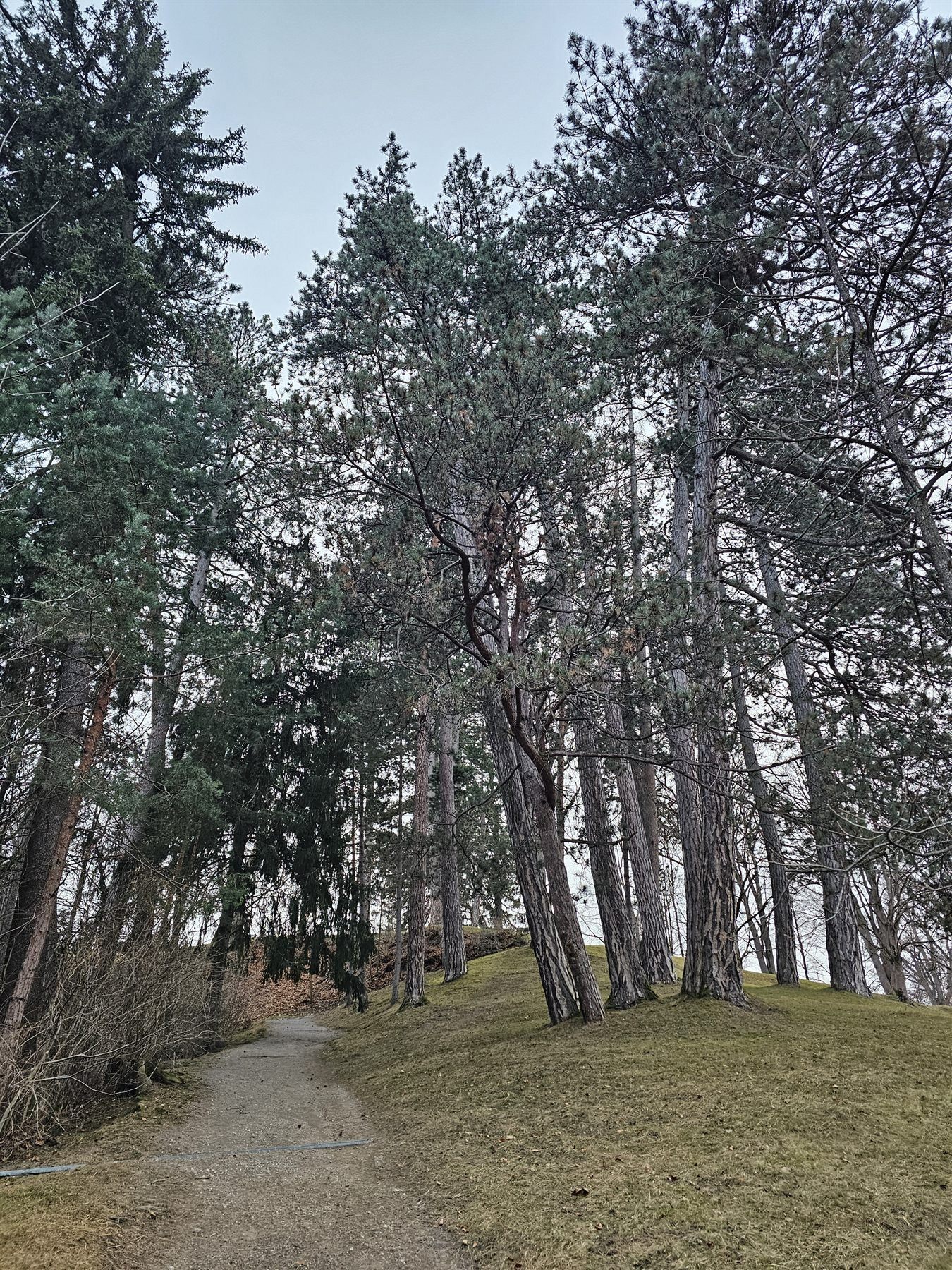
We spent some time walking through the castle grounds after lunch. The paths were quiet, surrounded by trees and hills. It felt calm, almost still — like a small pause from everything else. No rush, no noise, just space to walk and breathe.
 The path through the tall trees on the grounds.
 The Alps, glimpsed through the trees.
Further along, the path climbed gently through tall pines, with the snow-capped Alps appearing between the trees every so often — the kind of view that made us stop and just look for a minute.
Ambras Castle is easy to reach by public transport and rarely feels crowded, which makes it a good, calmer alternative to Innsbruck's busier old town attractions on a day when you want a slower pace with kids.
Back to Innsbruck
By late afternoon, we headed back into the city. Innsbruck's Christmas market was in full swing in front of the Golden Roof, the huge lit tree in the square dwarfing the market stalls beneath it, with the snow-capped Nordkette range looming behind the rooftops even after dark. The Golden Roof (Goldenes Dachl) itself is the city's best-known landmark — a balcony added around 1500 for Emperor Maximilian I, covered in 2,657 gilded copper tiles so he'd have a suitably grand spot to watch tournaments and festivities in the square below. Before heading back, we stepped into the nearby Hofkirche, just a short walk away — quiet, calm, and a nice way to slow down before ending the day.
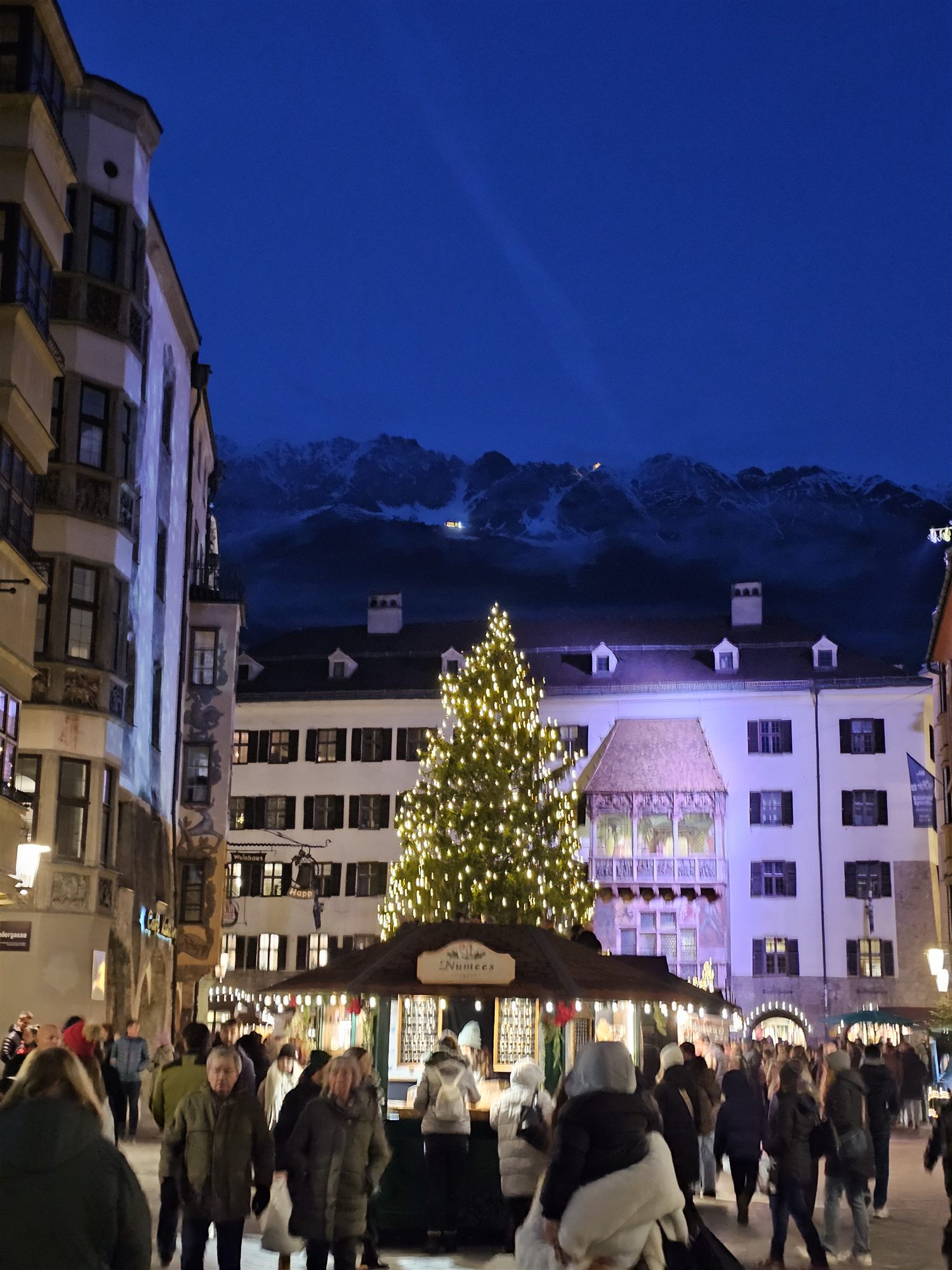 Innsbruck's Christmas market, tree lit up against the mountains.
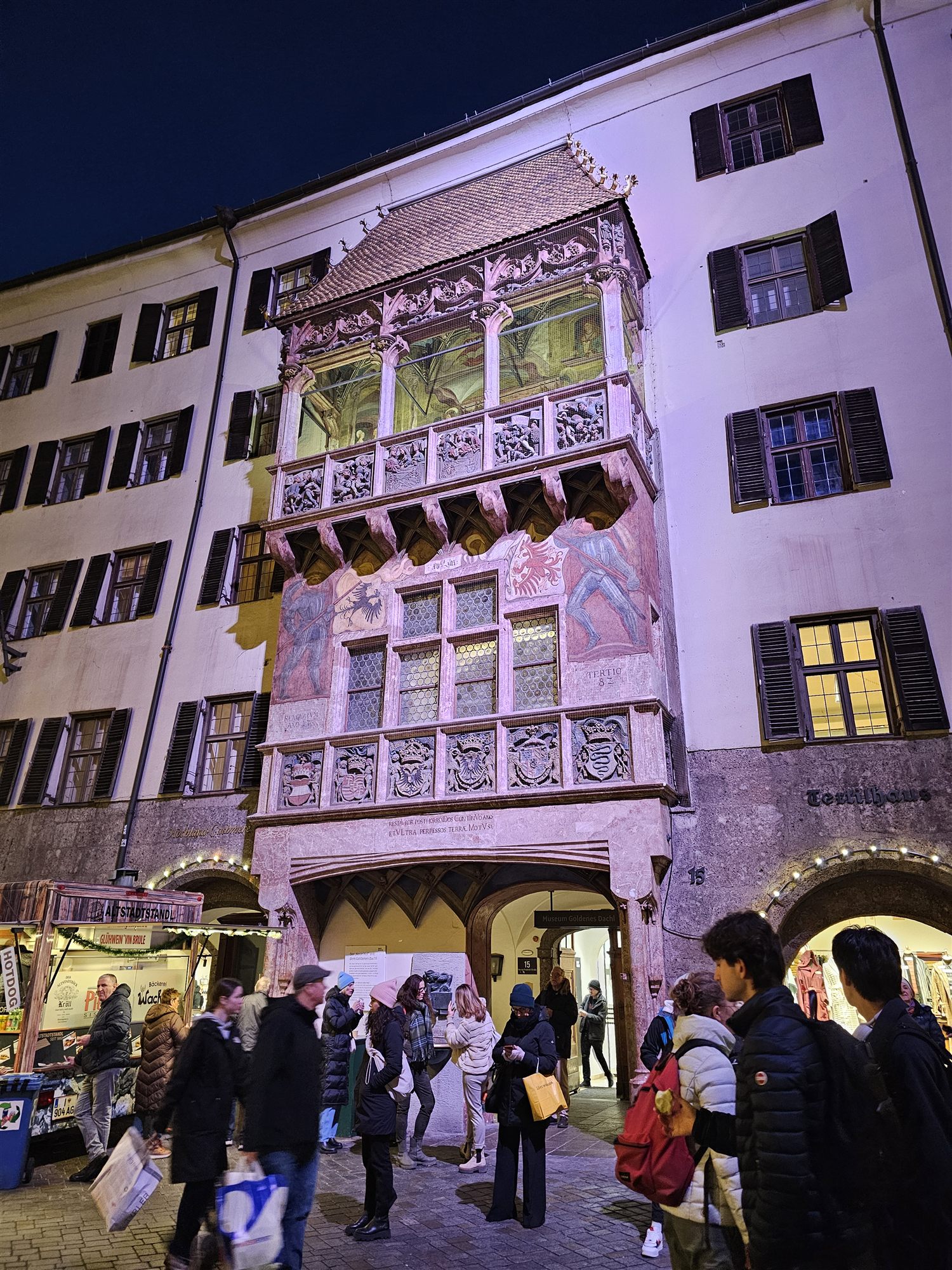 The Golden Roof's 2,657 gilded tiles, up close.
A Calm and Meaningful Day
It wasn't a packed itinerary, but it didn't need to be. A short trip to Ambras Castle, a bit of history, a quiet walk, and a gentle evening in Innsbruck — simple, but one of those days that felt just right. Days like this are easy to overlook when planning a trip, but they often end up being the ones you remember most clearly afterward.