
Quick Facts
- Date
- Saturday, 13 December 2025
- Region
- Salzburg & Mondsee, Austria
- Covers
- Sound of Music filming locations, Mondsee Basilica, Salzburg Old Town
- Cost & duration
- S$226.47 total, 4 hours (9:15am–1:15pm), booked via Klook
- Good for
- Families — light-hearted, easy pace, fun for kids too
A Different Kind of Day
On 13 December, our seventh day in Austria, we booked the four-hour Sound of Music tour through Klook, S$226.47 in total, meeting at 8:45am at Mirabellplatz, just a few minutes' walk from our apartment. Our coach was unmistakably branded, "Sound of Music" painted across the side, and the guide kept up a running mix of stories, music, and commentary for the full four hours. Before long, the whole bus was singing along — something we didn't expect, but quietly enjoyed.
 Mirabellplatz, fogged in, on the morning we met the bus.
 Our guide, mid-story, somewhere between stops.
The route ran through the countryside around Salzburg — quiet tree-lined avenues and open fields between the filming locations. Along the way, our guide filled in the real story behind the film: Georg von Trapp was an Austrian U-boat commander in the First World War, and his second wife Maria had been a novice at Salzburg's Nonnberg Abbey before she married him in 1927. The family lost their savings in a bank failure during the Depression and began singing publicly to get by; they left Austria for the United States in 1938, the year of the Anschluss, and settled in Vermont, where they toured for years as the Trapp Family Singers.
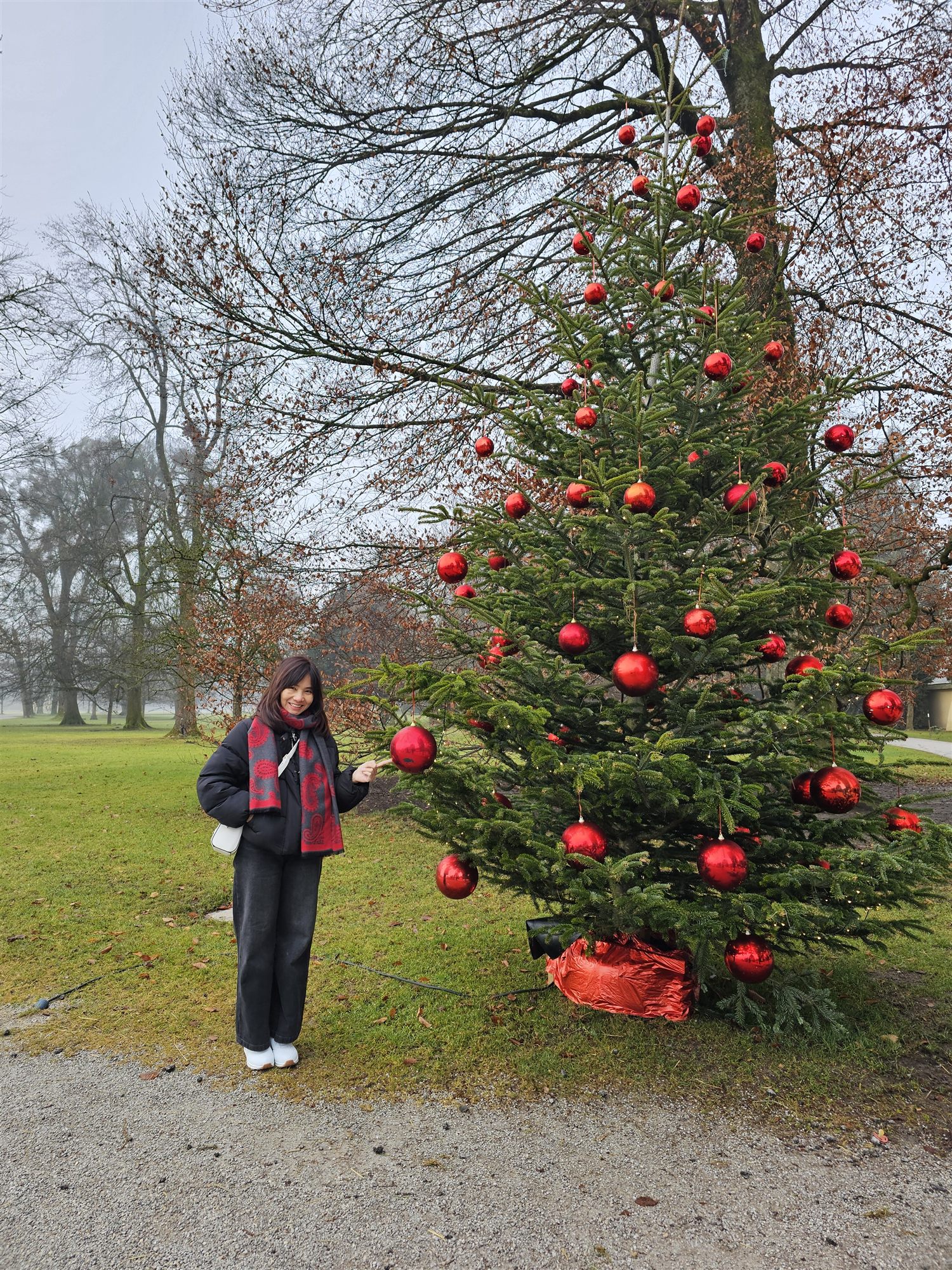 A Christmas tree in the fog, decorated top to bottom in red.
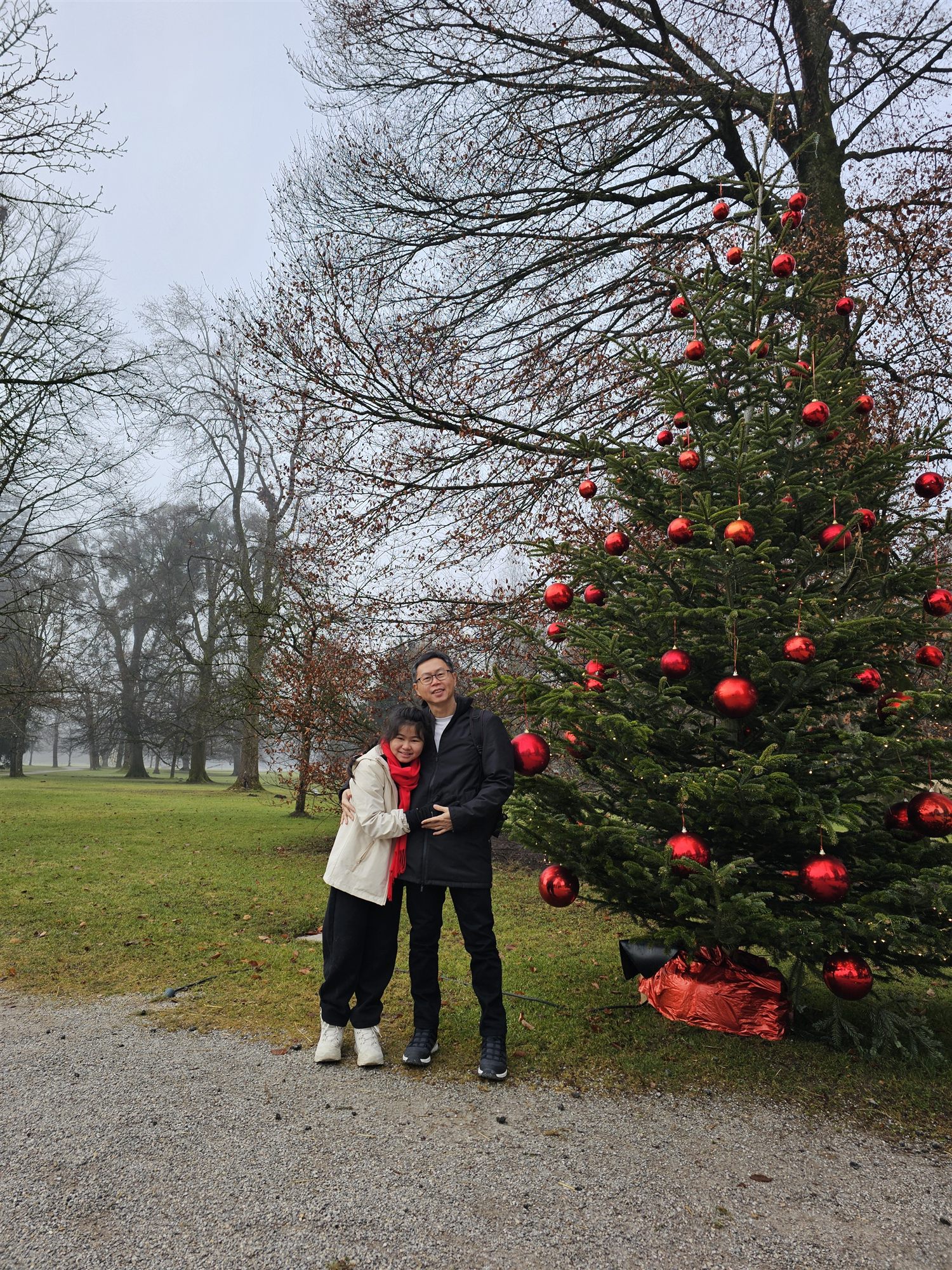 A stop worth pausing for, red baubles and all.
The Gazebo from the Film
One stop took us past a misty lakeside estate, its grand outline barely visible through the fog — Schloss Leopoldskron, on whose grounds the film's iconic gazebo, the setting for "Sixteen Going on Seventeen" and the final reprise, originally stood. It didn't stay there long. Fans kept climbing the fence to re-enact the bench-jumping scene, and at least one visitor was seriously injured doing it, so in 1958 the owners had the whole structure moved to the grounds of Hellbrunn Palace, a few kilometres away. It's still there today, glassed in and roped off, but very much recognisable.
 A lakeside estate, ghosted in fog.
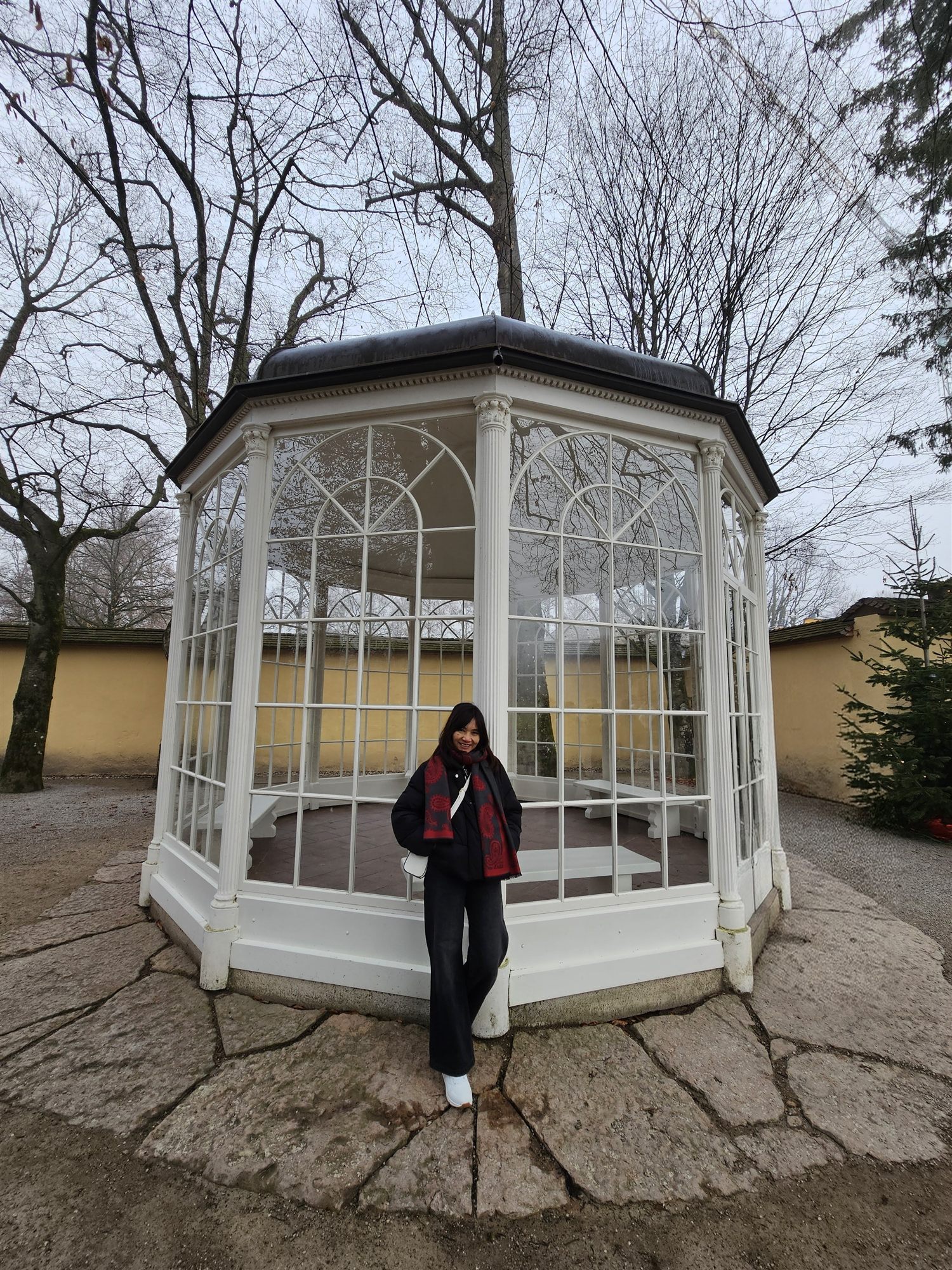 The real "Sixteen Going on Seventeen" gazebo, relocated to Hellbrunn Palace in 1958.
Further along, a small village church appeared and disappeared as the fog rolled through the hills — the same low cloud that had swallowed the lake estate now settling over the rooftops here too.
Mondsee Basilica
One of the stops that stayed with us was Mondsee, where we visited the Basilica of St. Michael, used for the film's wedding scene. We arrived to a brilliant blue sky and a huge Christmas tree standing in front of the church's bright yellow facade. The building dates to the late 15th century, though most of the interior — the gilded altars, the ceiling frescoes — is an early-18th-century Baroque redecoration by the painter Johann Michael Rottmayr. Just outside, the lake stretched quietly under the winter light.
 Inside the basilica — Gothic vaulting, Baroque gold.
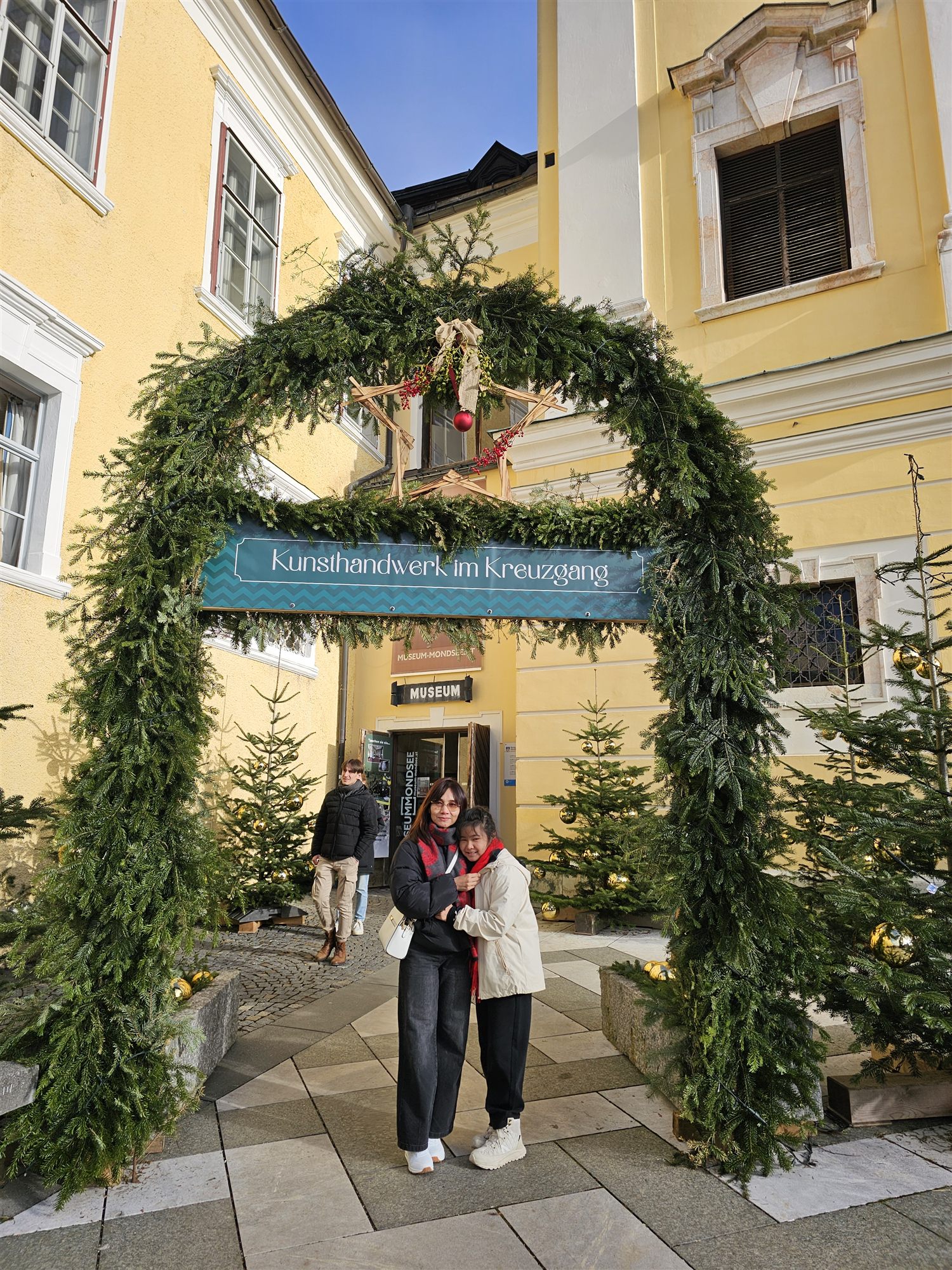 Under the garland arch, into Kunsthandwerk im Kreuzgang.
Right beside the basilica, a small Christmas craft market — "Kunsthandwerk im Kreuzgang," or craftwork in the cloister — was tucked under that fir-garland archway leading into the old abbey courtyard, the kind of detail that's easy to miss but makes the whole visit feel festive.
Down by the water, the mood shifted completely — fog rolling low over the lake, the sun trying to break through, and barely a sound except for birds crossing the surface. It was hard to leave.
 A church tower, half-swallowed by the fog.
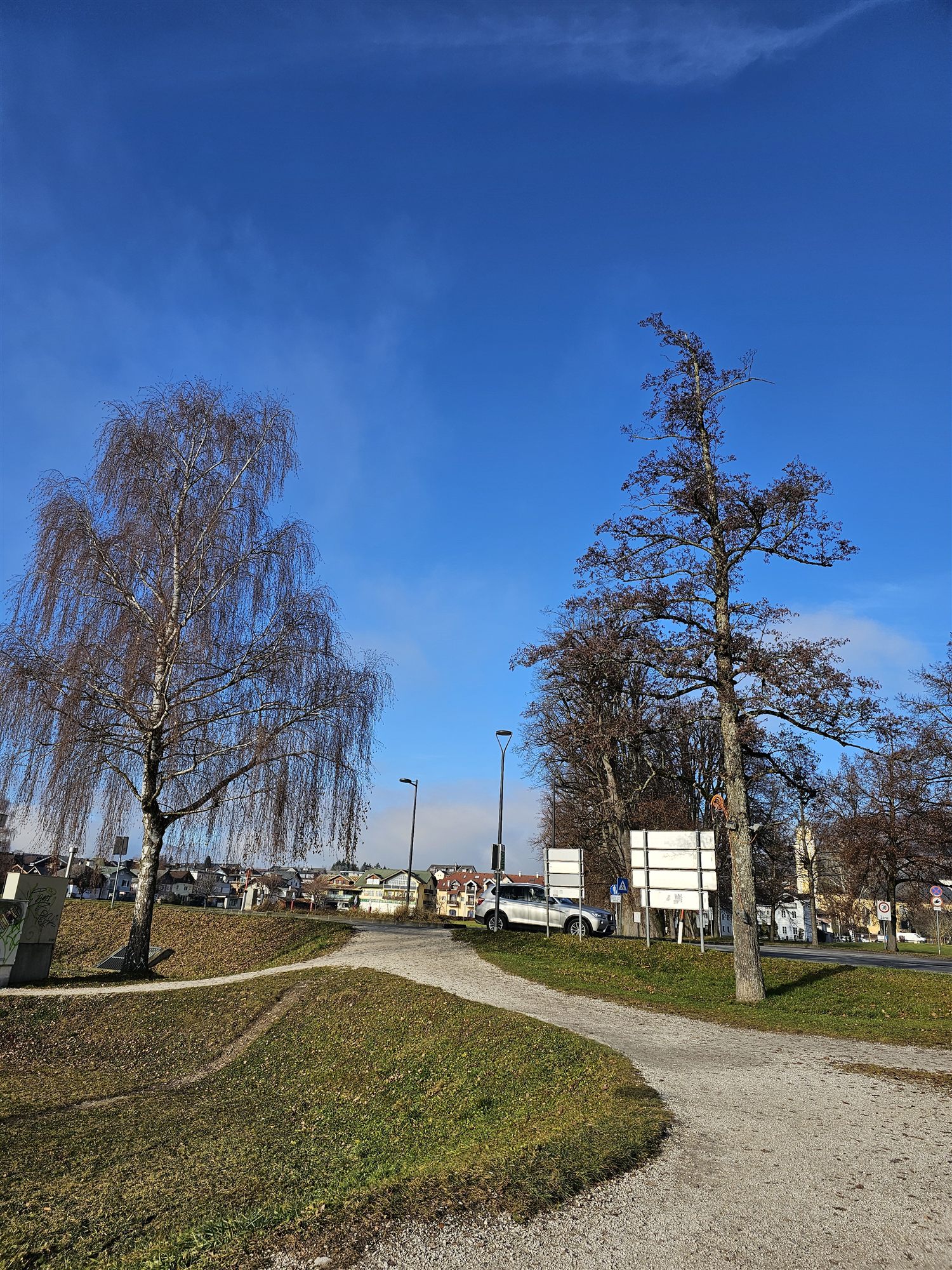 Minutes later, down the road, the sky had cleared completely.
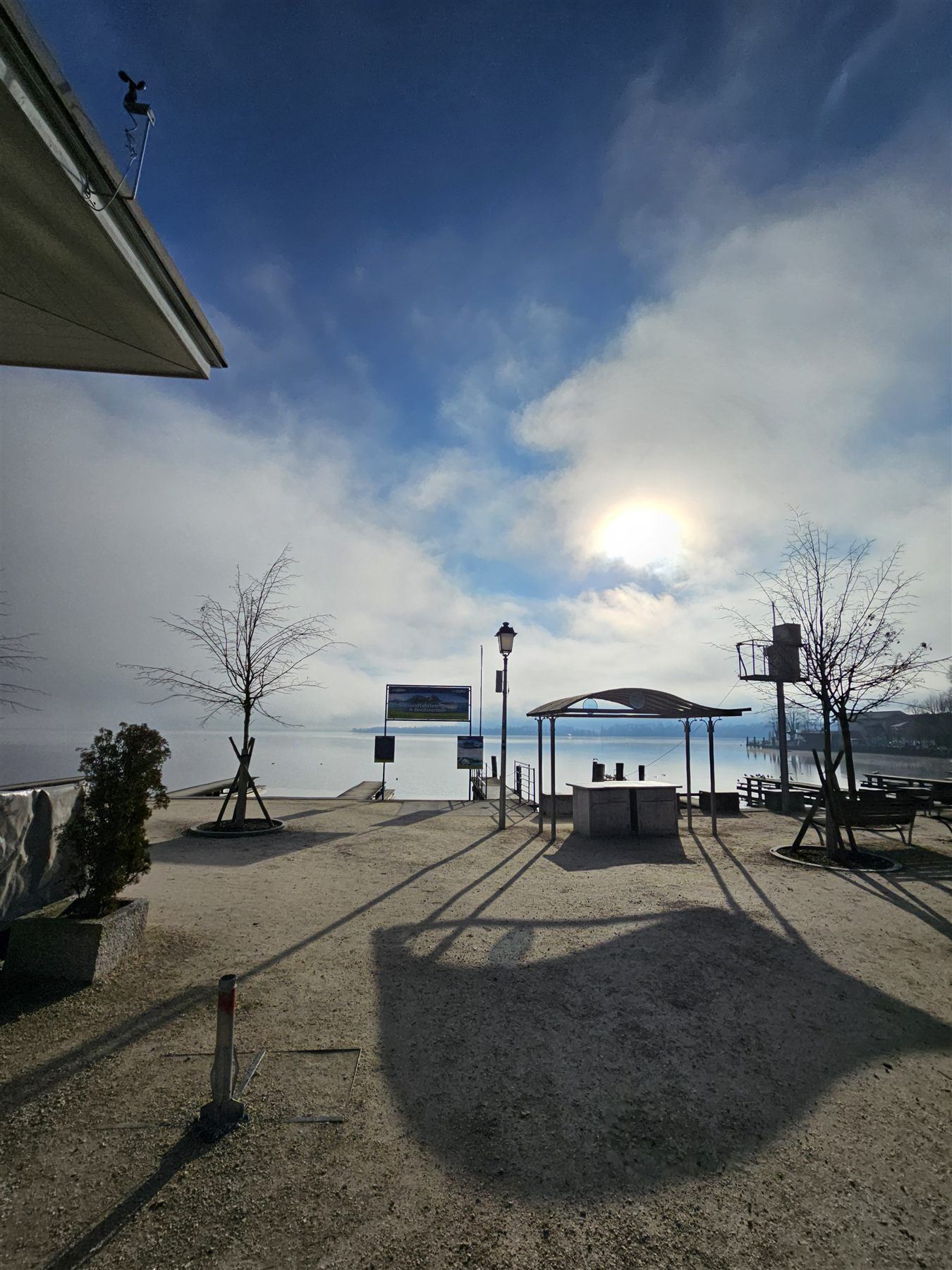 Mondsee's waterfront, wrapped in fog and winter sun.
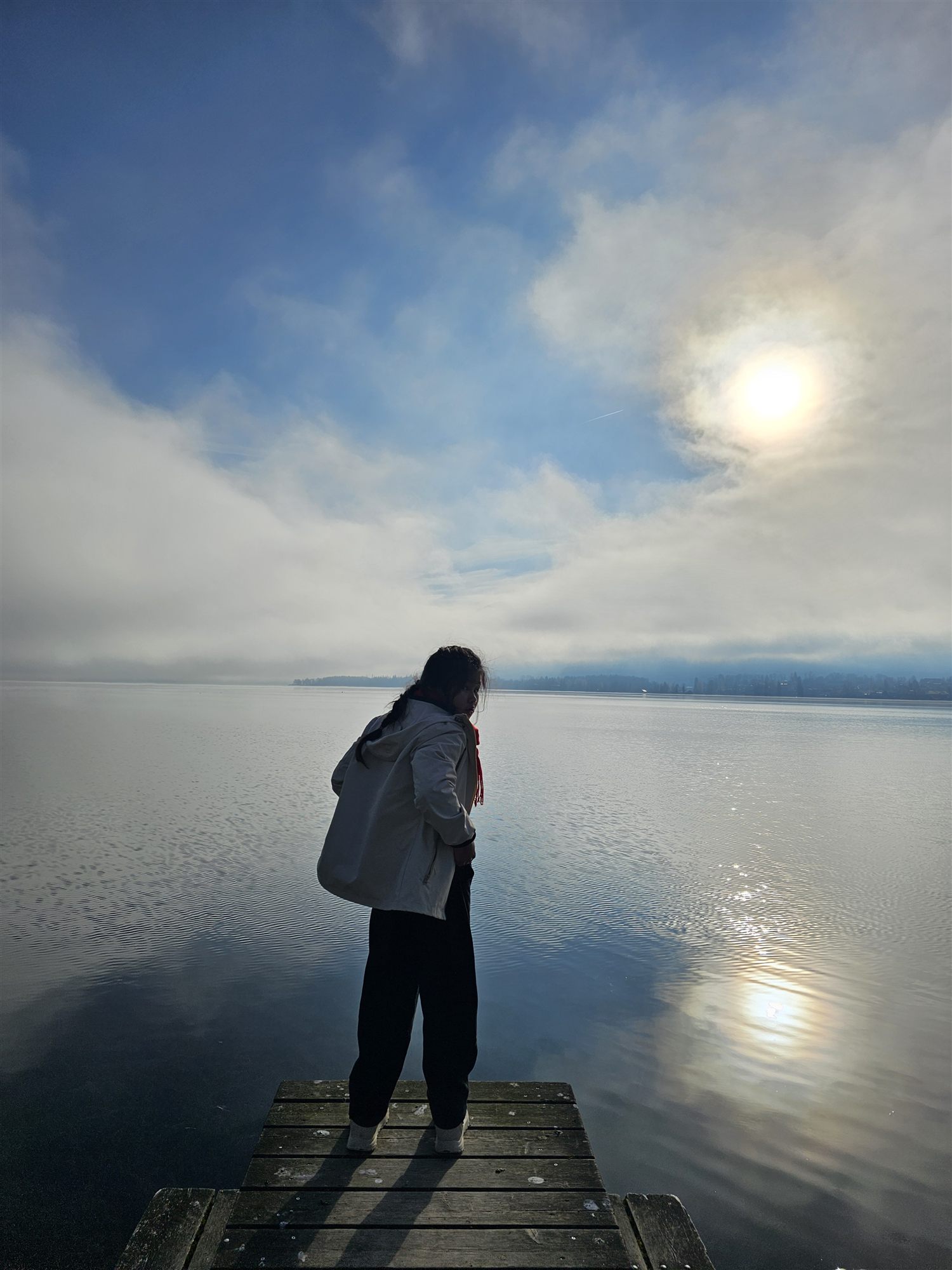 The lake, the fog, and the sun finally winning the argument.
A guided tour is worth it for this one — the running commentary and sing-along energy make it genuinely fun for kids, not just a scenery drive. Book a tour that includes Mondsee, not just the Salzburg city-centre filming spots.
Back in Salzburg: Mirabell Gardens
Back in Salzburg, the tour ended at Mirabell Gardens, laid out in its present form in 1690 for Prince-Archbishop Johann Ernst von Thun and the setting for the film's "Do-Re-Mi" steps and fountain scenes. We wandered the gravel paths between the clipped hedges and flowerbeds, with Hohensalzburg Fortress rising faintly through the clouds at the far end of the avenue. After that, we spent the afternoon in the old town, had a late lunch, and stayed on for the Christmas market as blue hour settled over the rooftops.
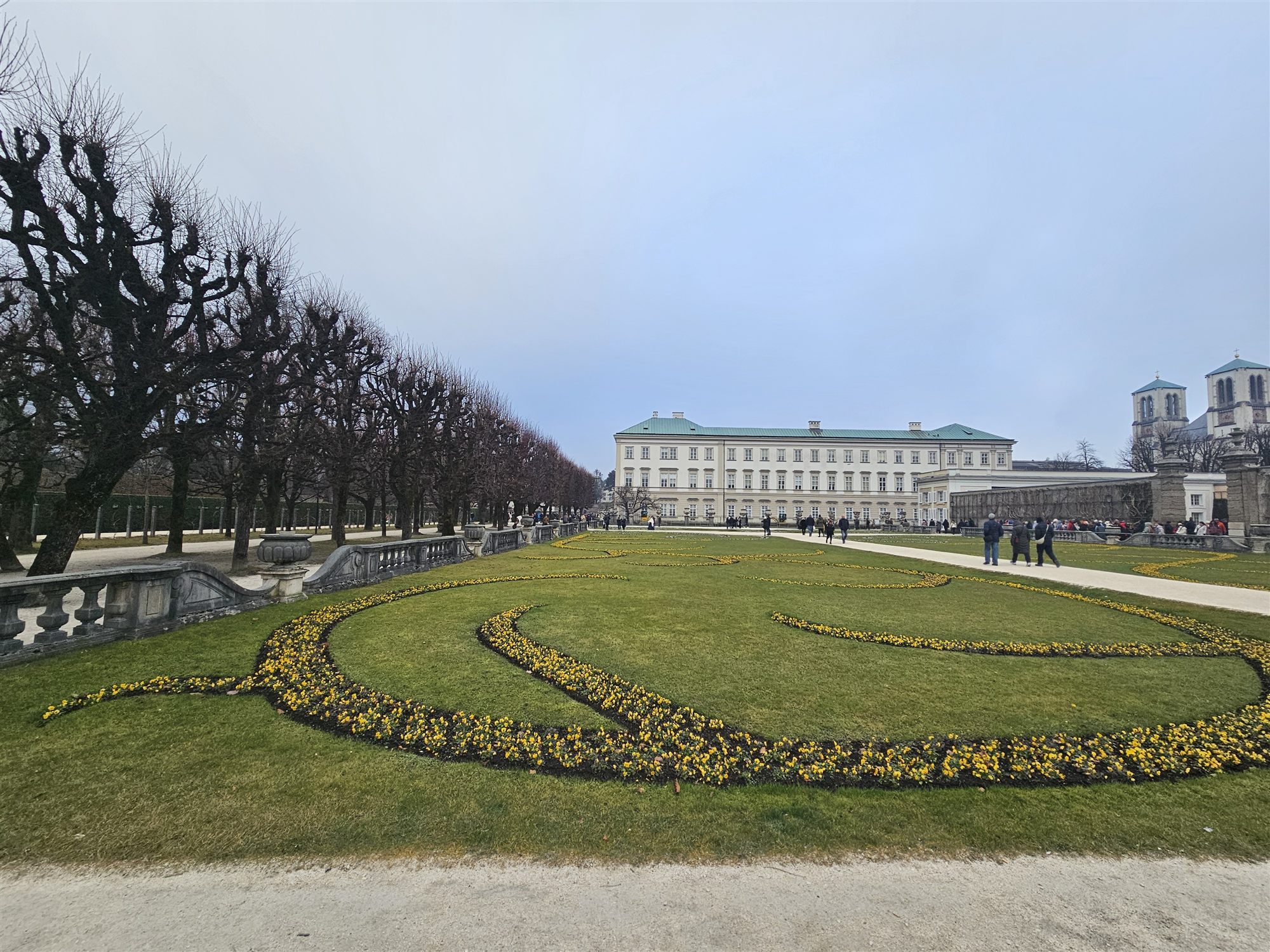
A Day That Stays With You
Four hours took us from a Mirabellplatz bus stop through von Trapp history, a lakeside basilica, and back to the same gardens where the film's steps were shot — more ground, real and cinematic, than we expected to cover before lunch. What we remember most is smaller than any of it: a busload of strangers singing along to songs none of us had planned to sing that morning.