
Quick Facts
- Date
- Friday, 20 December 2024
- Tour
- Nuremberg Day Tour from Munich — S$276.77
- Meeting point
- Radius Tours Office, Dachauer Str. 4, 80335 München — 8:30am, arrive 15 mins early
- Duration
- About 10 hours, by train
- Region
- Nuremberg, Bavaria, Germany
- Covers
- Old town, Lorenzkirche, Christmas market, Zeppelinfeld
- Note
- Best scheduled after a lighter day, not back-to-back with a heavy one
A Slower Start
Day 12, 20 December, was a full-day Nuremberg tour, meeting at the Radius Tours office on Dachauer Straße at 8:30am for a ten-hour day by train. The day started a little slower because our train was delayed for almost half an hour, and everyone had to wait around the platform. Since we were still recovering from the long Neuschwanstein trip the day before, all of us felt tired. Our daughter started showing signs of a cold, and was completely exhausted. A good reminder for us when planning our next big trip — always place an easier day after a heavy one.
 Asleep against the seat on the train.
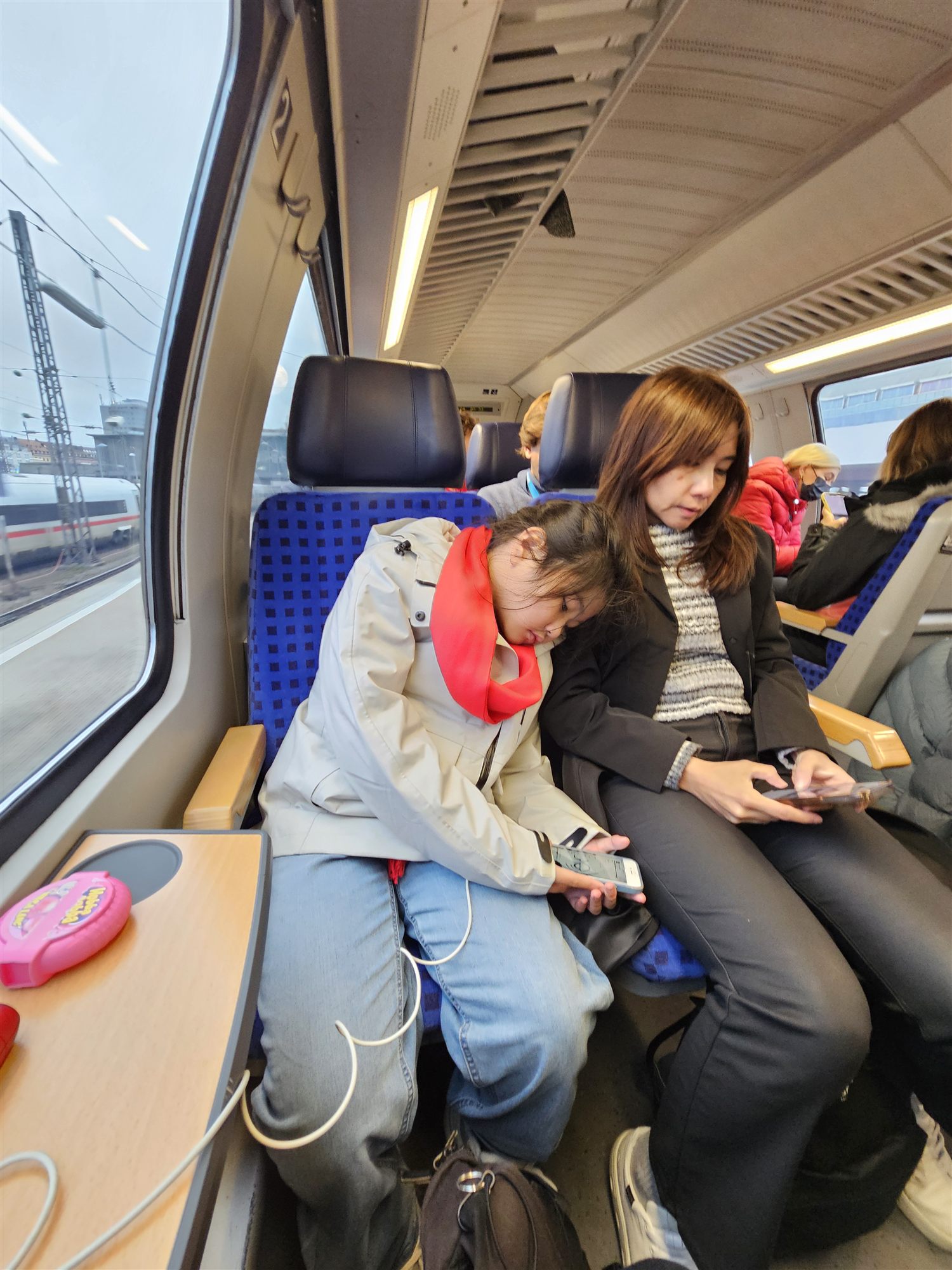 Watching the rail yard slide past.
Avoid scheduling a full-day tour like this right after a long, tiring day. If you can, put a slower day (or a free morning) between two demanding ones — it makes a real difference for younger travellers.
Exploring the Old Town
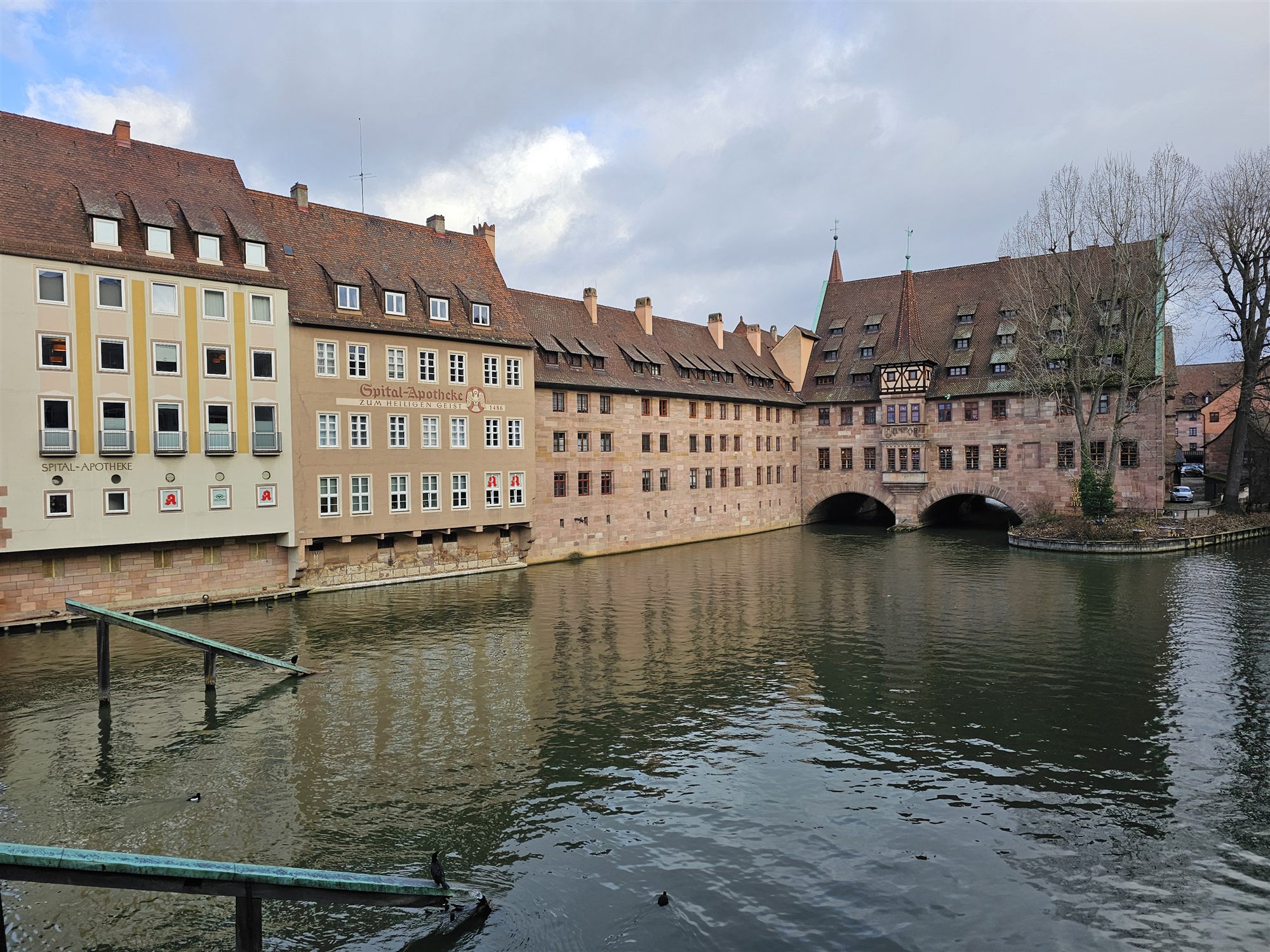
Once we arrived in Nuremberg, the guided tour took us through the old city walls, across stone bridges, and into the medieval streets. Much of what we were walking through is actually a careful postwar reconstruction — Nuremberg's historic centre was almost entirely destroyed in a single night of bombing in January 1945, and what stands today was rebuilt from rubble, stone by stone, using the original street plan. Inside Lorenzkirche, the tall gothic arches and Christmas decorations gave the space a quiet, peaceful feeling.
The Christmas market here felt different from the others we had visited — more traditional and local, with gingerbread stalls, bratwurst stands, and a steady festive crowd. Nuremberg's Christkindlesmarkt is one of the oldest and most famous in Germany, with records tracing it back to the 1600s, and every year a local woman or teenager is chosen to play the "Christkind" who opens it. Along the way, we passed the Schöner Brunnen, a gothic fountain carved in the 1300s with a small gold ring set into its iron fence — legend has it spinning the ring three times brings good luck, and there was a steady queue of people doing exactly that.
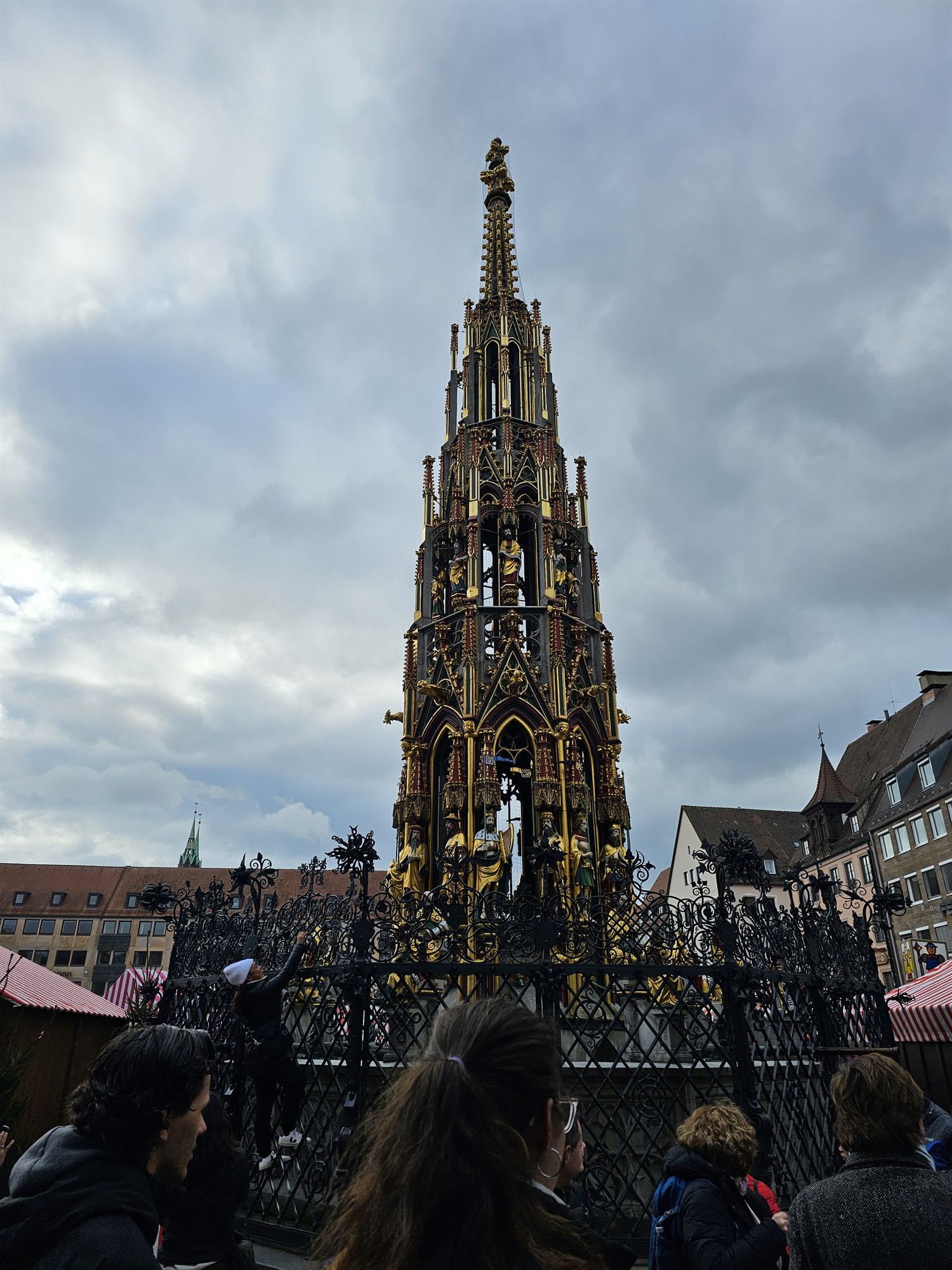 The Schöner Brunnen, with its lucky gold ring.
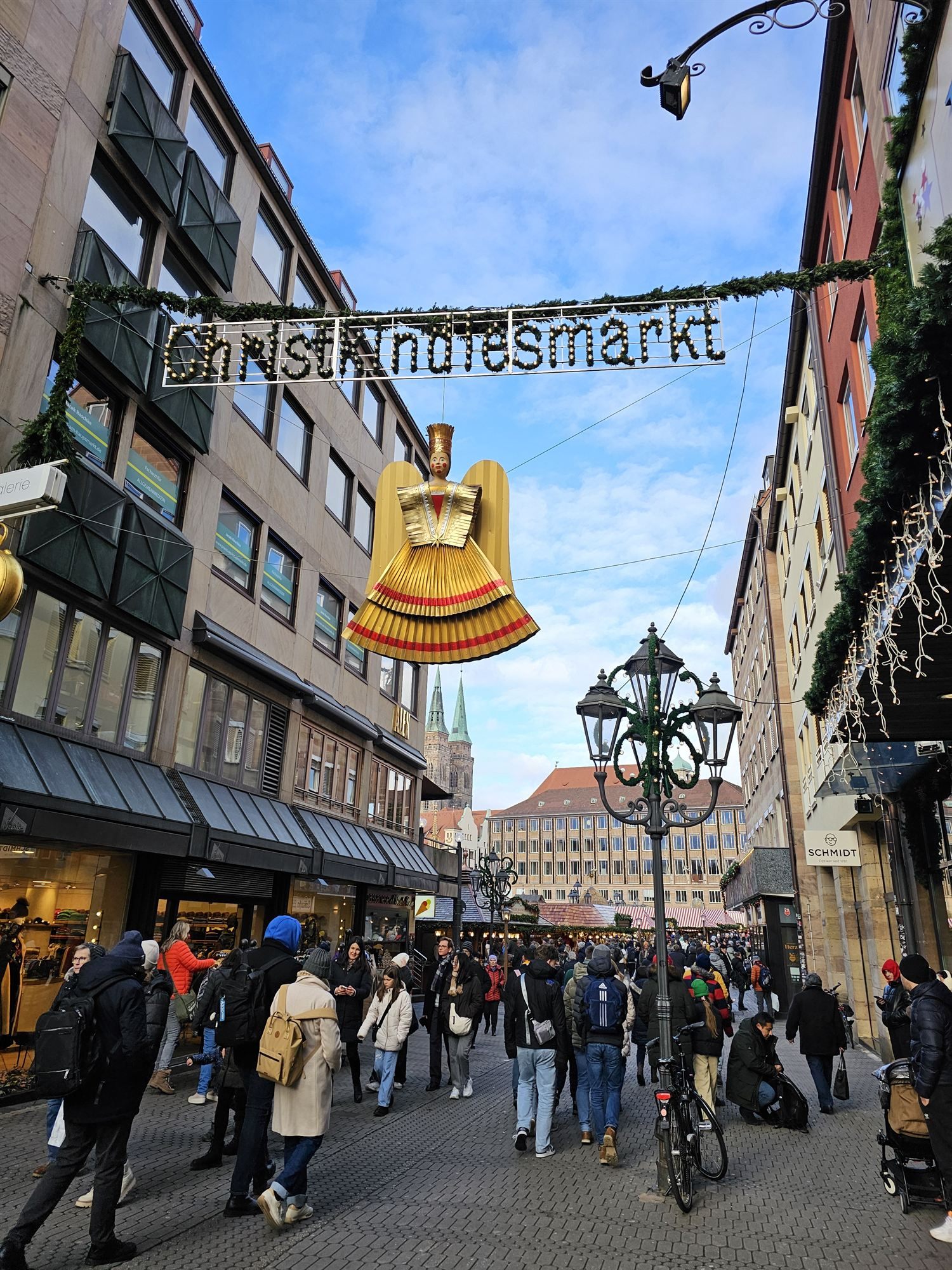 The entrance to the Christkindlesmarkt.
A Taste of Nuremberg
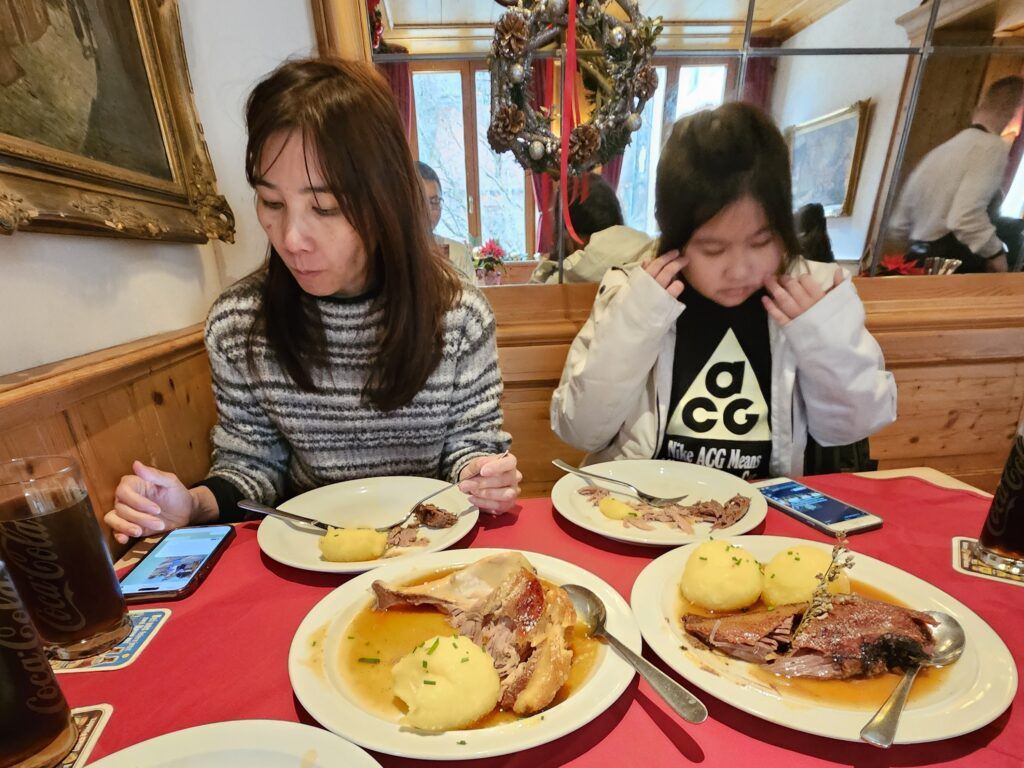
For lunch, we kept it hearty with roasted duck and potato dumplings — simple, warm, and exactly what we needed on a cold day.
A Different Kind of History
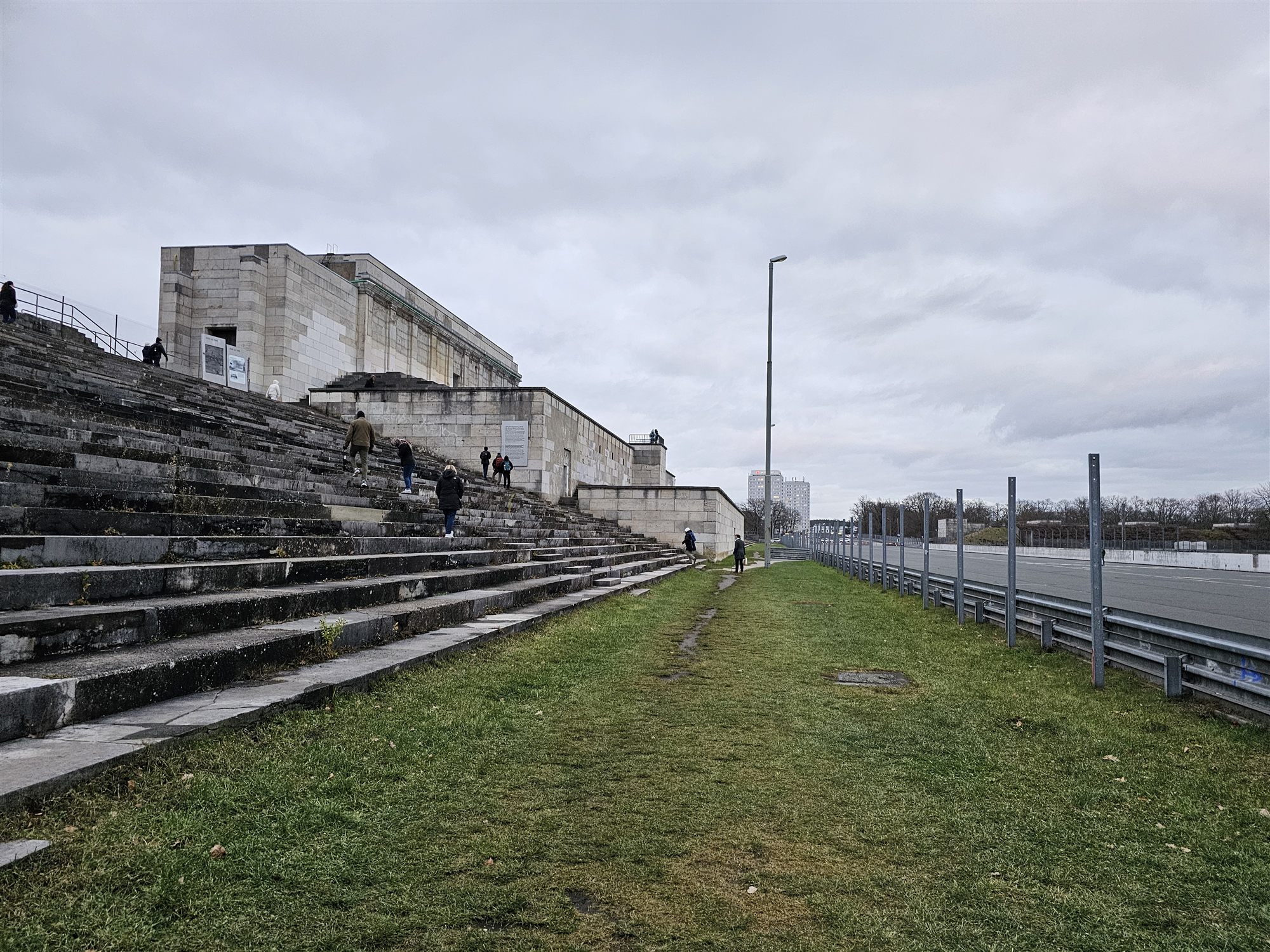
Before heading back, the guide brought us to Zeppelinfeld, the grandstand Albert Speer designed to hold the Nazi Party's Nuremberg rallies, which could pack in well over 100,000 people and were filmed by Leni Riefenstahl for "Triumph of the Will." American troops blew up the large swastika that once topped the main tribune in 1945, and the structure has been left standing since — not restored, not demolished, just slowly deteriorating. Standing on the huge stone steps, in the cold and empty field, it wasn't a "tourist spot" in the cheerful sense, but it felt like an important place to have seen in person rather than only read about.
A Gentle Ending
By the time we boarded the train back to Munich, we were exhausted. But as we stepped out of the station, snow began to fall. Soft, quiet flakes drifted down, and just like that, the whole day softened. Our daughter forgot her tiredness and looked up, smiling. It felt like a small, unexpected gift at the end of the day.